
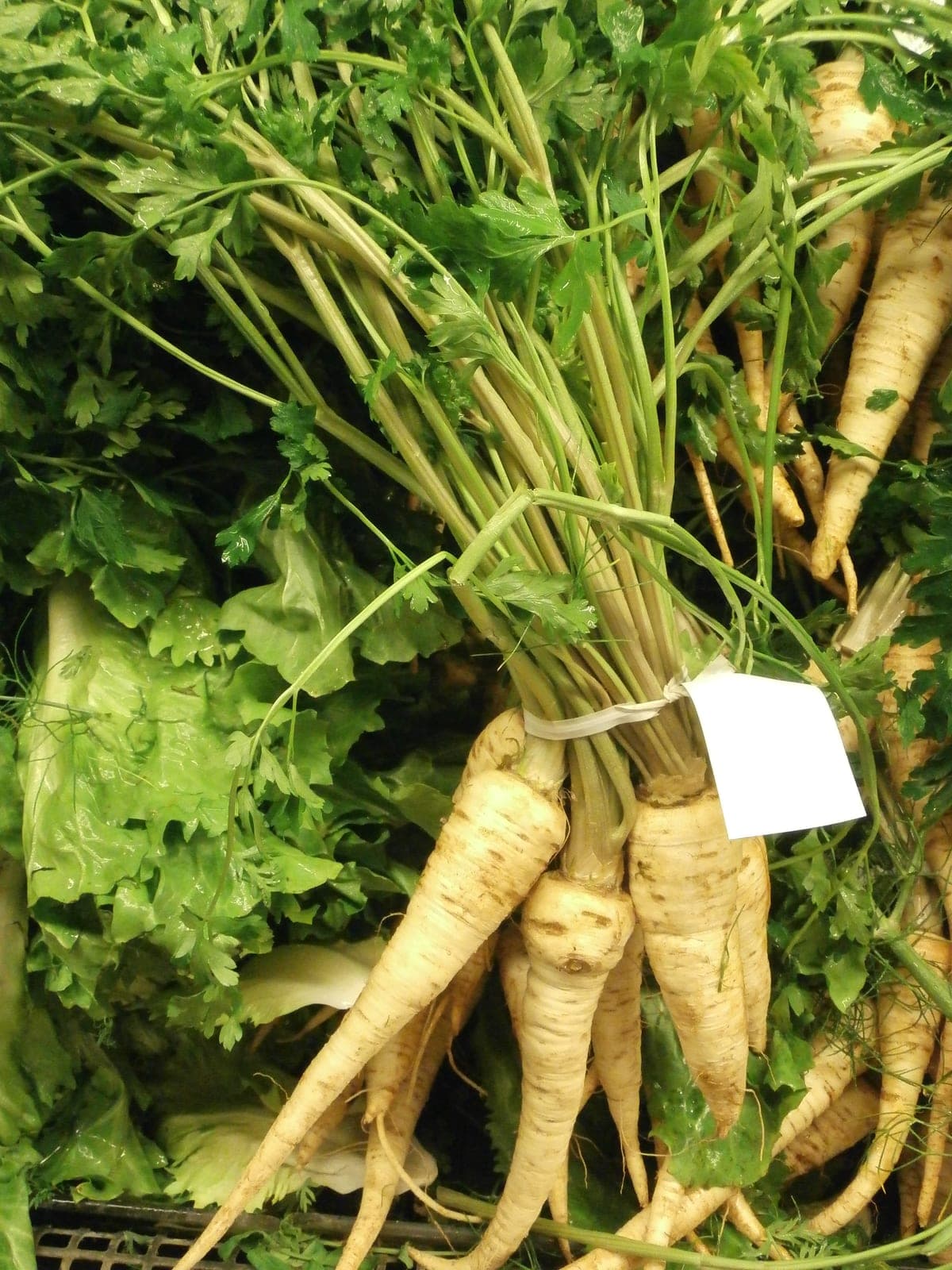
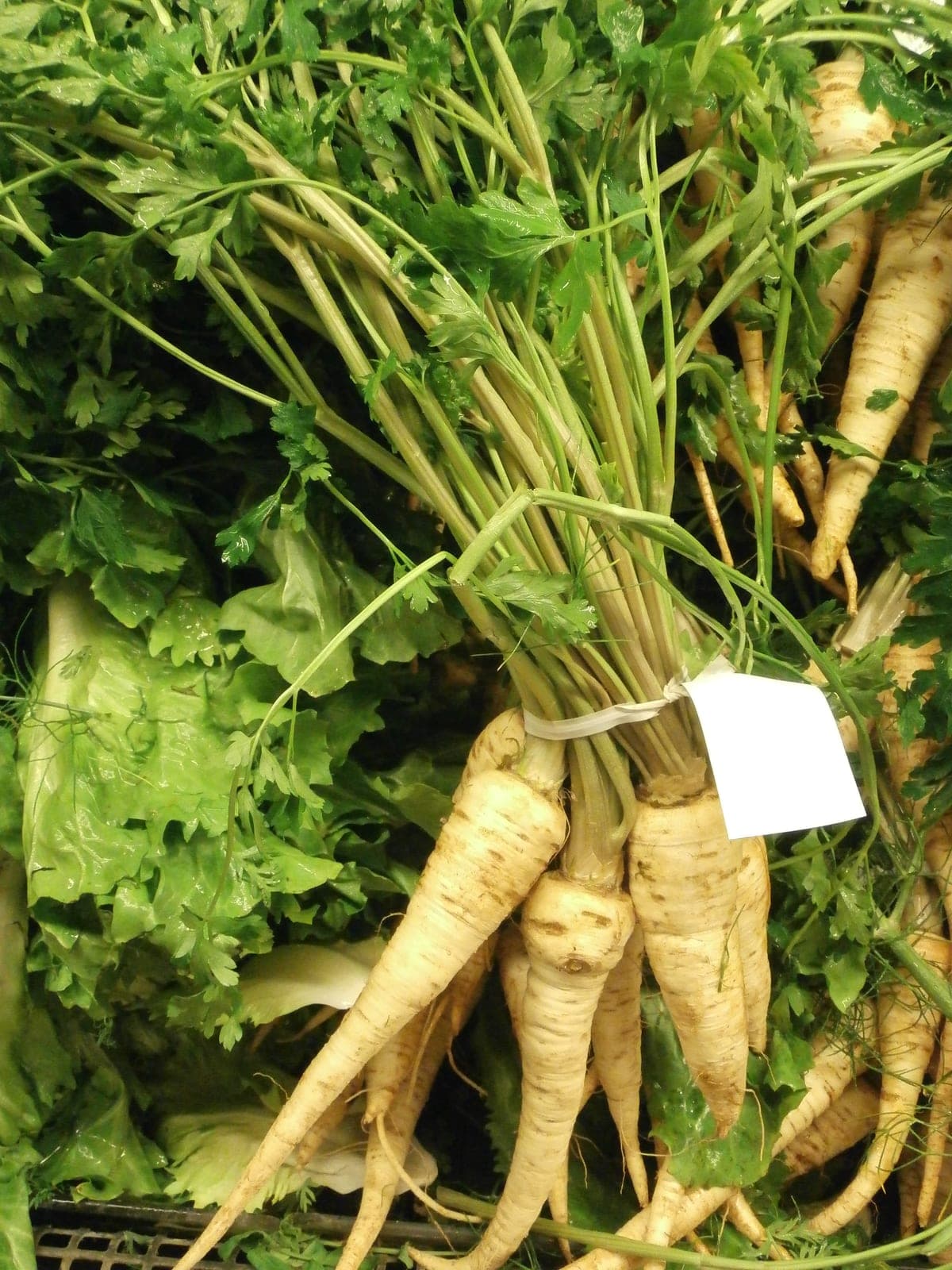
Parsnip is the patient crop of the root bed - sown in spring and left in the ground the whole season, it asks only for deep loose soil and time. The reward comes late: after the first hard frosts, the starchy roots turn sweet and nutty, better in November than they ever were in September.
The one hard rule is fresh seed. Parsnip seed loses viability within a year, so old packets germinate poorly or not at all. Sow as soon as the soil can be worked into a fine, stone-free seedbed, keep it constantly moist through the slow two-to-three-week germination, and thin early so the roots have room to size up. Leave the crop in the ground and dig as needed through winter under a blanket of mulch - frost only improves it.
Parsnip Canker
Reddish-brown to black lesions form at the root shoulder and crown, extending down the upper root. Affected tissue becomes corky, cracked, or soft and sunken. Damage is most visible at harvest but can be detected by parting soil at the crown midseason.
Grow canker-resistant varieties. Avoid root injury during weeding or cultivation. Ensure good drainage and avoid waterlogged soil. Rotate parsnips on a minimum 3–4 year cycle. Do not over-apply nitrogen, which increases susceptibility. Harvest promptly once roots are mature.
Cavity Spot
Sunken, gray-brown elliptical lesions across the root surface, sometimes cracking. Caused by Pythium in wet soils.
Improve drainage and avoid overwatering. Maintain pH near 6.5 and avoid excess potassium. Rotate away from carrots for 3–4 years in affected beds.
Powdery mildew
White or grey powdery coating on leaves - usually starting on older growth in humid conditions or when nights cool.
Improve air circulation by thinning plants. Apply neem oil or potassium bicarbonate spray at first sign. Avoid overhead watering.
Root-Knot Nematode
Swollen galls on roots, poor vigor, wilting in heat, and reduced fruiting. Containers and sandy soils are more prone.
Use clean potting mix in containers. Avoid replanting in infested soil. Maintain plant vigor with mulch and steady watering. Solarize affected garden soil.
Damping Off
Seedlings collapse at the soil line with thin, water-soaked stems; seeds may fail to emerge or rot before sprouting.
Sow in well-draining mix, avoid overwatering, and ensure good airflow. Remove affected seedlings and let the surface dry between waterings.