
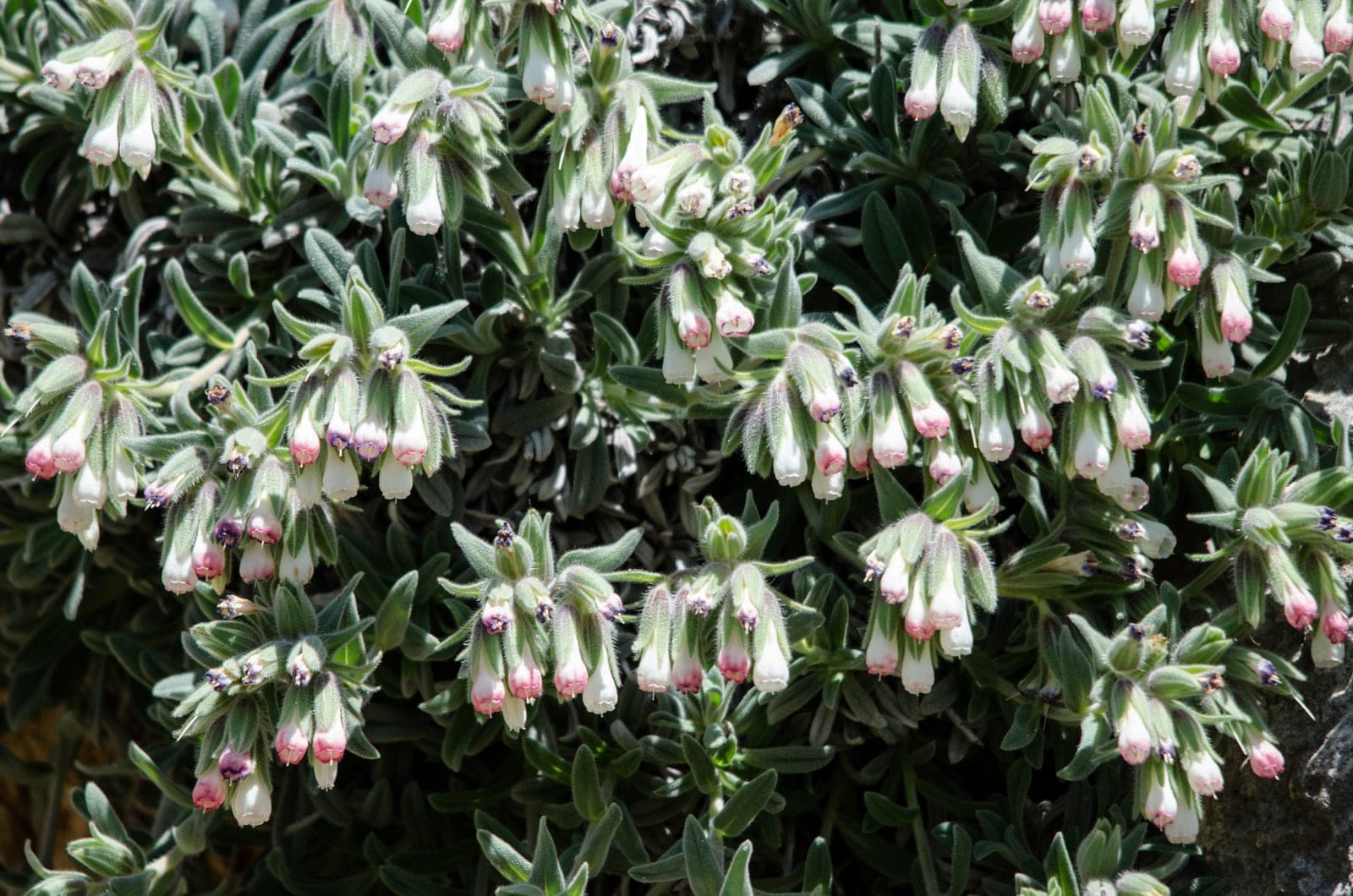
Onosma alborosea is a low-growing perennial native to Turkey and the eastern Mediterranean, grown for its pendant tubular flowers that open creamy white and age to pink or rose on the same plant. The color shift results from pH changes in anthocyanin pigments, giving a single plant a two-toned appearance throughout its flowering period. It suits rock gardens, gravel plantings, dry stone walls, and raised beds where drainage is sharp and reliable.
The plant forms a mound of narrow, silvery-bristled leaves typical of Boraginaceae. It thrives in lean, alkaline to neutral, sandy or rocky soils and becomes highly drought-tolerant once established. Heavy clay, pooling moisture, and wet winters are the primary causes of failure; a soil pH above 6.5 suits it best. It behaves as a short-lived perennial or biennial and self-seeds modestly in suitable conditions, helping it persist in a planting without active replanting.
Crown Rot
Lower leaves yellow and wilt; the base of the rosette turns brown and soft, sometimes with white fungal threads at the soil line. Plants collapse in wet conditions.
Remove and destroy affected plants. Improve drainage and avoid overhead watering. Do not mulch directly against the crown. Space plants for airflow and avoid replanting in the same wet spot.
Root rot
Plants wilt, yellow, and stunt even in moist soil; lower stems and roots turn brown, soft, and mushy and the plant may collapse. Most common in heavy, wet, or poorly drained ground.
Improve drainage and stop overwatering, and never plant too deep. Lift and destroy badly affected plants along with the soil around the roots. Grow in raised or free-draining beds to prevent it returning.
Powdery mildew
White or grey powdery coating on leaves - usually starting on older growth in humid conditions or when nights cool.
Improve air circulation by thinning plants. Apply neem oil or potassium bicarbonate spray at first sign. Avoid overhead watering.