
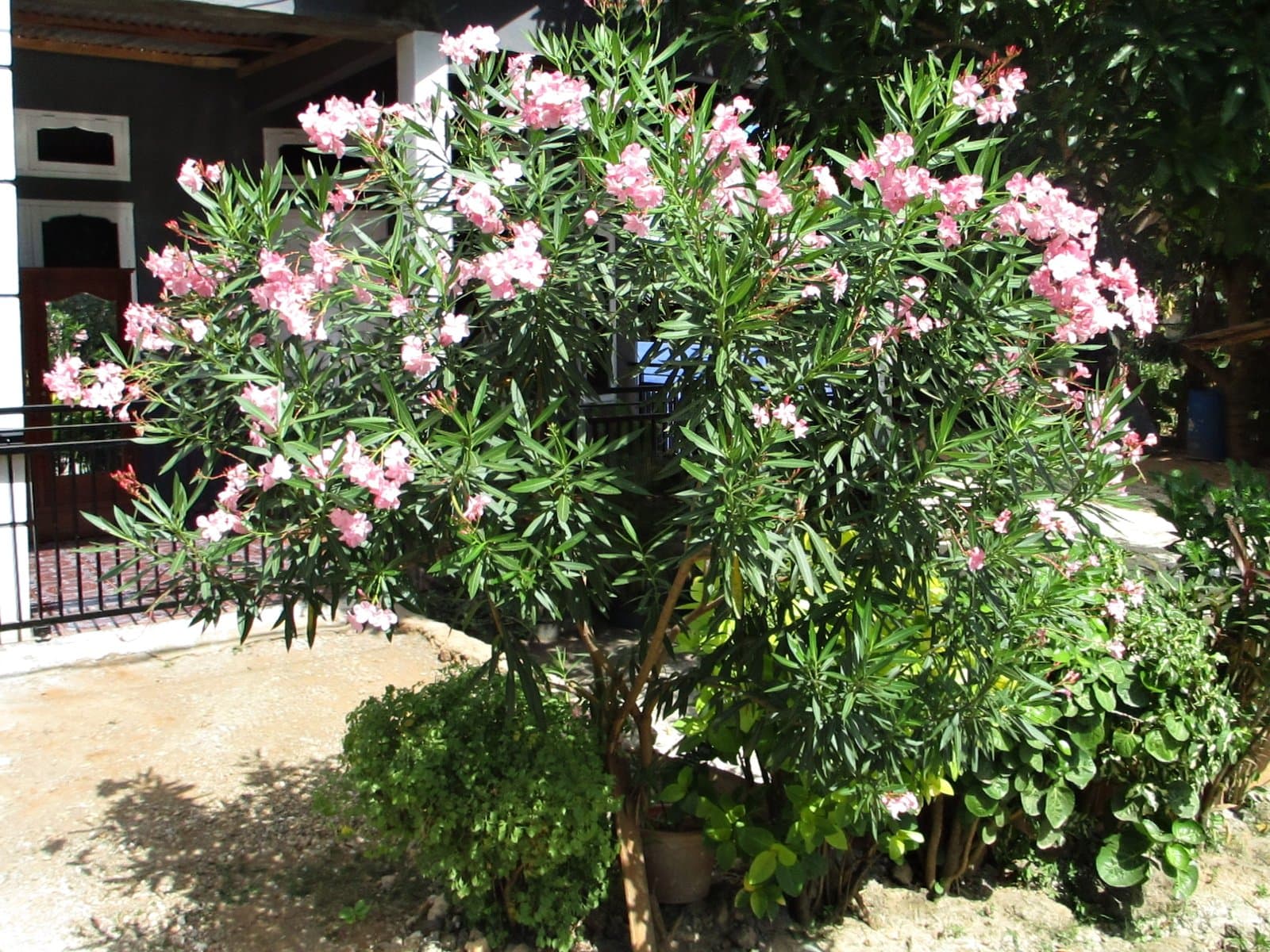
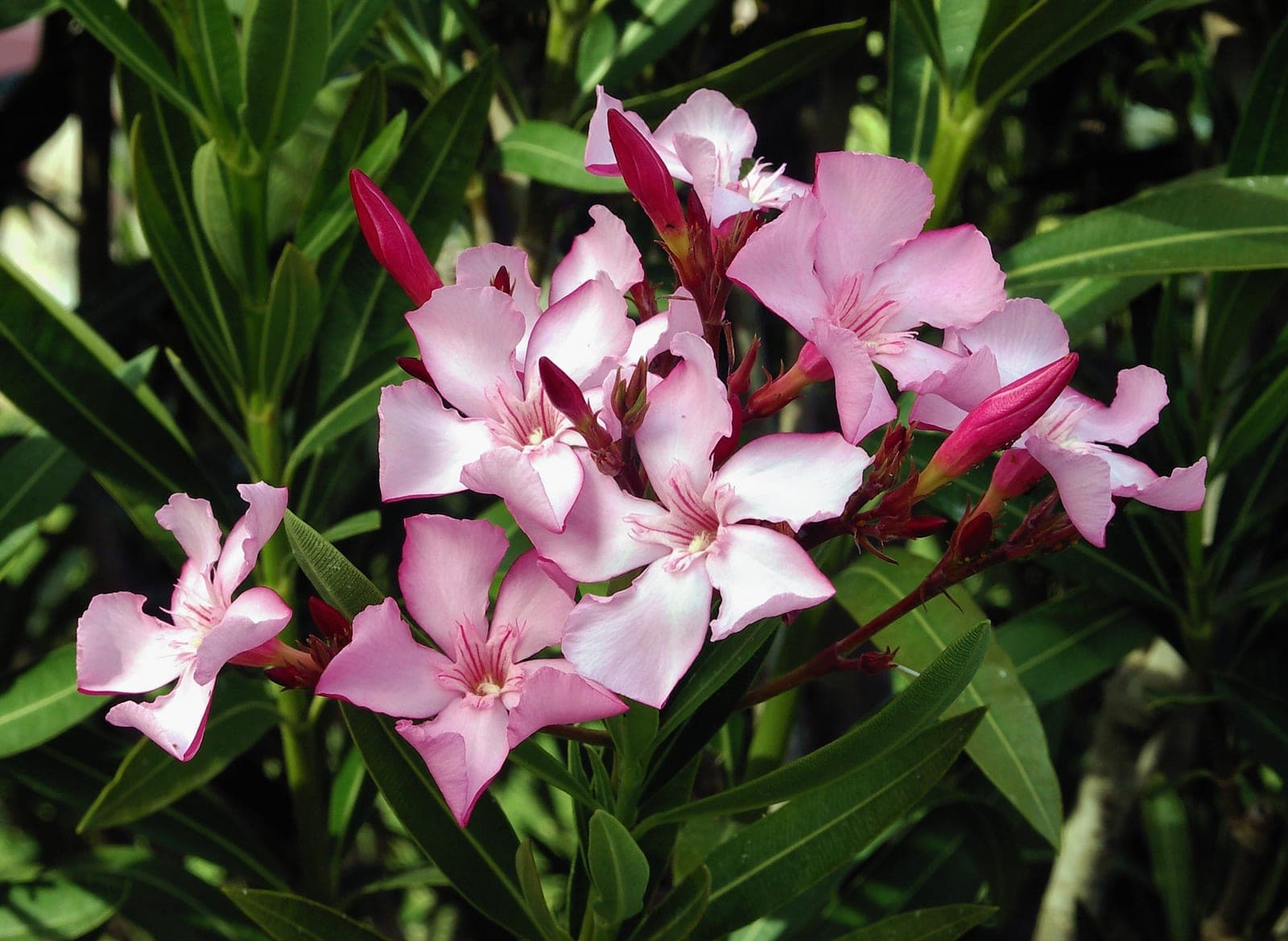
Oleander (Nerium oleander) is a broadleaf evergreen shrub or small tree native to the Mediterranean basin and extending east through South Asia. It is among the most widely planted ornamental shrubs in subtropical and warm-temperate regions, valued for prolific blooms from spring through fall and tolerance of difficult conditions.
The shrub thrives in heat, drought, poor soils, and coastal salt spray, making it a standard choice for screens, windbreaks, and low-water landscapes. All plant parts contain cardiac glycosides - primarily oleandrin - and are highly toxic to humans and animals; wear gloves when pruning, never burn clippings, and bag and trash all cut material. In zones 8b–9a, mulching the root zone before hard freezes protects established plants. Container-grown specimens can be overwintered indoors where temperatures drop below 15°F.
Ayurvedic and Mediterranean folk medicine documented external application of oleander preparations for skin diseases and parasitic skin conditions. Oleandrin has been investigated in oncology research for antitumor and antiviral properties; clinical application remains experimental.
Bacterial Leaf Scorch
Browning at leaf margins progresses inward, often with a yellow or reddish border between healthy and necrotic tissue. Symptoms first appear on older leaves in late summer and worsen each subsequent year as the pathogen spreads through the xylem.
No cure exists. Prune affected branches, maintain tree vigor with deep watering and a wide mulch ring, and manage sharpshooter leafhopper populations where feasible. Oxytetracycline trunk injections by a licensed arborist may suppress symptoms temporarily but do not eliminate Xylella fastidiosa.
Sooty Mold (Scale-Associated)
Black, powdery or crusty coating on upper leaf surfaces and stems. Affected leaves may yellow and drop in severe cases. The mold grows on honeydew secreted by scale insects, mealybugs, or aphids feeding on the plant.
Control the underlying pest infestation first using horticultural oil or neem oil applied thoroughly to stems and leaf undersides. Once pest populations are reduced, sooty mold stops spreading and weathers away over time. Rinse foliage with a strong stream of water to dislodge existing mold deposits.
Root rot
Plants wilt, yellow, and stunt even in moist soil; lower stems and roots turn brown, soft, and mushy and the plant may collapse. Most common in heavy, wet, or poorly drained ground.
Improve drainage and stop overwatering, and never plant too deep. Lift and destroy badly affected plants along with the soil around the roots. Grow in raised or free-draining beds to prevent it returning.
Fungal leaf spot
Brown or purplish spots on the leaves, often ringed with a yellow halo, that spread and merge in warm, humid, or wet weather; heavily spotted leaves yellow and drop early.
Pick off spotted leaves and clear fallen debris to remove overwintering spores. Improve air circulation by thinning, and water at the base so foliage dries quickly. If it persists, apply a copper- or sulfur-based fungicide at the first sign.
Oleander Knot
Rough, corky galls form on stems, branches, and occasionally leaf midribs. Branches may die back above the gall. Galls enlarge over multiple seasons and can girdle stems.
Prune infected branches well below visible galls using sterilized tools; disinfect blades between cuts with 70% isopropyl alcohol. Avoid overhead irrigation and working with wet plants to limit bacterial spread. No effective chemical cure exists; prevent spread by removing and bagging infected material.