
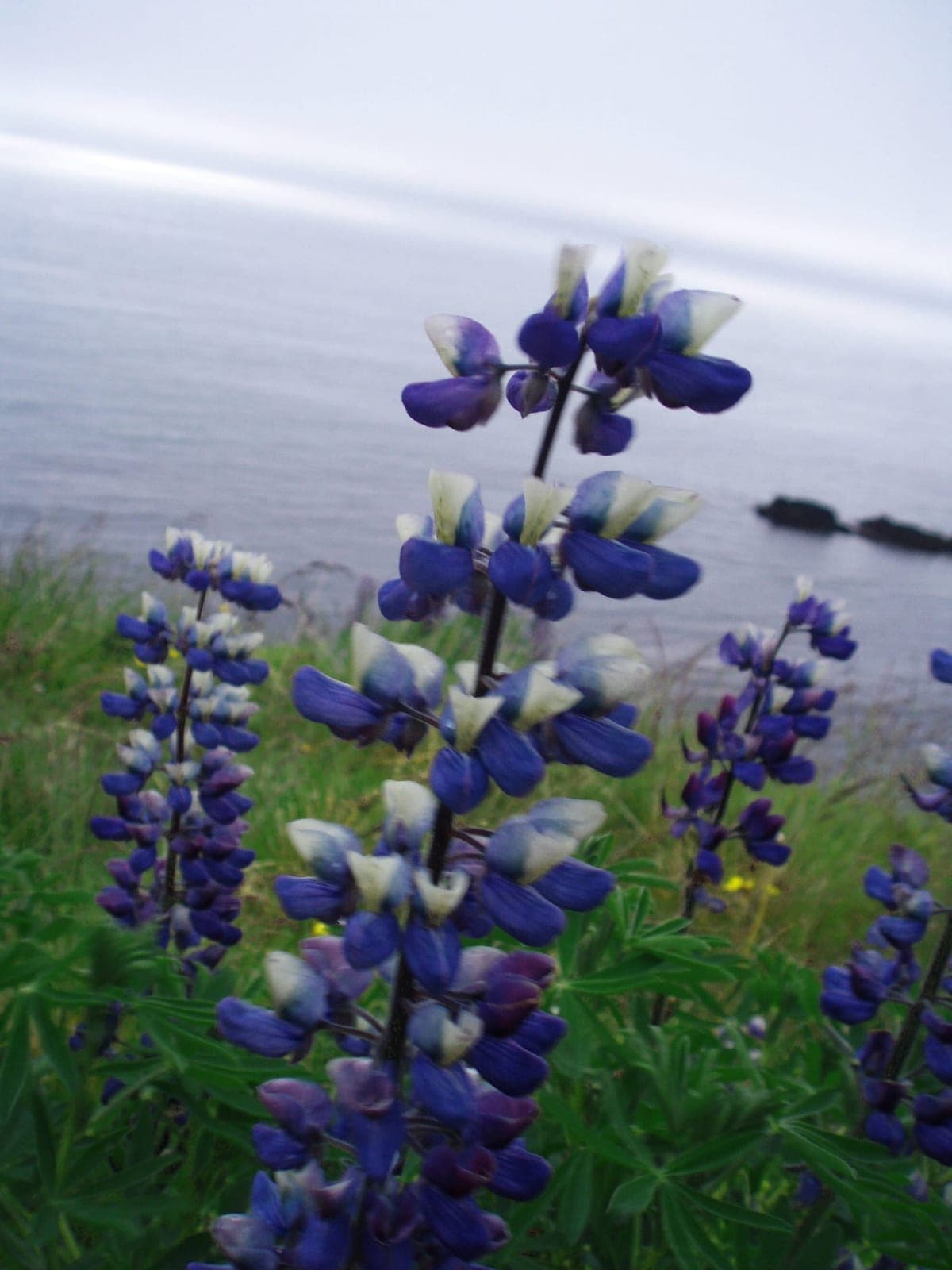
Nootka lupine is a cold-hardy perennial legume native to coastal bluffs, riverbanks, and subalpine slopes from Alaska through the Pacific Northwest. Stems reach 40–60 cm and carry palmately compound leaves topped by dense upright racemes of blue-purple flowers from late spring through midsummer. Few perennial lupines perform as reliably in zones 2–4, making it a practical choice for northern gardens and high-elevation landscapes.
Plants fix atmospheric nitrogen through root-nodule bacteria, gradually improving poor sandy or gravelly soils. Good drainage is the critical requirement; fertility is not. Seed coats are hard and germination improves significantly with scarification or a 12-hour warm-water soak before sowing. Lupines develop taproots early and resist transplanting; sow where plants are meant to stay. Once established, they self-seed freely and can naturalize into a persistent colony on open or disturbed ground.
Nootka lupine was deliberately introduced to Iceland in the mid-20th century to stabilize eroded volcanic soils and build organic matter, a role where its nitrogen-fixing ability proved highly effective. It spread well beyond planted areas and is now considered an ecological threat to native subarctic vegetation in Iceland and parts of Norway, where its vigorous growth suppresses lower-growing endemic species.
Ecoregions:TundraNorthwestern Forested MountainsMarine West Coast Forest
Lupin Anthracnose
Twisted, bending stems with sunken brown lesions; leaves develop dark spots and may collapse. Pink spore masses can appear on infected tissue in wet weather.
Remove and destroy infected plants. Use clean, treated seed and avoid overhead watering. Space plants for airflow and rotate planting sites to reduce spore buildup.
Powdery mildew
White or grey powdery coating on leaves - usually starting on older growth in humid conditions or when nights cool.
Improve air circulation by thinning plants. Apply neem oil or potassium bicarbonate spray at first sign. Avoid overhead watering.
Root rot
Plants wilt, yellow, and stunt even in moist soil; lower stems and roots turn brown, soft, and mushy and the plant may collapse. Most common in heavy, wet, or poorly drained ground.
Improve drainage and stop overwatering, and never plant too deep. Lift and destroy badly affected plants along with the soil around the roots. Grow in raised or free-draining beds to prevent it returning.
Damping Off
Seedlings collapse at the soil line with thin, water-soaked stems; seeds may fail to emerge or rot before sprouting.
Sow in well-draining mix, avoid overwatering, and ensure good airflow. Remove affected seedlings and let the surface dry between waterings.