
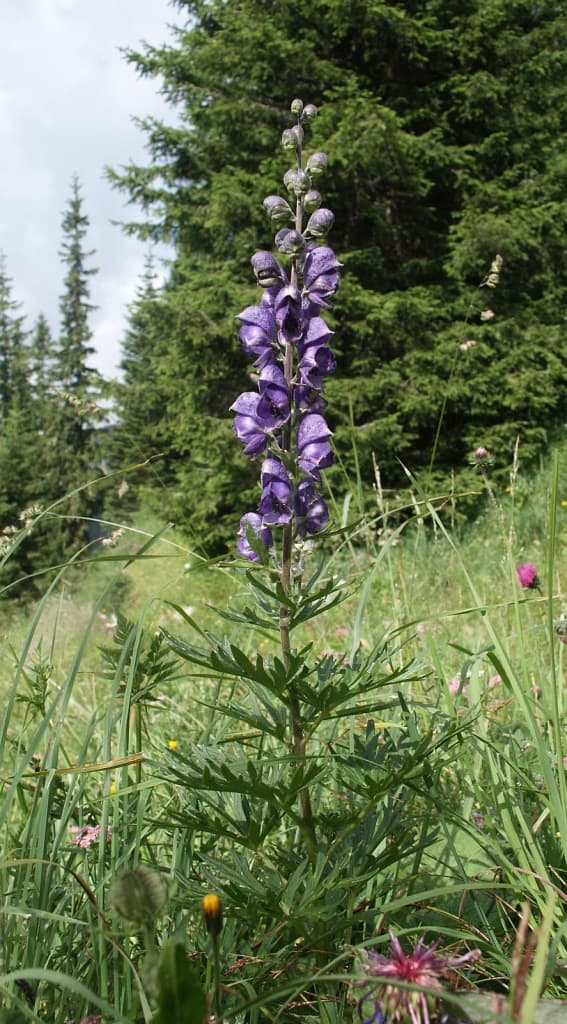
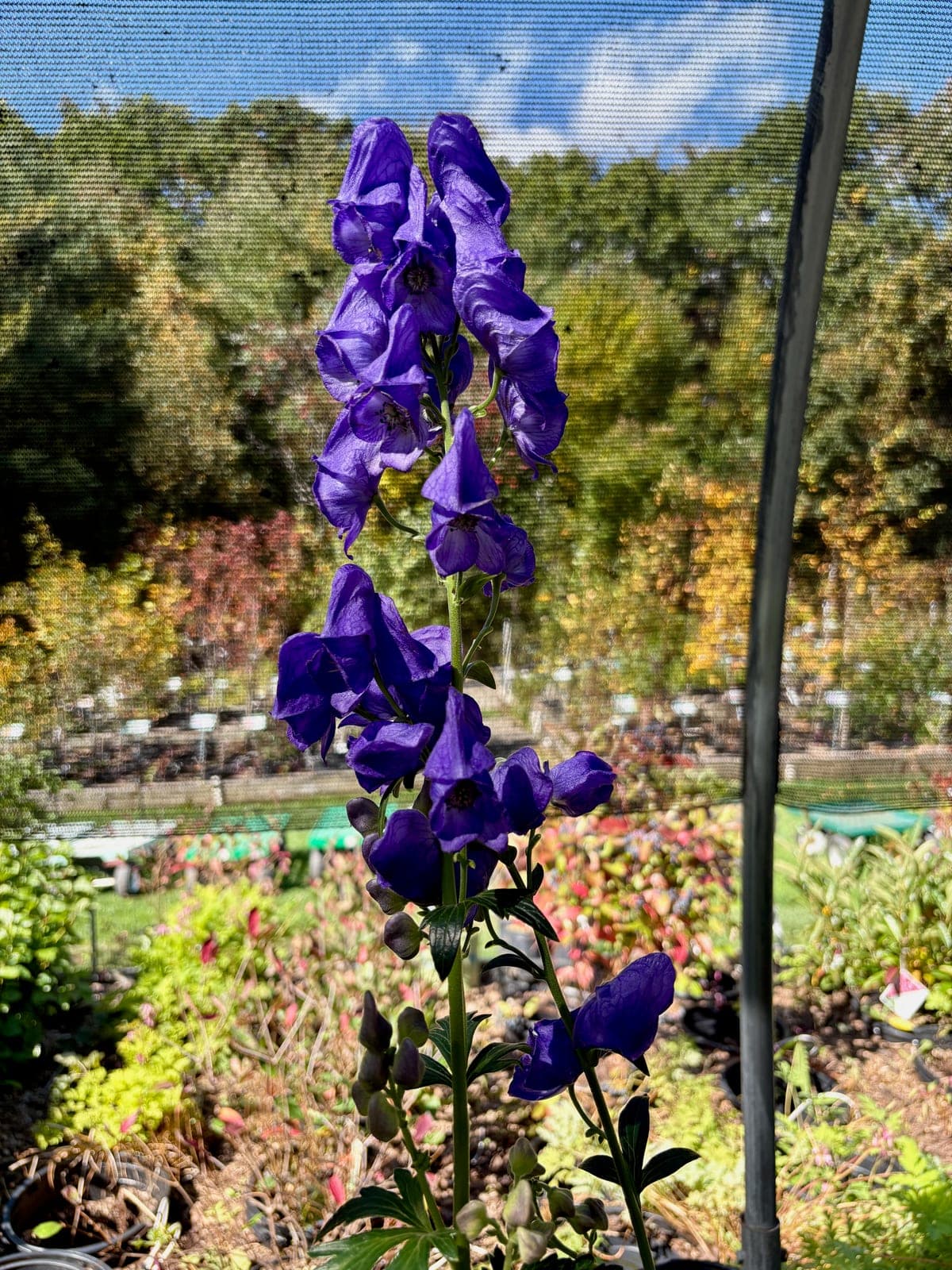
Monkshood is a long-lived perennial native to western and central Europe, grown for its deep purple-blue, hood-shaped flowers in late summer and fall. Few plants match that color at that point in the season, and it fills the late-season gap in partly shaded borders with reliable vertical structure.
All parts are acutely toxic - aconitine, the primary alkaloid, can penetrate intact skin - so gloves are mandatory whenever handling or dividing plants. Dispose of all trimmings in the trash, not the compost. Monkshood performs best in cool, moist conditions with rich, slightly acidic soil and declines quickly where summers are long and hot. Mulching the root zone helps maintain moisture and temperature. Established clumps benefit from division every three to four years to stay vigorous.
Aconitine has one of the longest documented records as a toxin in Europe and Asia, historically extracted for arrow tips and pest baits. European herbalists applied processed root preparations for neuralgia, gout, and rheumatism, though the margin between any active dose and a lethal one is exceptionally narrow. Related Asian species remain in traditional Chinese medicine, used only in strictly processed forms.
Powdery mildew
White or grey powdery coating on leaves - usually starting on older growth in humid conditions or when nights cool.
Improve air circulation by thinning plants. Apply neem oil or potassium bicarbonate spray at first sign. Avoid overhead watering.
Crown Rot
Lower leaves yellow and wilt; the base of the rosette turns brown and soft, sometimes with white fungal threads at the soil line. Plants collapse in wet conditions.
Remove and destroy affected plants. Improve drainage and avoid overhead watering. Do not mulch directly against the crown. Space plants for airflow and avoid replanting in the same wet spot.
Root rot
Plants wilt, yellow, and stunt even in moist soil; lower stems and roots turn brown, soft, and mushy and the plant may collapse. Most common in heavy, wet, or poorly drained ground.
Improve drainage and stop overwatering, and never plant too deep. Lift and destroy badly affected plants along with the soil around the roots. Grow in raised or free-draining beds to prevent it returning.
Botrytis (grey mould)
Grey fuzzy mould on petals and stems, worst in cool wet conditions.
Remove affected parts immediately. Improve air circulation. Avoid overhead watering. Apply copper fungicide if severe.