
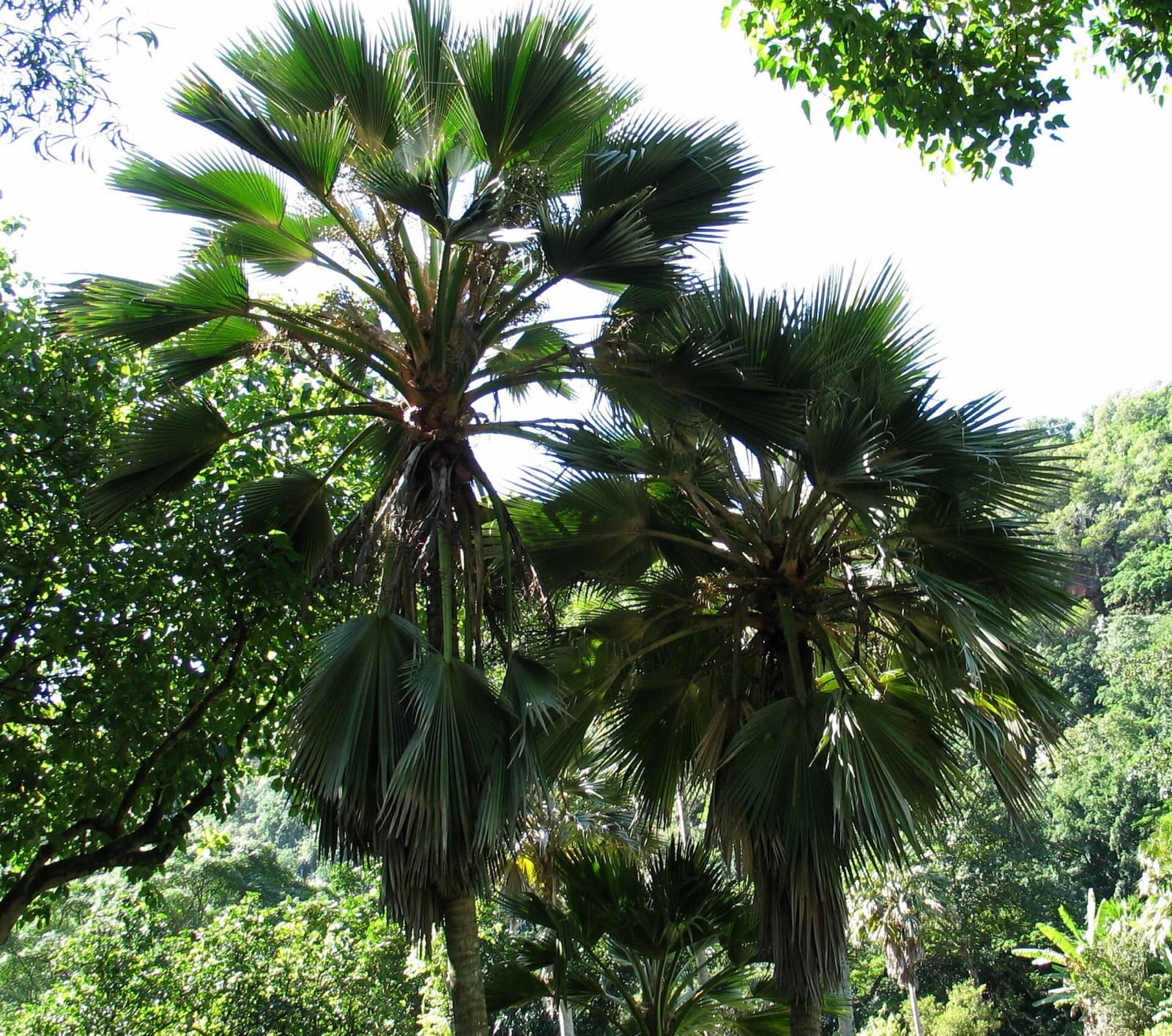
Loulu are the native fan palms of Hawaii. All of the Hawaiian Pritchardia species are endemic, and many are rare in the wild after centuries of land clearing, grazing and seed-eating rats. They have round, pleated fan leaves, a smooth ringed trunk and clusters of small cream flowers that mature into dark fruits. Traditionally the leaves were used for thatch, fans and hats, and the young fruit was eaten.
This entry covers Pritchardia hillebrandii, a good-looking garden species; the care is much the same for the other Hawaiian loulu. They are slow but steady, and they do best in full sun to light shade, in rich well-drained soil with regular water in their first years. Mature palms tolerate wind and some salt. Fresh seed germinates in a couple of months in a warm, shaded bed; dried seed is slow or fails. Wear gloves when cleaning up old leaf bases, and trim only fronds that are fully brown.
Buy nursery-grown plants from a licensed local source rather than collecting from the wild.
Lethal Yellowing
Premature drop of immature fruit is the first sign, followed by blackening and collapse of the newly emerging spear leaf. All fronds then yellow progressively from the base upward; the palm typically dies within 3–5 months of first symptoms.
No cure exists once symptoms appear. Preventive trunk injections of oxytetracycline hydrochloride every 3–4 months can protect high-value specimens in areas with confirmed disease pressure. Remove and destroy infected palms promptly to limit spread via planthopper vectors. Sabal palmetto has moderate natural resistance compared to coconut palm but is not immune.
Graphiola Leaf Spot (False Smut)
Small, hard, dark brown to black wart-like pustules erupt from both surfaces of fronds, often ringed by yellow halos. Heavily infected fronds yellow and die back prematurely.
Remove and destroy heavily infected fronds. Improve air circulation around the crown by pruning adjacent vegetation. Apply copper-based fungicide in spring as new growth emerges and repeat monthly through the growing season if infection pressure remains high.
Ganoderma Butt Rot
White rot of heartwood at the base and lower trunk. Large, hard, shelf-like bracket fungi with a shiny reddish-brown upper surface and cream-colored pore surface appear at or near the soil line. Infected trees lose structural integrity with little visible external warning until failure.
No effective chemical treatment once established. Remove and destroy conks before they release spores. Have a certified arborist assess structural risk; removal is often required for trees near structures or high-traffic areas. Prevent infection by avoiding root collar wounds, reducing soil compaction, and maintaining tree health.
Root rot
Plants wilt, yellow, and stunt even in moist soil; lower stems and roots turn brown, soft, and mushy and the plant may collapse. Most common in heavy, wet, or poorly drained ground.
Improve drainage and stop overwatering, and never plant too deep. Lift and destroy badly affected plants along with the soil around the roots. Grow in raised or free-draining beds to prevent it returning.