
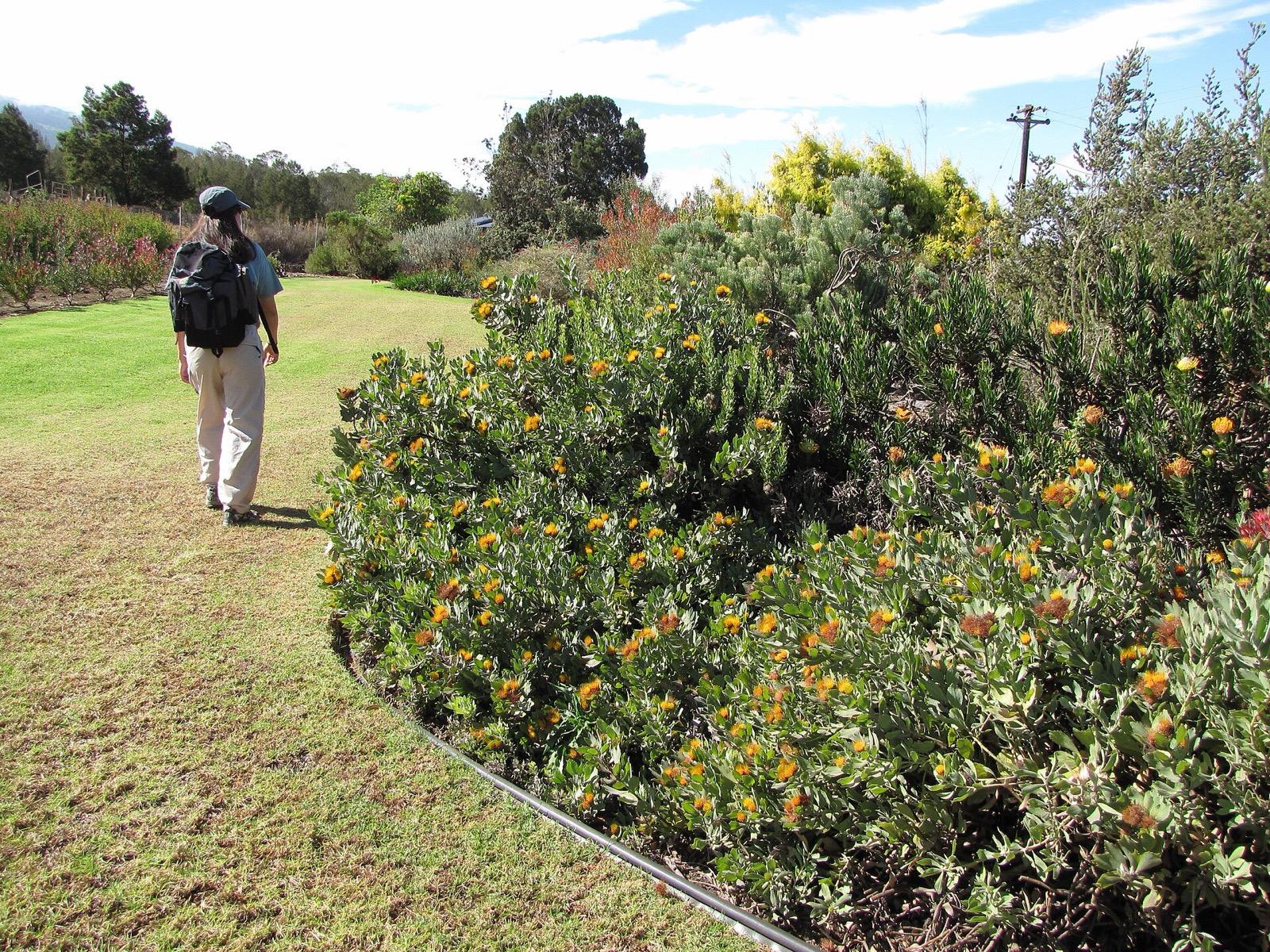
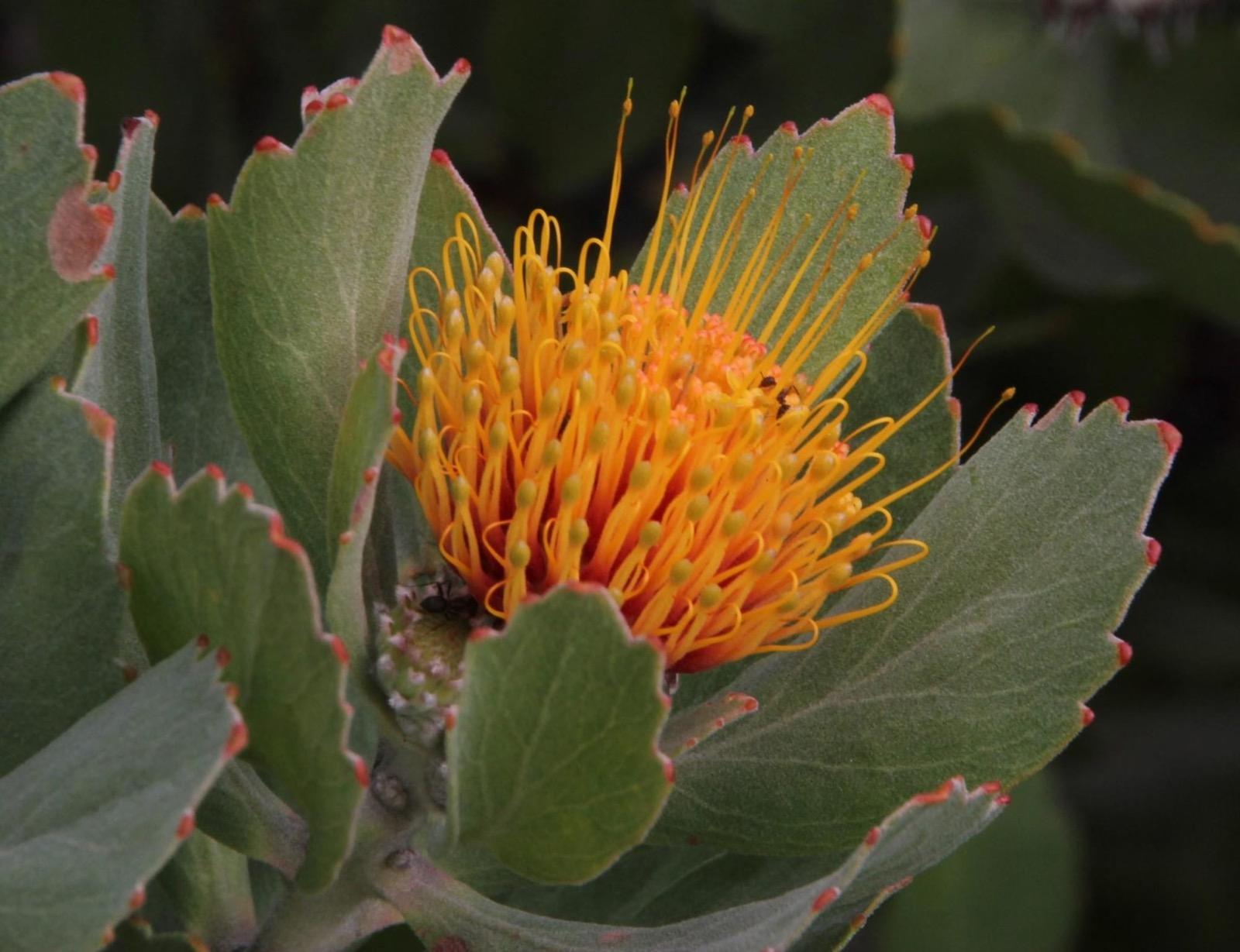
Leucospermum mundii is a compact evergreen shrub native to fynbos in the Langeberg mountains of South Africa's Western Cape, reaching 20–40 in tall. It produces circular flower heads in shades of pale yellow to deep crimson, with long styles protruding from each head in a pincushion arrangement. Clusters of three to ten heads appear per stem, and the long-lasting cut stems are valued in the floral trade.
Native fynbos soils are acidic, nutrient-poor, and sharply drained, with wet winters and dry summers - conditions that must be matched in cultivation. Excellent drainage is non-negotiable. Phosphorus-rich fertilizers damage Proteaceae root systems; use only low-phosphorus formulations made for Proteaceae, or avoid fertilizing entirely. Keep mulch away from the stem base to prevent crown moisture buildup, and water established plants infrequently, allowing the soil to dry between waterings.
The protruding styles are adapted for pollination by nectar-feeding birds - sunbirds in South Africa, hummingbirds in California gardens. It works well as a focal-point shrub in low-water, Mediterranean-climate designs where few other plants produce equally bold flower heads.
These dates are for Zone 6b. Enter your ZIP to time every job to your own frost dates.
- buy · Feb 13 - Feb 27Buy plants - about two months before planting out
- plant · Apr 24 - May 8Plant into lean, acidic, fast-draining soil with no added compost or fertilizer; mound the bed if water sits after rain
- cut · May 8 - May 22Cut spent flower heads back to just above leafy growth to keep the bush compact; never cut into bare wood
- watch · Any time in springNever use a fertilizer with phosphorus; proteas are poisoned by it and yellow, then die
- watch · Any time in summerWater deeply but rarely the first two summers, then only in long droughts
Problems & troubleshooting
Common problems
Phytophthora Root Rot
Wilting despite moist soil, yellowing leaves, stunted growth, and dark, decayed roots and crown tissue. Vines may collapse during hot weather.
Plant in well-draining soil and avoid waterlogging. Remove and destroy affected vines. Improve drainage with raised beds or amended soil and avoid overwatering.
Botrytis (grey mould)
Grey fuzzy mould on petals and stems, worst in cool wet conditions.
Remove affected parts immediately. Improve air circulation. Avoid overhead watering. Apply copper fungicide if severe.