
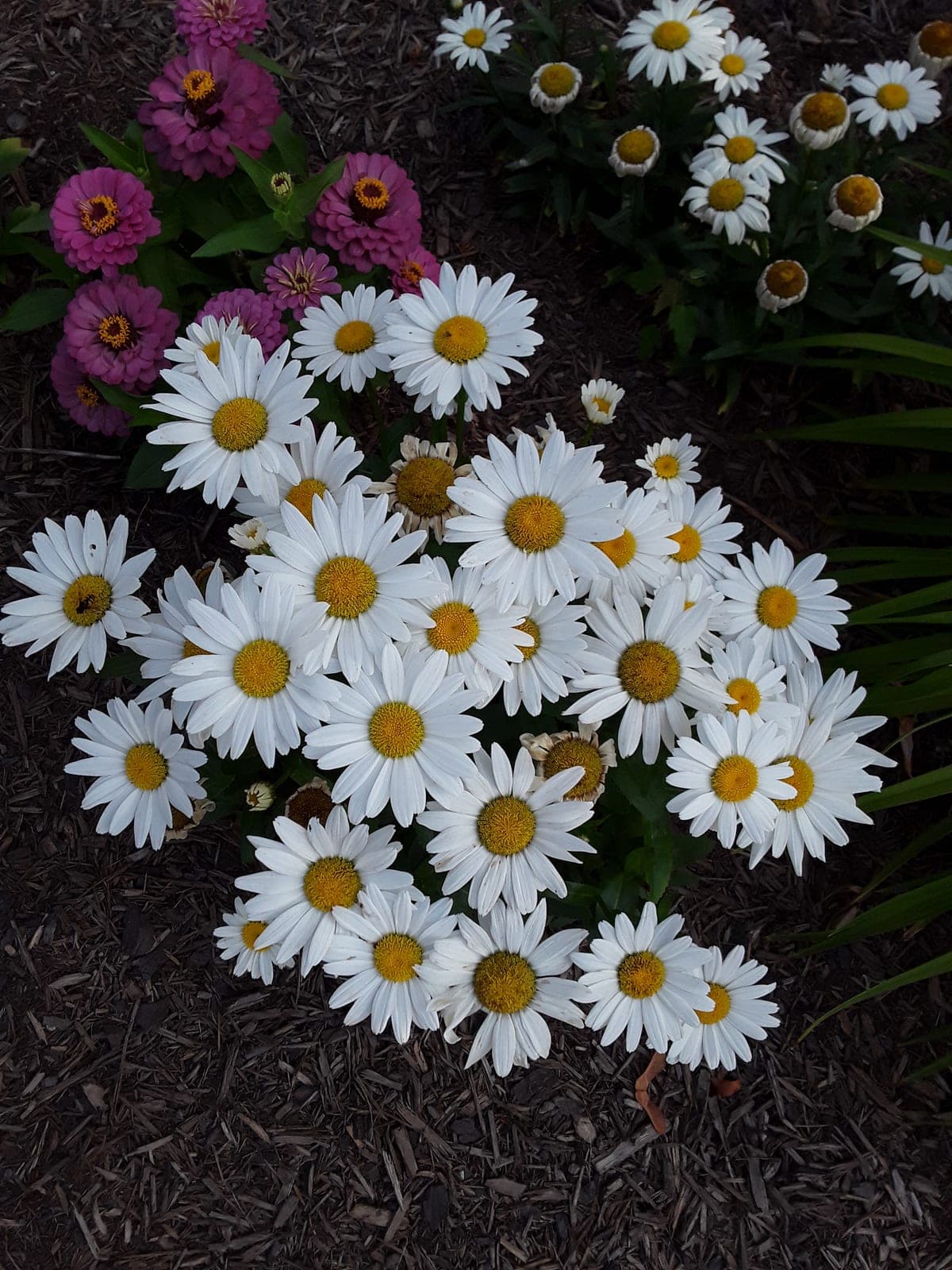
Shasta Daisy is a rewarding perennial that rewards a bit of thoughtful preparation at planting time. Start with well-drained soil - this plant's number one enemy is wet feet over winter, so if your garden holds moisture, work in generous amounts of grit or coarse sand before planting. A moderately fertile loam is ideal; avoid over-enriching with nitrogen or you'll get lush foliage at the expense of flowers. Direct sow outdoors in early spring once the soil can be worked, pressing seeds lightly into the surface since they need light to germinate. Alternatively, plant nursery divisions in spring or early fall, spacing them around 18–24 inches apart to allow for their eventual spread. The most common mistakes are planting in poorly drained spots, allowing the crown to be buried too deeply, and neglecting to divide clumps every two to three years - older clumps go woody in the centre and bloom poorly, so lift, divide, and replant the vigorous outer sections to keep plants thriving.
Beyond the garden, Leucanthemum superbum shares a family heritage with medicinal daisies, and in traditional European herbalism, preparations from related Leucanthemum species were used as mild antiseptics, applied as poultices to minor wounds and skin irritations, and taken as simple teas to help manage fever and calm spasms. While Shasta Daisy is not a culinary herb in any mainstream tradition, the petals are technically edible and have been scattered over salads in the way of other edible flower petals - though the flavour is mild and slightly bitter, so use sparingly if you try it. As a garden companion, Shasta Daisy pairs beautifully with yarrow and calendula, which share its preference for sunny, well-drained spots and together create a long season of colour while supporting a wide range of beneficial insects throughout summer and into fall.