
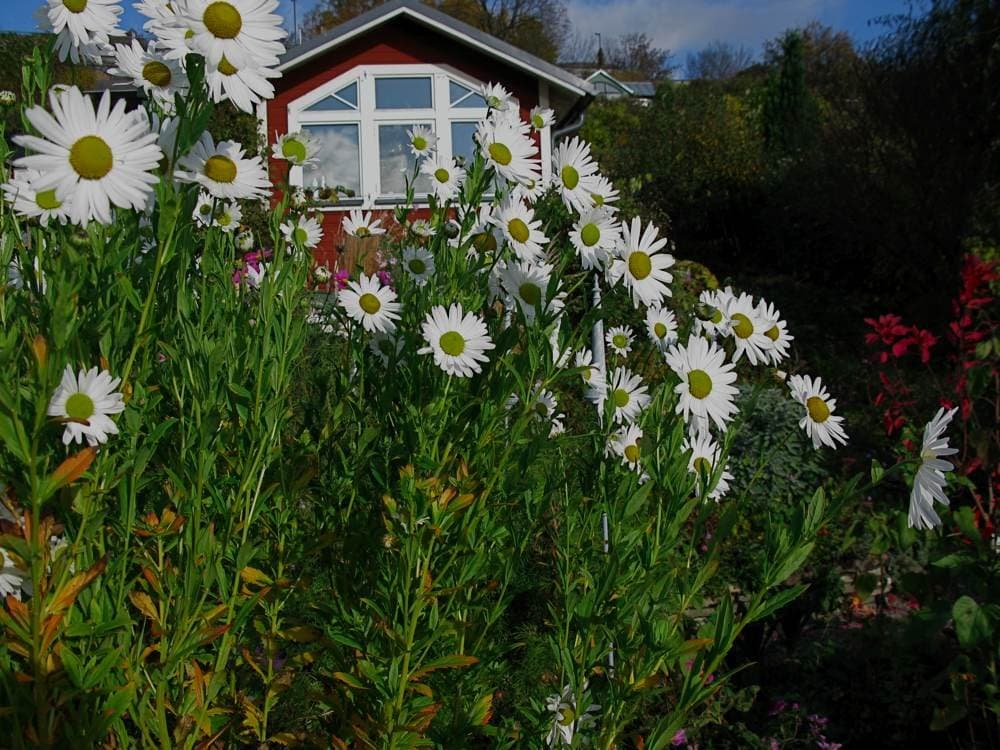
Leucanthemella serotina is a tall, rhizomatous perennial native to river floodplains and wet meadows across Central and Eastern Europe. In gardens it reaches 5–6 feet and carries white-rayed, greenish-yellow-centered daisy-type flowers through September and October, providing structure and color when most other perennials have finished. It holds the RHS Award of Garden Merit.
Plants spread steadily by rhizomes and benefit from division every three to four years to maintain vigor and prevent overcrowding. Stems require staking or neighbor support before midsummer, especially in rich soil. The species naturalizes well along pond margins, meadow edges, and the back of deep borders. Consistent soil moisture during the growing season prevents premature leaf scorch; a soil pH of 6–7 suits it best. Mulching in cold zones protects the crown through winter.
The late-season flowers are a documented forage source for bees and hoverflies during a period when few other species are in bloom.
Powdery mildew
White or grey powdery coating on leaves - usually starting on older growth in humid conditions or when nights cool.
Improve air circulation by thinning plants. Apply neem oil or potassium bicarbonate spray at first sign. Avoid overhead watering.
Fungal leaf spot
Brown or purplish spots on the leaves, often ringed with a yellow halo, that spread and merge in warm, humid, or wet weather; heavily spotted leaves yellow and drop early.
Pick off spotted leaves and clear fallen debris to remove overwintering spores. Improve air circulation by thinning, and water at the base so foliage dries quickly. If it persists, apply a copper- or sulfur-based fungicide at the first sign.
Botrytis (grey mould)
Grey fuzzy mould on petals and stems, worst in cool wet conditions.
Remove affected parts immediately. Improve air circulation. Avoid overhead watering. Apply copper fungicide if severe.
Aster Yellows
Deformed, greenish flowers, stunted growth, and yellowed foliage. Flower centers may produce tufts of leafy growth instead of normal petals.
No cure. Remove and destroy infected plants immediately to stop spread. Control leafhoppers, which transmit the disease, and remove nearby weed hosts.