
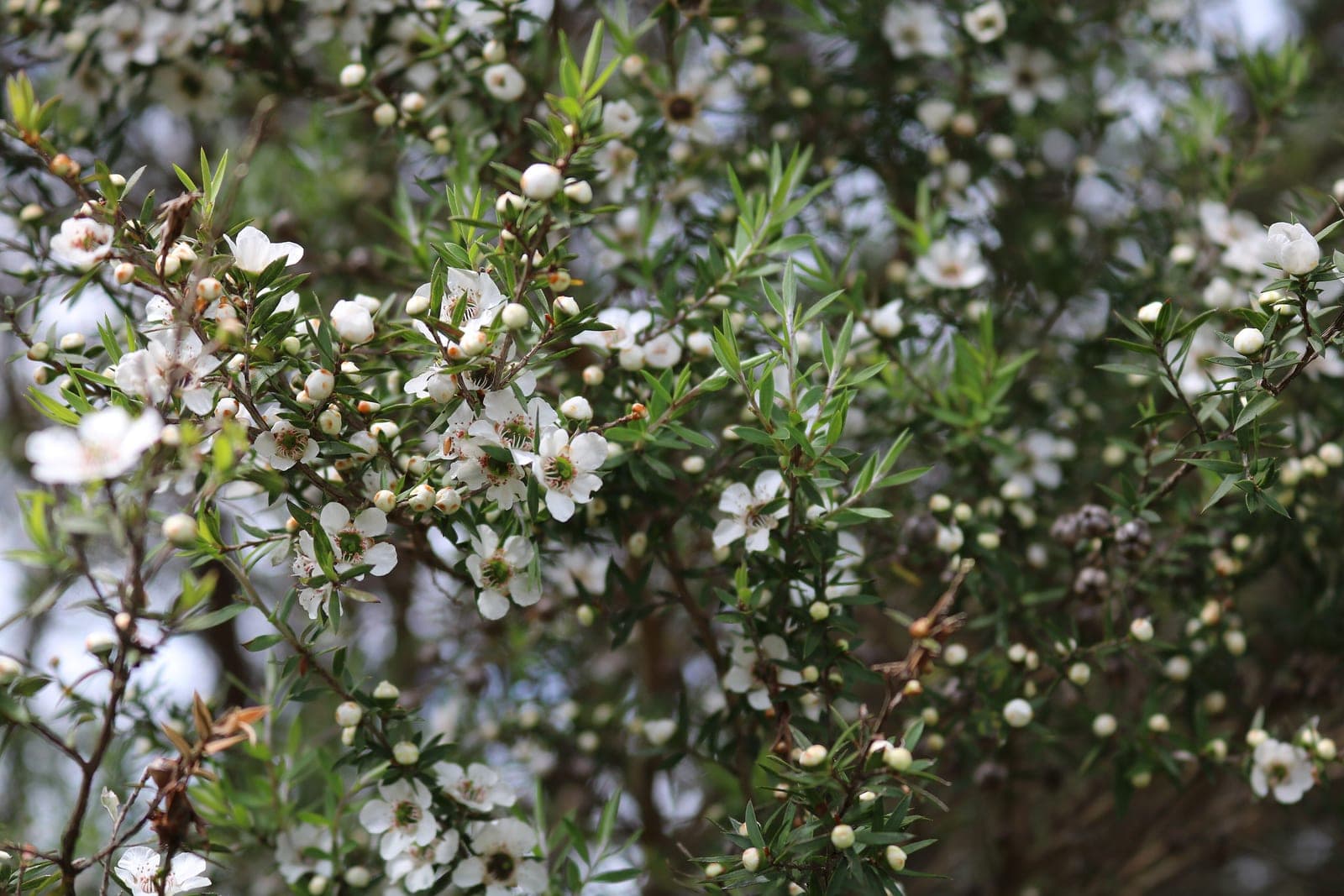
Leptospermum scoparium is an evergreen shrub or small tree native to New Zealand and southeastern Australia, grown for its dense, heath-like foliage and profuse small flowers that range from white through pink to deep red depending on cultivar. It is the primary nectar source for mānuka honey and supports bees over an extended season.
Plants perform best in full sun with sharp drainage and tolerate coastal salt spray and moderate drought once established. Slightly acidic, low-nutrient soil suits them well; heavy clay and high-phosphorus fertilizers should both be avoided. Prune only into the current season's growth after the main flush - cutting back to old bare wood rarely regenerates. In zone 9, planting against a sheltered wall extends hardiness, and a dry mulch over the root zone buffers brief cold spells.
Māori used bark and leaf decoctions traditionally for fever, urinary complaints, and as a topical analgesic. The leaf essential oil contains leptospermone and flavesone, compounds with demonstrated antimicrobial and antifungal activity in laboratory studies. Mānuka honey, produced from the flowers, contains elevated methylglyoxal (MGO) responsible for its clinically documented antibacterial properties; it is registered in licensed wound-care products in multiple countries.
Myrtle Rust
Bright yellow-orange powdery pustules erupt on young shoots, leaves, and buds. Heavily infected growing tips become distorted, stunted, or killed. Older leaves develop smaller, darker brown pustules as infection matures.
Remove and destroy infected plant material immediately. Apply fungicides containing myclobutanil or mancozeb at first appearance of pustules and repeat on label schedule. Avoid overhead irrigation. Monitor new growth closely during warm, humid weather, when the pathogen spreads most rapidly.
Phytophthora Root Rot
Wilting despite moist soil, yellowing leaves, stunted growth, and dark, decayed roots and crown tissue. Vines may collapse during hot weather.
Plant in well-draining soil and avoid waterlogging. Remove and destroy affected vines. Improve drainage with raised beds or amended soil and avoid overwatering.
Powdery mildew
White or grey powdery coating on leaves - usually starting on older growth in humid conditions or when nights cool.
Improve air circulation by thinning plants. Apply neem oil or potassium bicarbonate spray at first sign. Avoid overhead watering.