
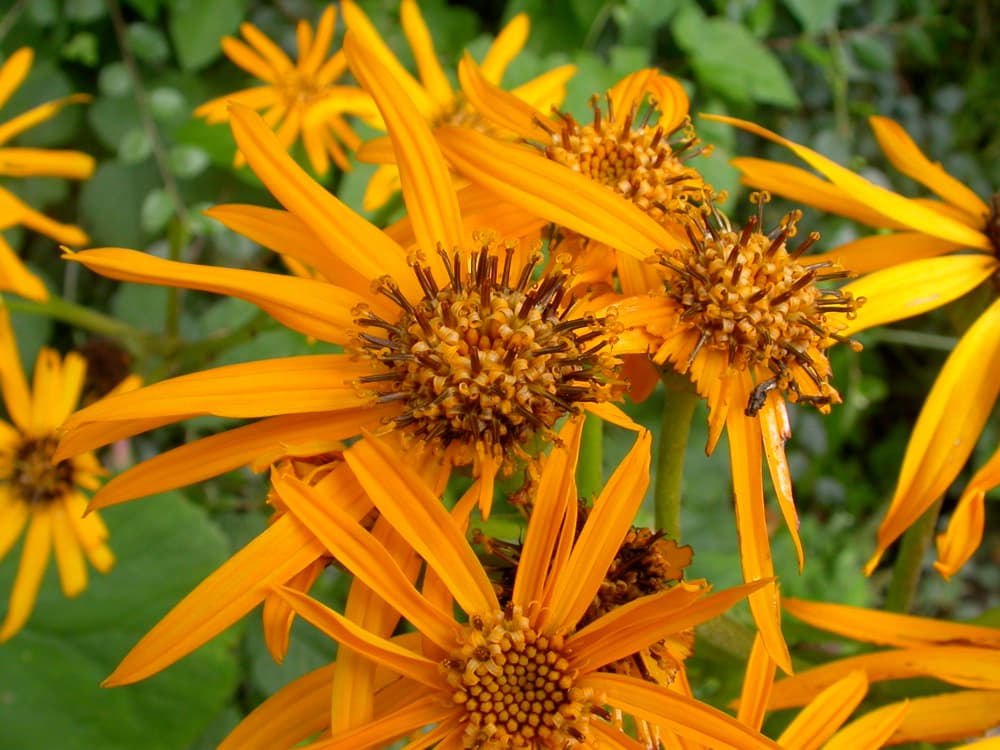
Ligularia dentata is a large, clump-forming perennial native to China and Japan, grown for its bold, kidney-shaped leaves that can span 12–20 inches across. Cultivars such as 'Britt-Marie Crawford' and 'Othello' carry deep bronze or purple foliage that holds visual weight throughout the growing season. Orange-yellow daisy-type flowers rise on branched stems in late summer.
This species wilts dramatically in afternoon heat or direct sun even when soil moisture is adequate - a known physiological response rather than a sign of drought stress; plants recover by evening without intervention. It performs best in cool, humid settings with consistently moist soil: woodland edges, bog margins, and streamside strips. Humus-rich soil and a thick mulch layer moderate root temperature and reduce moisture loss through dry spells. In zones 4–5, crown mulching after hard frost improves winter survival.
Crown Rot
Lower leaves yellow and wilt; the base of the rosette turns brown and soft, sometimes with white fungal threads at the soil line. Plants collapse in wet conditions.
Remove and destroy affected plants. Improve drainage and avoid overhead watering. Do not mulch directly against the crown. Space plants for airflow and avoid replanting in the same wet spot.
Root rot
Plants wilt, yellow, and stunt even in moist soil; lower stems and roots turn brown, soft, and mushy and the plant may collapse. Most common in heavy, wet, or poorly drained ground.
Improve drainage and stop overwatering, and never plant too deep. Lift and destroy badly affected plants along with the soil around the roots. Grow in raised or free-draining beds to prevent it returning.
Botrytis (grey mould)
Grey fuzzy mould on petals and stems, worst in cool wet conditions.
Remove affected parts immediately. Improve air circulation. Avoid overhead watering. Apply copper fungicide if severe.
Fungal leaf spot
Brown or purplish spots on the leaves, often ringed with a yellow halo, that spread and merge in warm, humid, or wet weather; heavily spotted leaves yellow and drop early.
Pick off spotted leaves and clear fallen debris to remove overwintering spores. Improve air circulation by thinning, and water at the base so foliage dries quickly. If it persists, apply a copper- or sulfur-based fungicide at the first sign.
Powdery mildew
White or grey powdery coating on leaves - usually starting on older growth in humid conditions or when nights cool.
Improve air circulation by thinning plants. Apply neem oil or potassium bicarbonate spray at first sign. Avoid overhead watering.