
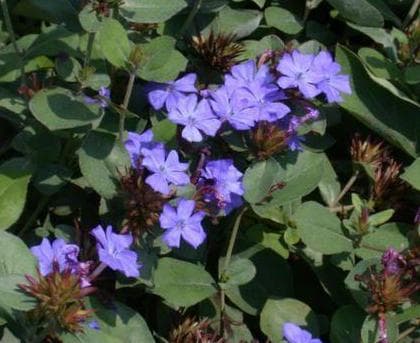
Ceratostigma plumbaginoides is a low rhizomatous perennial native to western China, grown as a groundcover for its intense cobalt-blue flowers in late summer and fall combined with simultaneous red-bronze foliage. It is one of the few groundcovers with strong ornamental value at the end of the growing season, when most perennials have finished.
The plant spreads by underground rhizomes to form a weed-suppressing mat 6–12 inches tall. A critical trait is its very late spring emergence-crowns break dormancy several weeks after most perennials, so mark planting locations to avoid inadvertent digging. Full sun produces the most flowers and the richest fall color; part shade is tolerated. Well-drained soil is essential, as prolonged wet roots cause crown rot. Apply light mulch over crowns in zone 5 to improve winter survival. Established plants are drought-tolerant and spread aggressively enough to outcompete most weeds over time.
Root rot
Plants wilt, yellow, and stunt even in moist soil; lower stems and roots turn brown, soft, and mushy and the plant may collapse. Most common in heavy, wet, or poorly drained ground.
Improve drainage and stop overwatering, and never plant too deep. Lift and destroy badly affected plants along with the soil around the roots. Grow in raised or free-draining beds to prevent it returning.
Fungal leaf spot
Brown or purplish spots on the leaves, often ringed with a yellow halo, that spread and merge in warm, humid, or wet weather; heavily spotted leaves yellow and drop early.
Pick off spotted leaves and clear fallen debris to remove overwintering spores. Improve air circulation by thinning, and water at the base so foliage dries quickly. If it persists, apply a copper- or sulfur-based fungicide at the first sign.
Powdery mildew
White or grey powdery coating on leaves - usually starting on older growth in humid conditions or when nights cool.
Improve air circulation by thinning plants. Apply neem oil or potassium bicarbonate spray at first sign. Avoid overhead watering.