
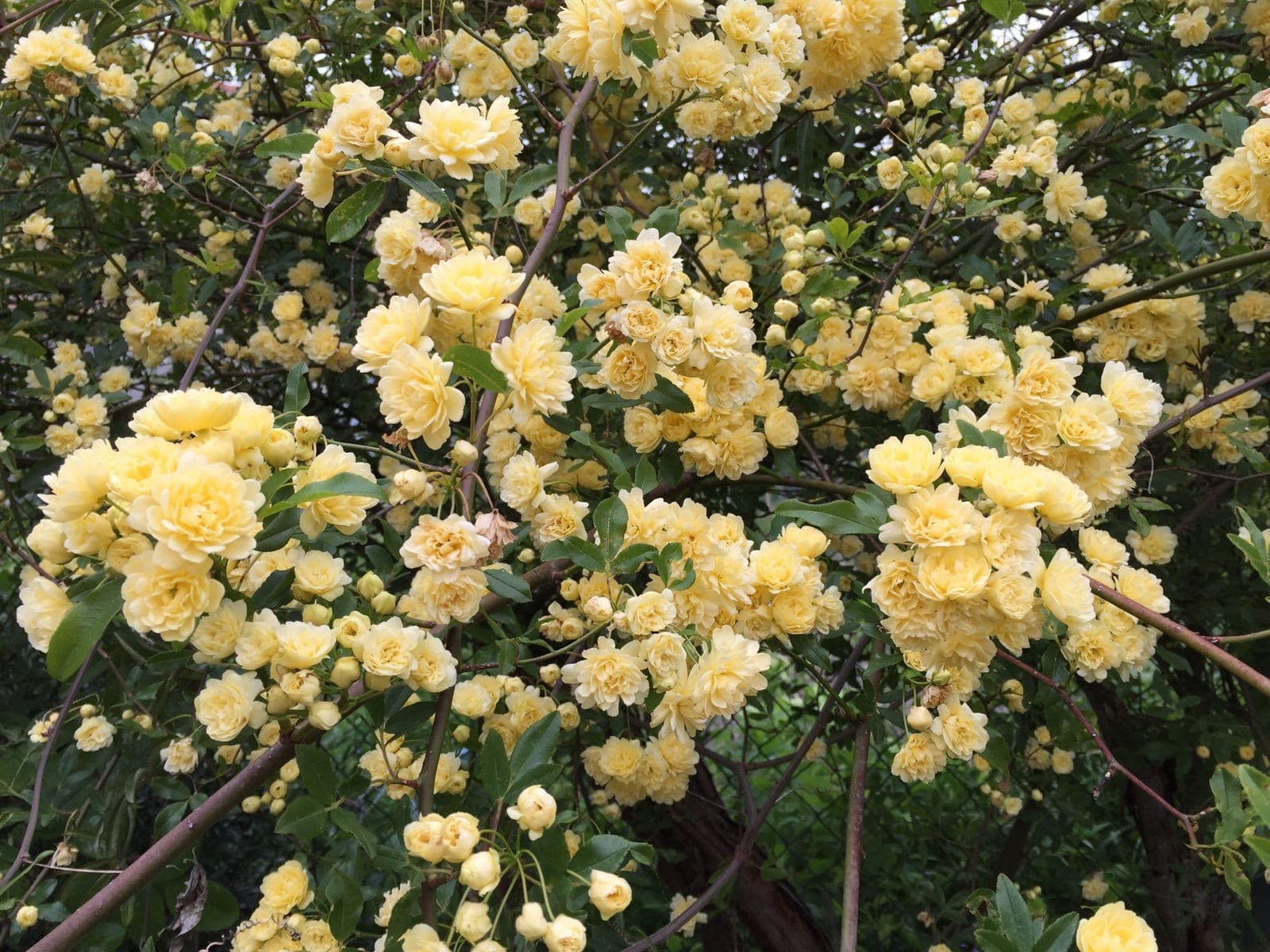
Lady Banks Rose is a large, vigorous climbing rose native to China, grown for one spectacular event each year rather than repeat bloom: a single dense spring flush of small, double, butter-yellow flowers borne in cascading clusters along nearly every stem. 'Lutea' is the most widely planted form in American gardens - a fully double yellow with essentially no fragrance, as opposed to the fragrant white 'Alba Plena'.
Unlike almost every other rose, its canes are nearly thornless, which makes it far more pleasant to train, prune, and walk past than a typical climbing rose. It's also one of the most trouble-free roses available - remarkably resistant to blackspot and the fungal issues that plague modern hybrids, needing no spray program to stay healthy in most climates. Given a sturdy arbor, pergola, or wall to climb, a single plant can eventually cover an enormous area; the famous specimen in Tombstone, Arizona, documented as the world's largest rose bush, covers roughly 9,000 square feet from one original planting.
Because it flowers only on old wood from the previous season, pruning timing matters more than for repeat-blooming roses: any hard cutback must happen immediately after the spring bloom, never in the dormant season, or the coming year's flower display is lost.
Growing roses? Read the Rose Care Calendar - pruning by class, feeding, pests, climbers, and growing for hips, timed to your frost dates.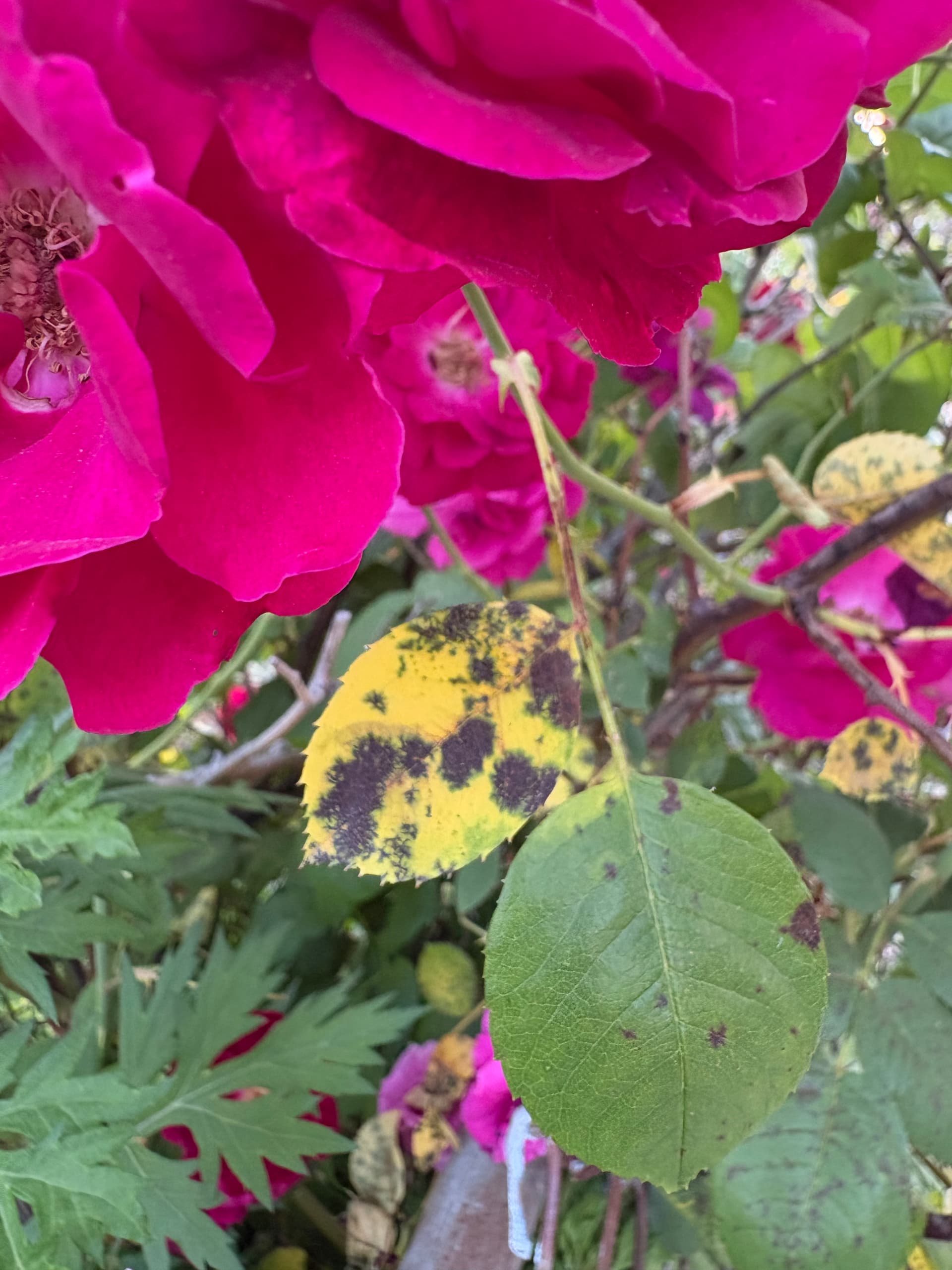
Yellow spot (rose rust)
Bright yellow spots on the upper surface of leaves, with orange-yellow powdery pustules on the underside. Leaves may drop prematurely. Worst in cool, wet springs.
Remove and bin all affected leaves - do not compost. Apply a systemic fungicide (myclobutanil or trifloxystrobin) at first sign and repeat every 10–14 days. Spray preventively from early spring before infection takes hold. Improve air circulation by pruning to an open centre.
Aphids
Aphididae →Clusters of small soft insects on new growth and flower buds.
Knock off with a strong jet of water. Ladybirds and lacewings are natural predators. Insecticidal soap as last resort.