
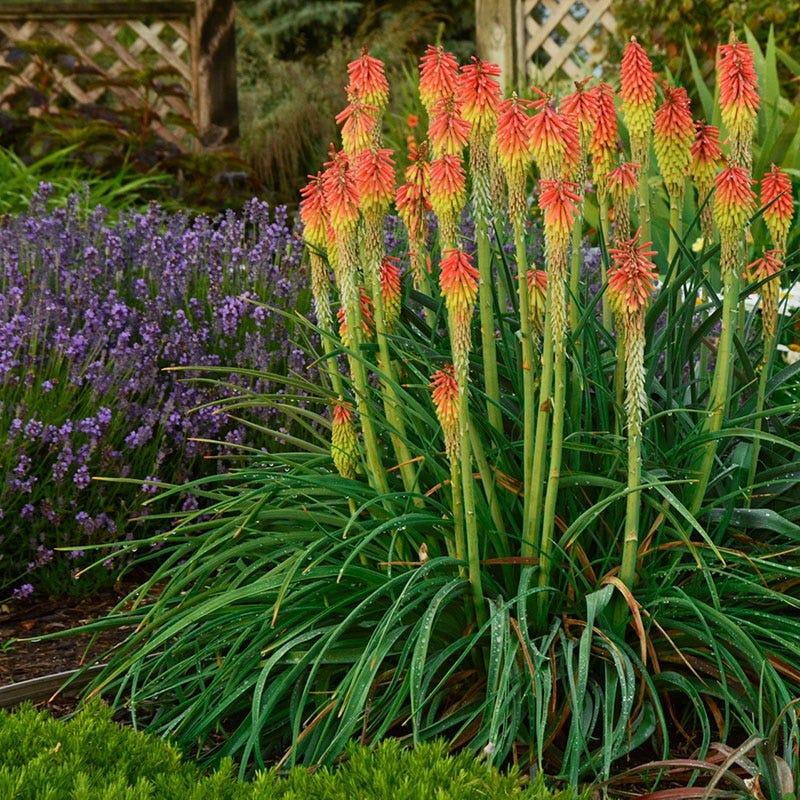
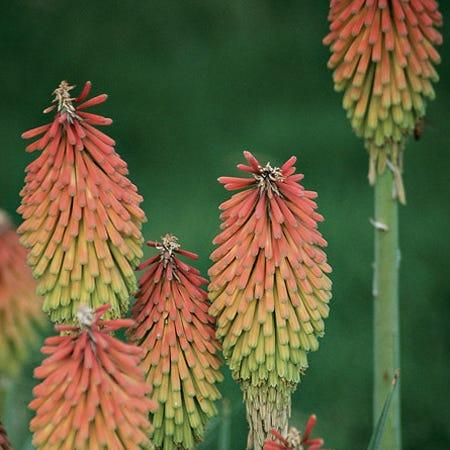
Kniphofia hirsuta 'Fire Dance' is a compact, clump-forming perennial from the Drakensberg mountains of South Africa. It produces bicolored torches - red-orange at the tip graduating to yellow at the base - on upright stems above narrow, slightly hairy, grass-like foliage. At 12–18 inches in bloom, it fits front-of-border placements and containers where full-sized kniphofias would overwhelm the space.
It demands full sun and sharply drained soil; the species name hirsuta refers to the rougher, hairier leaves that contribute to its greater cold tolerance compared to most kniphofias, allowing reliable survival in Zone 5. Crown rot from waterlogged soil is the primary threat - planting on a gentle slope or in a raised bed prevents water from pooling at the crown. Established plants are drought tolerant and rarely need supplemental fertilizer. Divide clumps every three to four years to maintain vigor. In Zones 5–6, fold the foliage over the crown in late fall and secure it loosely; this insulation layer protects dormant growth through winter better than hard cutting.
The nectar-rich flowers reliably attract hummingbirds and long-tongued bees across the summer season, making 'Fire Dance' a productive addition to wildlife-focused plantings.
These dates are for Zone 6b. Enter your ZIP to time every job to your own frost dates.
- buy · Nov 21 - Dec 5Order seed - about two months before sowing
- sow · Jan 30 - Feb 13Sow seed indoors; if nothing emerges after 3-4 weeks, chill the tray for 2-4 weeks and bring it back to warmth
- buy · Feb 13 - Feb 27Buy plants - about two months before planting out
- plant · Apr 24 - May 8Plant out seedlings or nursery plants once the soil has warmed, crown slightly proud of grade
- cut · Any time in summerCut spent spikes at the base to keep the clump tidy
Problems & troubleshooting
Common problems
Crown Rot
Lower leaves yellow and wilt; the base of the rosette turns brown and soft, sometimes with white fungal threads at the soil line. Plants collapse in wet conditions.
Remove and destroy affected plants. Improve drainage and avoid overhead watering. Do not mulch directly against the crown. Space plants for airflow and avoid replanting in the same wet spot.
Root rot
Plants wilt, yellow, and stunt even in moist soil; lower stems and roots turn brown, soft, and mushy and the plant may collapse. Most common in heavy, wet, or poorly drained ground.
Improve drainage and stop overwatering, and never plant too deep. Lift and destroy badly affected plants along with the soil around the roots. Grow in raised or free-draining beds to prevent it returning.
Fungal leaf spot
Brown or purplish spots on the leaves, often ringed with a yellow halo, that spread and merge in warm, humid, or wet weather; heavily spotted leaves yellow and drop early.
Pick off spotted leaves and clear fallen debris to remove overwintering spores. Improve air circulation by thinning, and water at the base so foliage dries quickly. If it persists, apply a copper- or sulfur-based fungicide at the first sign.