
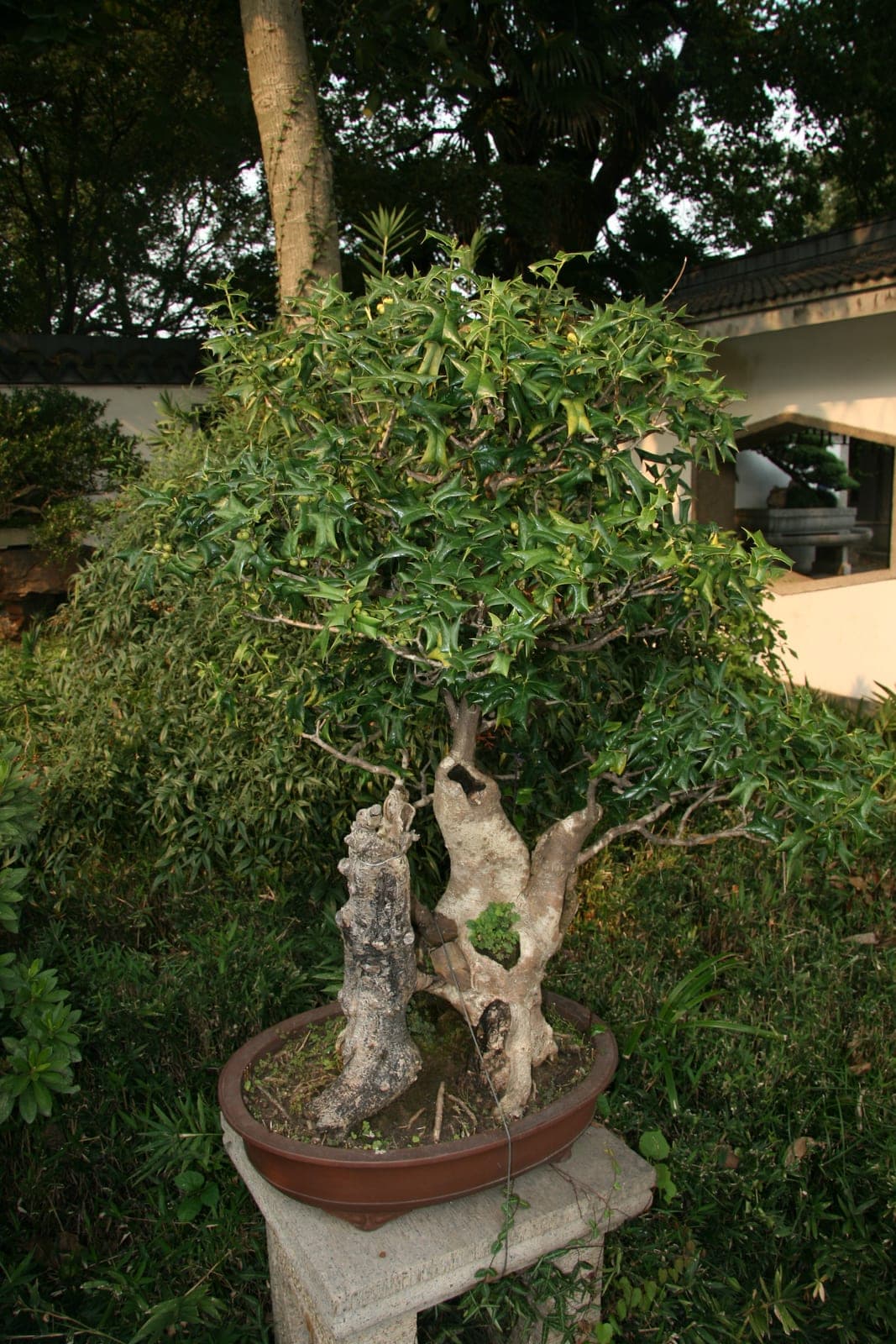
Chinese holly is a slow-growing, dense evergreen shrub native to eastern China and Korea. Its leaves are nearly rectangular with five sharp corner spines - a shape distinct from most other commonly grown hollies. Large, glossy red berries ripen in fall and persist through winter, providing food for birds and extending ornamental interest well into the cold months. The plant functions effectively as a foundation planting, clipped hedge, or thorny barrier where spiny foliage is an asset.
It tolerates heat and drought better than most hollies once established, performing reliably across the humid Southeast and into the lower mid-Atlantic. Slightly acidic, well-drained soil suits it best; a layer of organic mulch over the root zone maintains moisture and moderates soil pH. Many cultivars, including 'Burfordii', set fruit without a male pollinator, while the straight species and numerous other selections require a compatible male plant nearby for consistent berry production. Heavy shade reduces berry set and loosens the tight, dense form that makes this shrub useful for screens and formal hedges.
Holly Tar Spot
Yellow spots appear on upper leaf surfaces in early summer and enlarge into raised, black, tar-like lesions by late summer; infected leaves drop early.
Rake and dispose of all fallen leaves in autumn to eliminate overwintering spores. Apply a copper-based fungicide at bud break if infection was heavy the prior season.
Fungal leaf spot
Brown or purplish spots on the leaves, often ringed with a yellow halo, that spread and merge in warm, humid, or wet weather; heavily spotted leaves yellow and drop early.
Pick off spotted leaves and clear fallen debris to remove overwintering spores. Improve air circulation by thinning, and water at the base so foliage dries quickly. If it persists, apply a copper- or sulfur-based fungicide at the first sign.
Phytophthora Root Rot
Wilting despite moist soil, yellowing leaves, stunted growth, and dark, decayed roots and crown tissue. Vines may collapse during hot weather.
Plant in well-draining soil and avoid waterlogging. Remove and destroy affected vines. Improve drainage with raised beds or amended soil and avoid overwatering.
Leaf gall
Leaves, buds, or young shoots thicken into pale green, reddish, or whitish fleshy galls that later turn white with a powdery spore bloom before browning.
Pick off and destroy galls before they turn white and shed spores. Improve air circulation and avoid overhead watering in spring. The damage is largely cosmetic and rarely needs fungicide.
Holly Scale
Dynaspidiotus britannicus →White or gray waxy bumps on stems and undersides of leaves; yellowing foliage, reduced vigor, and sooty mold developing from honeydew deposits.
Apply dormant horticultural oil before bud break to smother overwintering scales. Spray insecticidal soap or summer-weight horticultural oil when crawlers emerge in early summer. Prune and destroy heavily infested stems.