
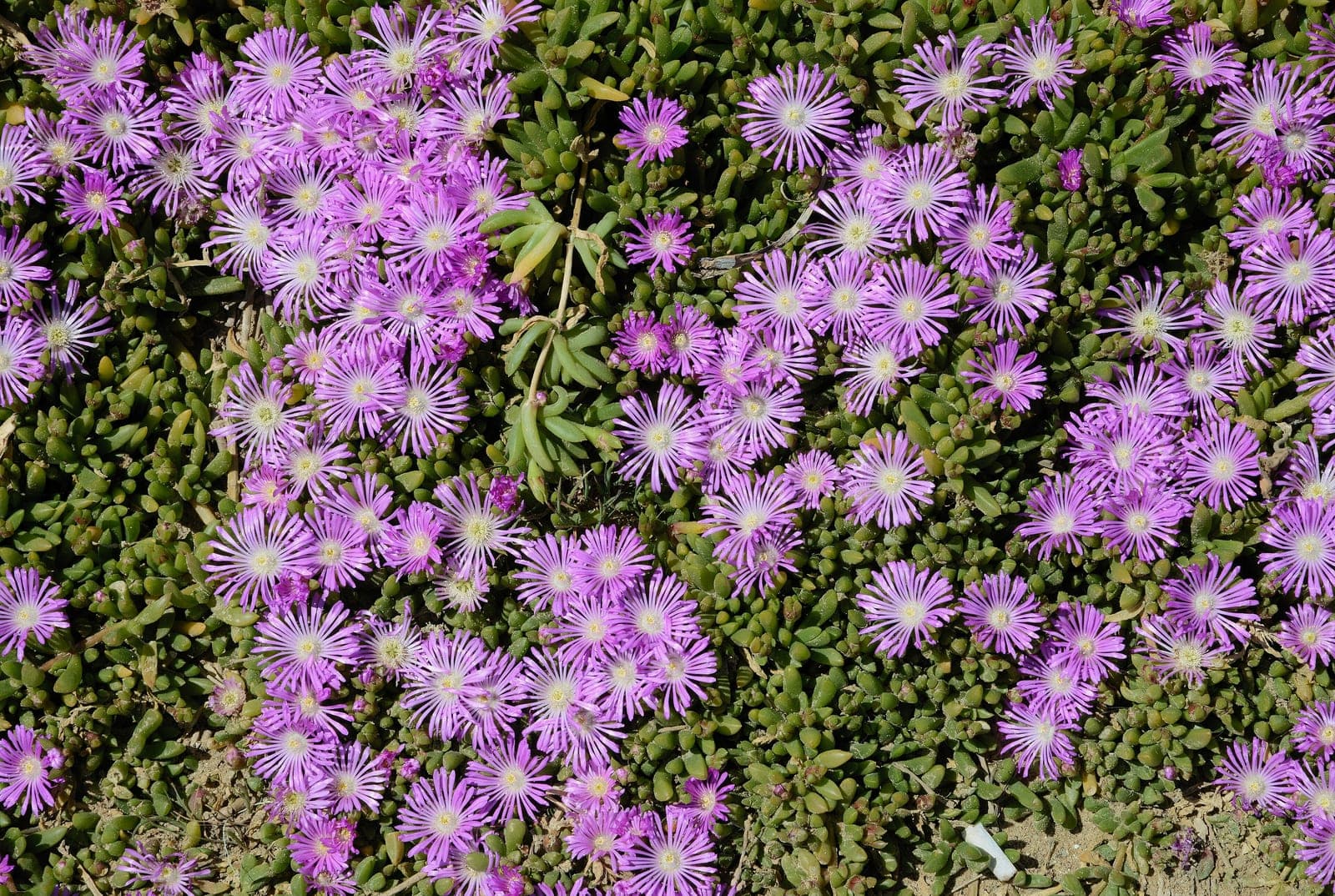
Delosperma cooperi is a mat-forming succulent perennial native to South Africa, growing 4–6 inches tall with trailing stems that root as they spread to form dense ground coverage. Tiny translucent papillae on the fleshy leaves refract light and give the foliage a glistening appearance - the source of the common name. Vivid magenta-purple flowers appear from late spring through summer and attract bees and other pollinators. Gardeners grow it as weed-suppressing ground cover, on hot dry slopes for erosion control, and in rock gardens where drainage is sharp and few other plants persist.
Good drainage is essential; plants decline rapidly in clay or waterlogged soil. Amend planting areas with gravel or coarse sand before planting, or site on a slope or raised bed. In zones 5b–6b, a thin layer of grit mulch spread over the crown reduces winterkill caused by freeze-thaw moisture cycles. Once established, plants require water only during extended drought. Stems root where they contact soil, gradually filling gaps without aggressive spread.
Crown Rot
Lower leaves yellow and wilt; the base of the rosette turns brown and soft, sometimes with white fungal threads at the soil line. Plants collapse in wet conditions.
Remove and destroy affected plants. Improve drainage and avoid overhead watering. Do not mulch directly against the crown. Space plants for airflow and avoid replanting in the same wet spot.
Root rot
Plants wilt, yellow, and stunt even in moist soil; lower stems and roots turn brown, soft, and mushy and the plant may collapse. Most common in heavy, wet, or poorly drained ground.
Improve drainage and stop overwatering, and never plant too deep. Lift and destroy badly affected plants along with the soil around the roots. Grow in raised or free-draining beds to prevent it returning.