
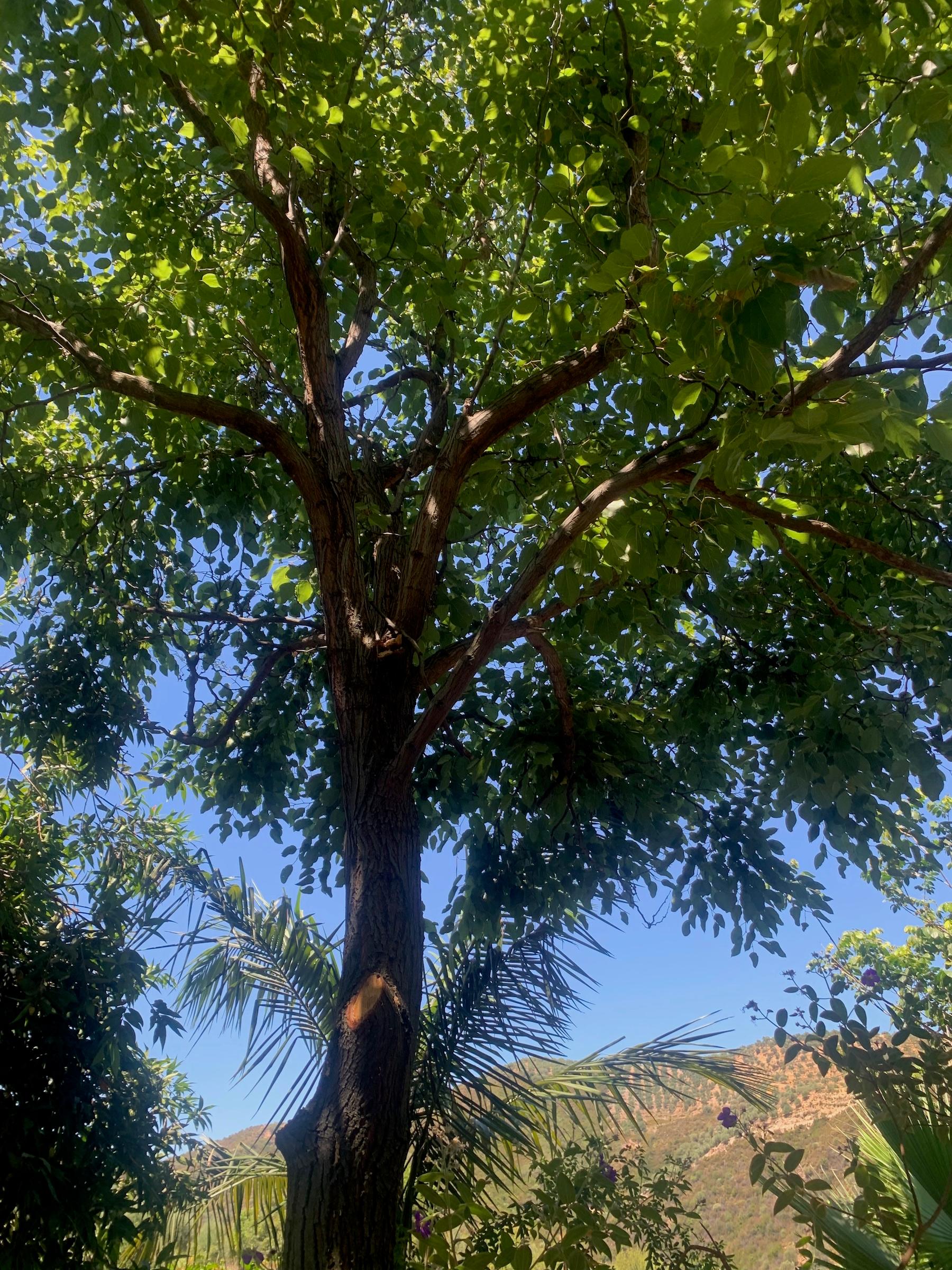
Hovenia dulcis is a medium to large deciduous tree native to China, Korea, Japan, and the Himalayas. Its edible prize is not the small drupe itself but the swollen, fleshy peduncles - the thickened fruit stalks - that ripen in fall and develop a sweet, raisin-like flavor after light frost exposure. Beyond edible value, the tree provides dense shade and is grown as an ornamental specimen in temperate gardens.
It performs best in full sun on moist, sandy or loamy soils with reliable drainage. Establishment from container or bare-root stock is straightforward, and growth is moderate once settled. Mature trees tolerate periodic drought but fruit production improves with consistent moisture. Hovenia dulcis is a prolific self-seeder and is classified as an invasive species in Brazilian subtropical forests and in other moist, mild-winter regions; remove volunteer seedlings promptly and verify local restrictions before planting.
The fruit and peduncles have an extensive history in Chinese and Korean traditional medicine for liver support and reducing alcohol effects. Dihydromyricetin (DHM), a flavonoid concentrated in the fruit, has been investigated in peer-reviewed studies for hepatoprotective and anti-inflammatory activity and appears as the active ingredient in commercial liver-support and hangover-remedy supplements.
These dates are for Zone 6b. Enter your ZIP to time every job to your own frost dates.
- cut · Any time in fallHarvest the swollen, fleshy peduncles after the first light frost when sugar content peaks. Use fresh, dried for storage, or steeped as tea.
- watch · Any time in fallSurvey the area around the tree for volunteer seedlings and remove them before they establish, particularly near woodland edges or natural areas.
- cut · Any time in winterPrune to remove dead, damaged, or crossing branches while the tree is fully dormant, before buds begin to swell.
- sow · Mar 27Plant container-grown or bare-root saplings in a permanent, full-sun location with moist, well-drained soil. Water thoroughly after planting.
- watch · Any time in springInspect new growth for aphid colonies and scale insects. Apply insecticidal soap or horticultural oil if populations are heavy.
- watch · Any time in summerMonitor foliage during humid periods for fungal leaf spot. Rake and dispose of infected fallen leaves to reduce overwintering spore loads.
Problems & troubleshooting
Common problems
Fungal leaf spot
Brown or purplish spots on the leaves, often ringed with a yellow halo, that spread and merge in warm, humid, or wet weather; heavily spotted leaves yellow and drop early.
Pick off spotted leaves and clear fallen debris to remove overwintering spores. Improve air circulation by thinning, and water at the base so foliage dries quickly. If it persists, apply a copper- or sulfur-based fungicide at the first sign.
Root rot
Plants wilt, yellow, and stunt even in moist soil; lower stems and roots turn brown, soft, and mushy and the plant may collapse. Most common in heavy, wet, or poorly drained ground.
Improve drainage and stop overwatering, and never plant too deep. Lift and destroy badly affected plants along with the soil around the roots. Grow in raised or free-draining beds to prevent it returning.
Powdery mildew
White or grey powdery coating on leaves - usually starting on older growth in humid conditions or when nights cool.
Improve air circulation by thinning plants. Apply neem oil or potassium bicarbonate spray at first sign. Avoid overhead watering.