
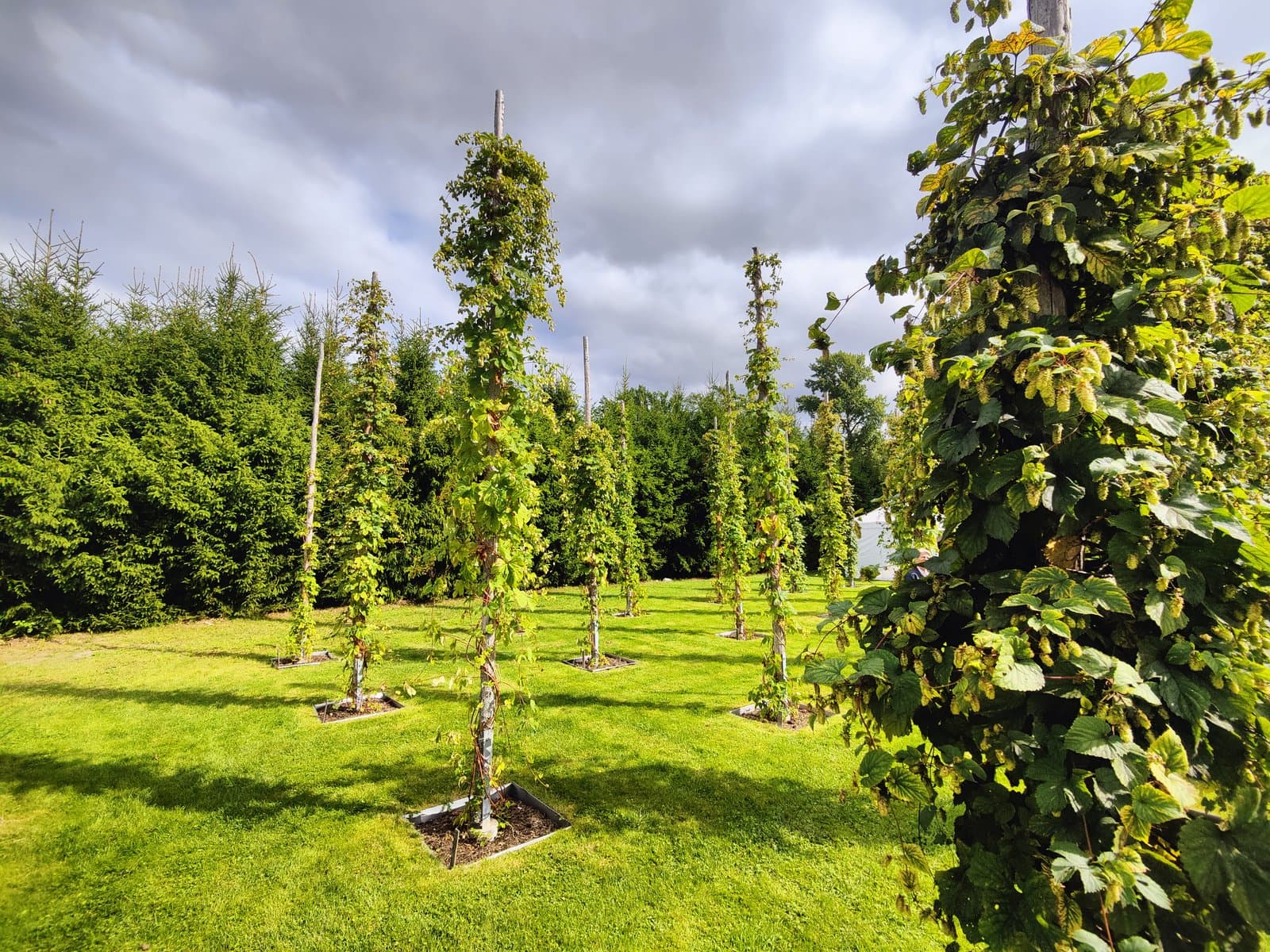
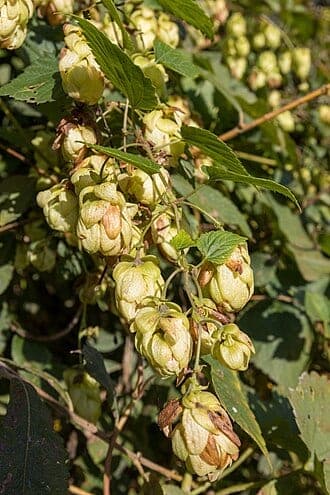
Humulus lupulus is a perennial herbaceous vine in the hemp family (Cannabaceae), grown primarily for its female seed cones - called strobiles - which contain lupulin, the resinous powder essential to brewing beer. The plant is dioecious; only female plants produce usable cones, so home growers should source named female cultivars suited to their target brewing style.
New bines emerge from a persistent rhizome each spring, climbing 15–25 ft before dying back in autumn. The rhizome spreads laterally over time; root barriers or annual perimeter edging help control its footprint. A tall, sturdy support structure - poles with horizontal wires - must be in place before growth begins, as standard garden trellises cannot handle the speed and weight of growth. Full production typically takes two to three seasons after establishment. Well-drained, deep, fertile soil in a slightly acidic to neutral pH range suits hops best; consistent moisture during rapid summer growth is critical for cone development. Mulching over the rhizome zone conserves moisture and moderates soil temperature.
Young spring shoots, harvested when 4–6 inches tall, are edible and used like asparagus in Belgian and Italian cuisine. Mature cones have documented sedative and anxiolytic properties; lupulin-derived alpha acids underpin traditional European remedies for insomnia and nervous tension, an effect supported by modern pharmacological research.
Powdery mildew
White or grey powdery coating on leaves - usually starting on older growth in humid conditions or when nights cool.
Improve air circulation by thinning plants. Apply neem oil or potassium bicarbonate spray at first sign. Avoid overhead watering.
Downy mildew
Yellowing on top of leaves with grey-purple fuzz underneath. Spreads rapidly in humid conditions.
Remove affected leaves. Improve air circulation. Avoid overhead watering. Copper spray as preventive.
Verticillium Wilt
Lower leaves yellow and wilt, often on one side of the plant, with brown streaking in the stem and crown tissue when cut open. Plants are stunted and decline over the season.
Remove and destroy affected plants. Avoid planting in soil that has grown infected tomatoes, peppers, or other susceptible crops. Rotate beds and improve drainage; there is no cure once a plant is infected.
Botrytis (grey mould)
Grey fuzzy mould on petals and stems, worst in cool wet conditions.
Remove affected parts immediately. Improve air circulation. Avoid overhead watering. Apply copper fungicide if severe.
Hop Stunt Viroid
Bines are noticeably shorter than healthy plants with compressed internodes and small, sometimes crinkled leaves. Cone yield drops sharply, and cones that do form are small and light. Plants show progressive decline over successive seasons without dramatic leaf discoloration.
No cure exists. Remove and destroy infected plants completely, including all rhizome material. Sterilize cutting tools with a 10% bleach solution or 70% ethanol between plants. Source replacement rhizomes only from certified viroid-tested nurseries; never divide or propagate from symptomatic stock.