
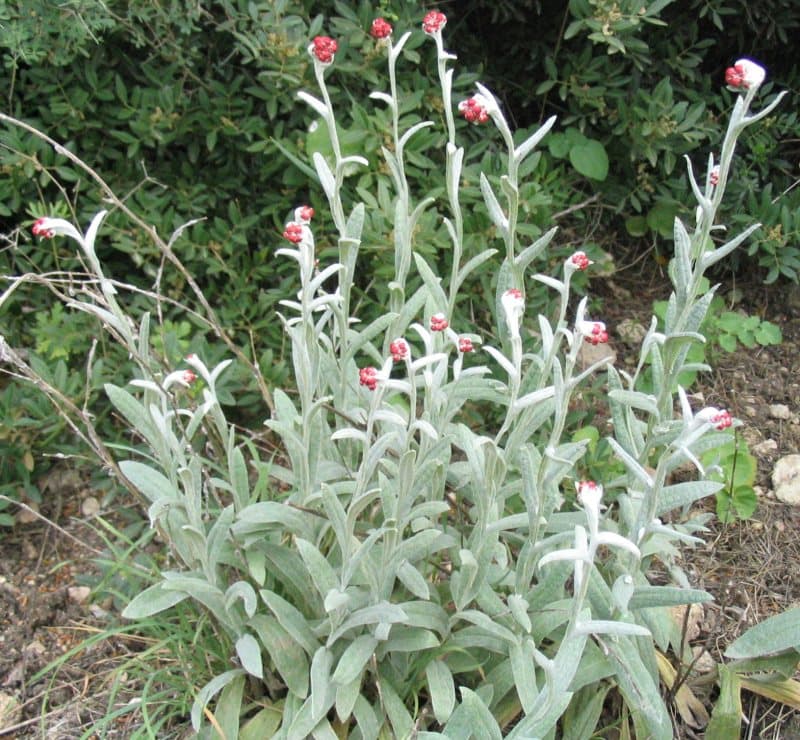
Helichrysum petiolare 'Limelight' is a trailing, sub-shrubby foliage plant grown for its soft, felted, chartreuse-to-lime leaves rather than its flowers - the small creamy-white button flowerheads it produces in summer are inconspicuous and usually pinched off to keep the foliage full. Crushed leaves release a mild licorice scent, giving rise to the common name licorice plant. It spills over the edges of containers, hanging baskets, and window boxes, brightening combinations of purple, blue, or magenta flowers with its acid-green color.
Native to South Africa, it is winter hardy only in Zones 9–11; elsewhere it is grown as a warm-season annual or overwintered indoors from cuttings taken in late summer, which root readily. Full sun keeps the foliage brightest and most compact; in more shade the trailing stems stretch and the color fades toward green. It resents wet feet - well-draining soil and container mixes are essential, and standing water in a saucer or liner will quickly rot the stems.
Root rot
Plants wilt, yellow, and stunt even in moist soil; lower stems and roots turn brown, soft, and mushy and the plant may collapse. Most common in heavy, wet, or poorly drained ground.
Improve drainage and stop overwatering, and never plant too deep. Lift and destroy badly affected plants along with the soil around the roots. Grow in raised or free-draining beds to prevent it returning.