
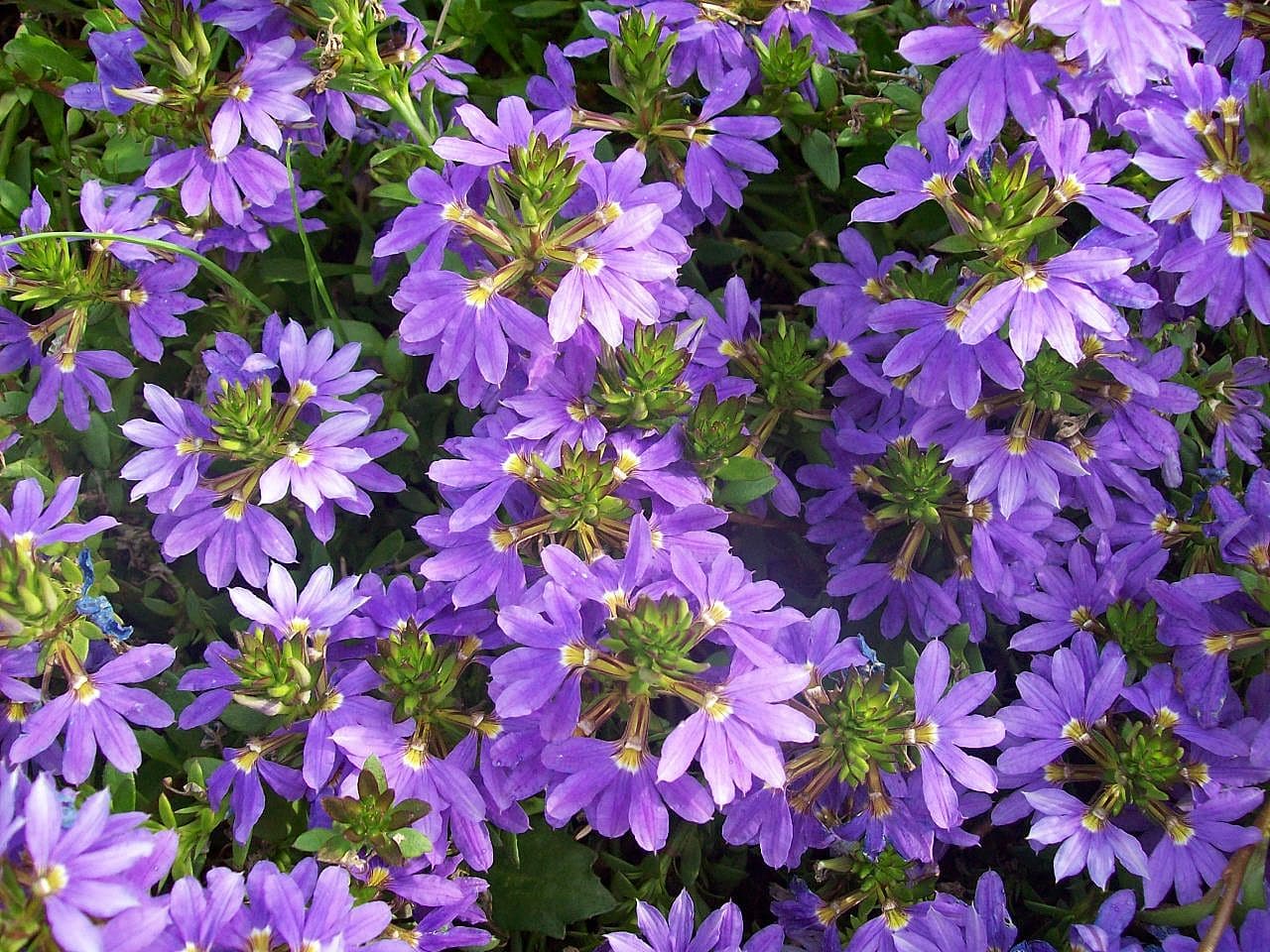
Scaevola aemula, commonly fanflower or fairy fan-flower, is a trailing, mounding plant native to the coastal woodlands, heathlands, and dunes of southern Australia. It blooms almost without pause from spring until frost, covering its stems in small half-fan-shaped flowers - usually blue, lavender, or violet with a bright throat - that give the plant its name and its constant color in hanging baskets, window boxes, and sunny border edges.
Hardy as a perennial only in Zones 9–11, it is grown as a warm-season annual elsewhere and planted out after the danger of frost has passed. Once established it tolerates heat, drought, and salt spray, making it a reliable performer in coastal gardens and containers that dry out quickly. Deadheading isn't necessary - spent flowers drop cleanly on their own - but a midsummer shear encourages fresh growth if plants become leggy. Where it isn't hardy, cuttings taken in late summer will overwinter indoors on a bright windowsill.
Root rot
Plants wilt, yellow, and stunt even in moist soil; lower stems and roots turn brown, soft, and mushy and the plant may collapse. Most common in heavy, wet, or poorly drained ground.
Improve drainage and stop overwatering, and never plant too deep. Lift and destroy badly affected plants along with the soil around the roots. Grow in raised or free-draining beds to prevent it returning.