
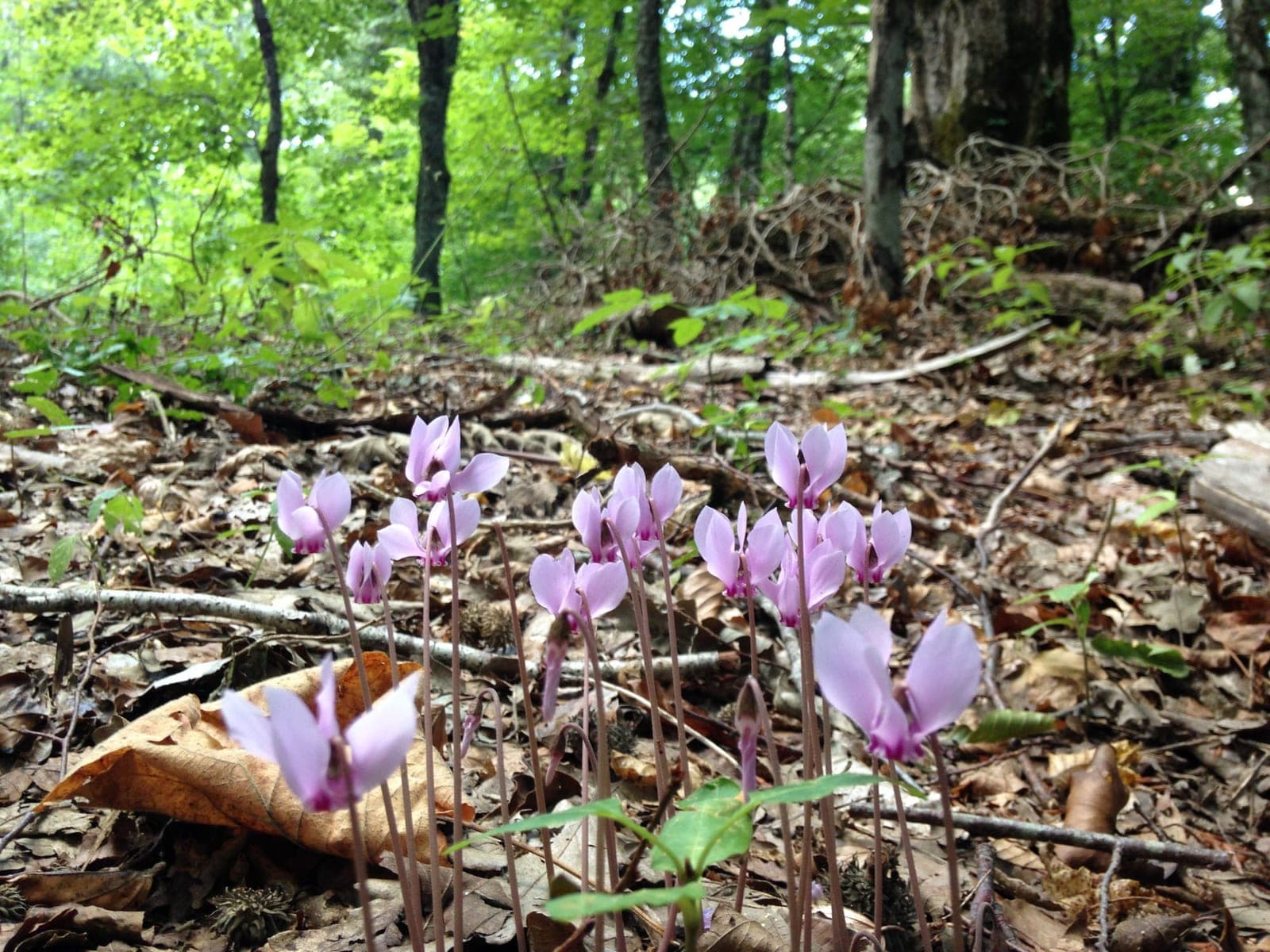
Cyclamen hederifolium is a small tuberous perennial native to Mediterranean woodlands, rocky slopes, and shrubland from southern France to western Turkey. It is reliably hardy through zone 5, far tougher than florist cyclamen - and one of the most dependable plants for dry shade under deciduous trees. Pink to white flowers emerge in late summer and early fall before the leaves appear, followed by ivy-shaped, silver-marbled foliage that covers the ground through winter and into spring.
The plant goes fully dormant in summer, which is the correct time to plant. Set tubers with the dimpled side up, barely covered with soil, in a spot that stays dry in summer and receives filtered light the rest of the year. Tubers enlarge slowly over many years, sometimes reaching dinner-plate size, and become more floriferous with age. Seeds carry a fatty elaiosome that attracts ants, which disperse them short distances; this is how plants build quietly into colonies without becoming invasive. Prefers neutral to slightly alkaline, well-drained soil; work in organic matter at planting to support establishment. Tolerates root competition from trees better than most small perennials.
Botrytis (grey mould)
Grey fuzzy mould on petals and stems, worst in cool wet conditions.
Remove affected parts immediately. Improve air circulation. Avoid overhead watering. Apply copper fungicide if severe.
Root rot
Plants wilt, yellow, and stunt even in moist soil; lower stems and roots turn brown, soft, and mushy and the plant may collapse. Most common in heavy, wet, or poorly drained ground.
Improve drainage and stop overwatering, and never plant too deep. Lift and destroy badly affected plants along with the soil around the roots. Grow in raised or free-draining beds to prevent it returning.