
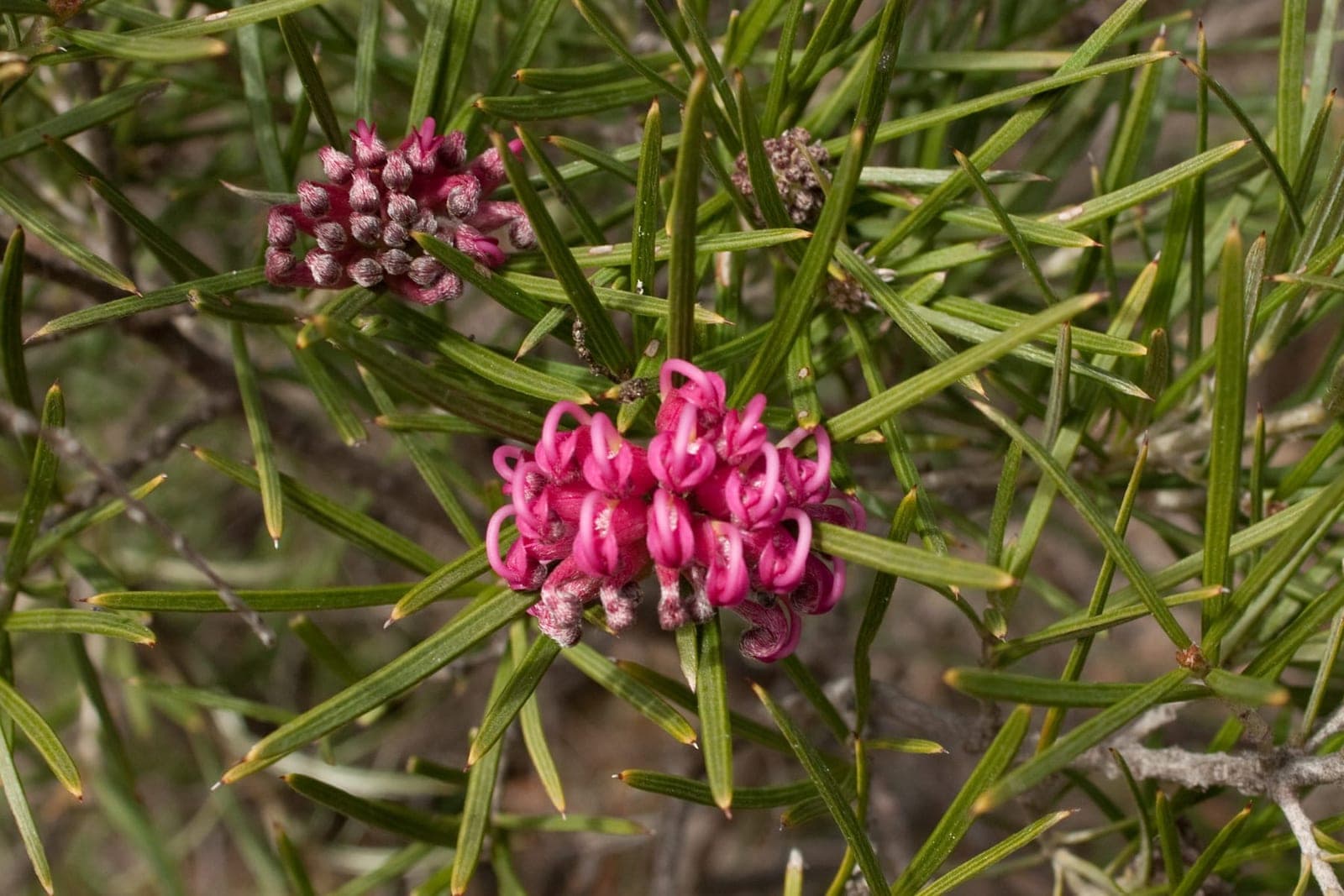
Grevillea confertifolia is a spreading, often dense shrub endemic to the Grampians (Gariwerd) in Victoria, Australia, where it grows on rocky, nutrient-poor sandstone and granite slopes. Its reddish-purple flowers and fine-textured foliage make it useful as an informal screen or bank stabilizer, and it reliably draws nectar-feeding birds: honeyeaters in its native range, hummingbirds in North American gardens.
Like all Proteaceae, this species is acutely sensitive to phosphorus - standard fertilizers and phosphorus-rich composts can cause rapid root damage or death. Plant in well-drained, slightly acidic soil of low fertility and avoid heavy clay. Coarse wood-chip mulch kept clear of the stem helps retain moisture without promoting crown rot. Established plants are drought-tolerant and need little supplemental water in Mediterranean-type climates. Light tip pruning after the main flowering flush keeps the plant dense and slows the tendency to become open and woody at the base.
Phytophthora Root Rot
Wilting despite moist soil, yellowing leaves, stunted growth, and dark, decayed roots and crown tissue. Vines may collapse during hot weather.
Plant in well-draining soil and avoid waterlogging. Remove and destroy affected vines. Improve drainage with raised beds or amended soil and avoid overwatering.
Root rot
Plants wilt, yellow, and stunt even in moist soil; lower stems and roots turn brown, soft, and mushy and the plant may collapse. Most common in heavy, wet, or poorly drained ground.
Improve drainage and stop overwatering, and never plant too deep. Lift and destroy badly affected plants along with the soil around the roots. Grow in raised or free-draining beds to prevent it returning.