
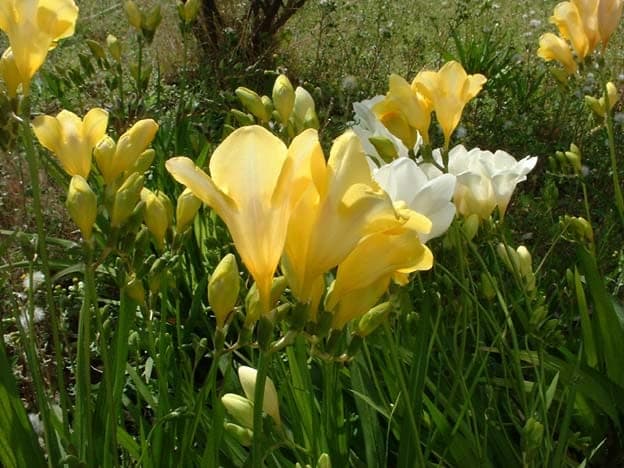
Freesia × hybrida are corm-producing plants bred from South African species in the Iridaceae family, grown for their intensely fragrant funnel-shaped flowers. Colors range from white and yellow to orange, pink, red, lavender, and purple. In zones 9–11, corms persist in the ground year-round; in cooler regions they are treated as tender annuals with corms lifted before frost.
Freesias require a cool growing period to trigger flowering - temperatures consistently above 70 °F during bud development inhibit blooming. Plant corms 2 inches deep in fall once summer heat has subsided. Excellent drainage is non-negotiable; corms rot quickly in waterlogged soil. Stems are slender and typically need light staking as clusters develop. Foliage must be left to die back naturally after flowering so corms can rebuild reserves before summer dormancy.
Freesia fragrance - built around linalool, geraniol, and related terpene compounds - is one of the most widely replicated scents in commercial perfumery. Cut stems last well in arrangements when harvested as the first one or two buds begin to open, with the remaining buds continuing to open in sequence over several days.
Botrytis (grey mould)
Grey fuzzy mould on petals and stems, worst in cool wet conditions.
Remove affected parts immediately. Improve air circulation. Avoid overhead watering. Apply copper fungicide if severe.
Fusarium wilt
Sudden wilting, brown streaks in stems, yellowing leaves. Affects sweet basil varieties most.
No cure. Remove and destroy plants. Do not replant in the same spot for 3+ years. Choose resistant varieties.
Mosaic virus
Yellowing, mottled, or distorted leaves. No cure - spread by aphids.
Remove and destroy infected plants. Control aphid populations to prevent spread. Do not propagate from infected tubers.
Root rot
Plants wilt, yellow, and stunt even in moist soil; lower stems and roots turn brown, soft, and mushy and the plant may collapse. Most common in heavy, wet, or poorly drained ground.
Improve drainage and stop overwatering, and never plant too deep. Lift and destroy badly affected plants along with the soil around the roots. Grow in raised or free-draining beds to prevent it returning.