
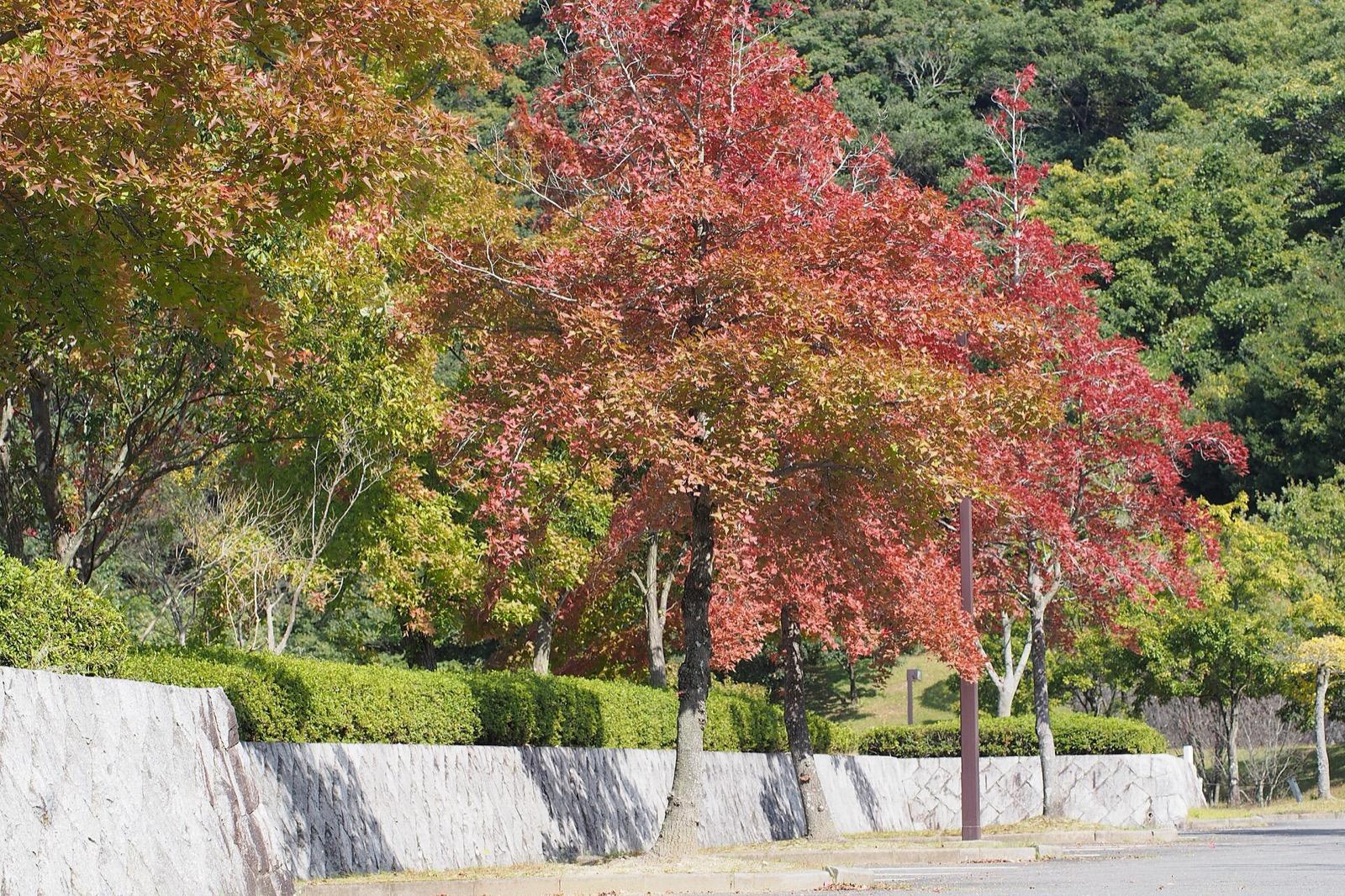
Liquidambar formosana is a large deciduous tree native to China, Taiwan, and adjacent mainland Southeast Asia. It is closely related to the American sweetgum (L. styraciflua) but carries distinctly three-lobed rather than five-lobed leaves and typically grows faster. In cultivation it reaches 40–60 feet with a broadly pyramidal to rounded crown, and autumn foliage turns vivid combinations of red, orange, purple, and yellow.
It performs best in full sun with moist, well-drained, moderately acidic soil. Like its American relative, it produces spiky round seed capsules that drop in late autumn and winter; plant it where that litter can be managed easily. The species is notably less cold-hardy than L. styraciflua and is reliably suited only to zones 7 through 9. Established trees develop good drought tolerance once deep-rooted, but consistent moisture during the first two or three growing seasons is important. Maintain a wide mulch ring to retain soil moisture and protect surface roots; keep mulch clear of the trunk.
In Traditional Chinese Medicine the dried fruit clusters, called lu lu tong, are used to promote blood circulation, relieve rheumatic and arthritic pain, reduce edema, and address menstrual irregularity. The resinous bark exudate has been applied topically as an antiseptic in folk practice across its native range.
These dates are for Zone 6b. Enter your ZIP to time every job to your own frost dates.
- buy · Jan 16 - Jan 30Order nursery stock - about two months before planting
- plant · Mar 27 - Apr 17Plant container stock once hard frosts are past: new growth breaks early and young trees are tender to late cold.
Problems & troubleshooting
Common problems
Fungal leaf spot
Brown or purplish spots on the leaves, often ringed with a yellow halo, that spread and merge in warm, humid, or wet weather; heavily spotted leaves yellow and drop early.
Pick off spotted leaves and clear fallen debris to remove overwintering spores. Improve air circulation by thinning, and water at the base so foliage dries quickly. If it persists, apply a copper- or sulfur-based fungicide at the first sign.
Botryosphaeria Canker
Dark, sunken cankers on stems and major branches, most often occurring after drought stress or mechanical wounding. Bark peeled back from affected areas reveals brown, discolored wood beneath. Branch tips wilt and die back progressively inward.
Prune infected branches at least 6 inches below the visible canker margin using sterilized tools, and dispose of all cuttings away from the garden. Reduce plant stress by maintaining consistent irrigation during dry periods and avoiding bark wounds during maintenance. No curative fungicide is available; keeping plants vigorous is the primary preventive strategy.
Root rot
Plants wilt, yellow, and stunt even in moist soil; lower stems and roots turn brown, soft, and mushy and the plant may collapse. Most common in heavy, wet, or poorly drained ground.
Improve drainage and stop overwatering, and never plant too deep. Lift and destroy badly affected plants along with the soil around the roots. Grow in raised or free-draining beds to prevent it returning.