
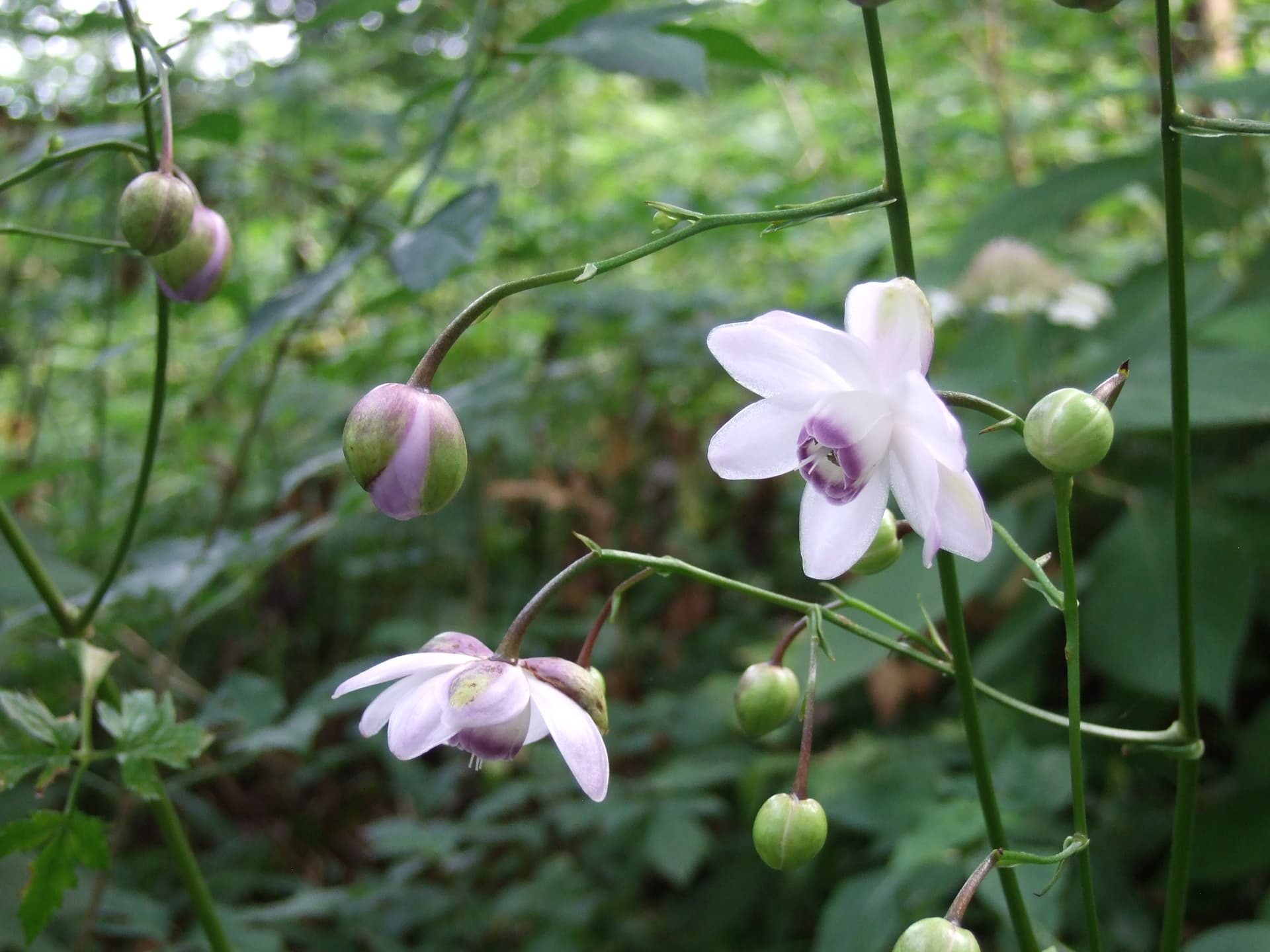
Anemonopsis macrophylla is a Japanese woodland perennial - the only species in its genus - endemic to shaded mountain forests of Honshu. It produces nodding, waxy flowers in pale lilac-purple on arching stems through mid to late summer, a flowering window rare among deep-shade perennials. Its large, glossy, compound leaves add structure before and after flowering, making it useful in woodland gardens where mid-summer shade interest is scarce.
This plant demands cool, consistently moist, humus-rich soil at pH 5.5–6.5 and dislikes afternoon heat and dry spells. It is slow to establish but long-lived once settled, spreading gradually into tidy clumps. Seeds require cold stratification and may take two or more years to reach blooming size; division of established crowns in early spring is more reliable. Mulching with leaf mold conserves moisture and keeps roots cool through summer. It performs best at the northern end of its hardiness range and struggles where summers are hot and humid.
Foliar Nematode
Angular brown or black patches on leaves, bounded by leaf veins, starting on lower foliage and moving upward. Affected leaves wither but stay attached.
Remove and destroy infected leaves and surrounding debris. Avoid overhead watering and wetting foliage. Space plants for airflow and do not compost affected material. Severely infested plants should be dug out and discarded.
Botrytis (grey mould)
Grey fuzzy mould on petals and stems, worst in cool wet conditions.
Remove affected parts immediately. Improve air circulation. Avoid overhead watering. Apply copper fungicide if severe.
Crown Rot
Lower leaves yellow and wilt; the base of the rosette turns brown and soft, sometimes with white fungal threads at the soil line. Plants collapse in wet conditions.
Remove and destroy affected plants. Improve drainage and avoid overhead watering. Do not mulch directly against the crown. Space plants for airflow and avoid replanting in the same wet spot.
Powdery mildew
White or grey powdery coating on leaves - usually starting on older growth in humid conditions or when nights cool.
Improve air circulation by thinning plants. Apply neem oil or potassium bicarbonate spray at first sign. Avoid overhead watering.