
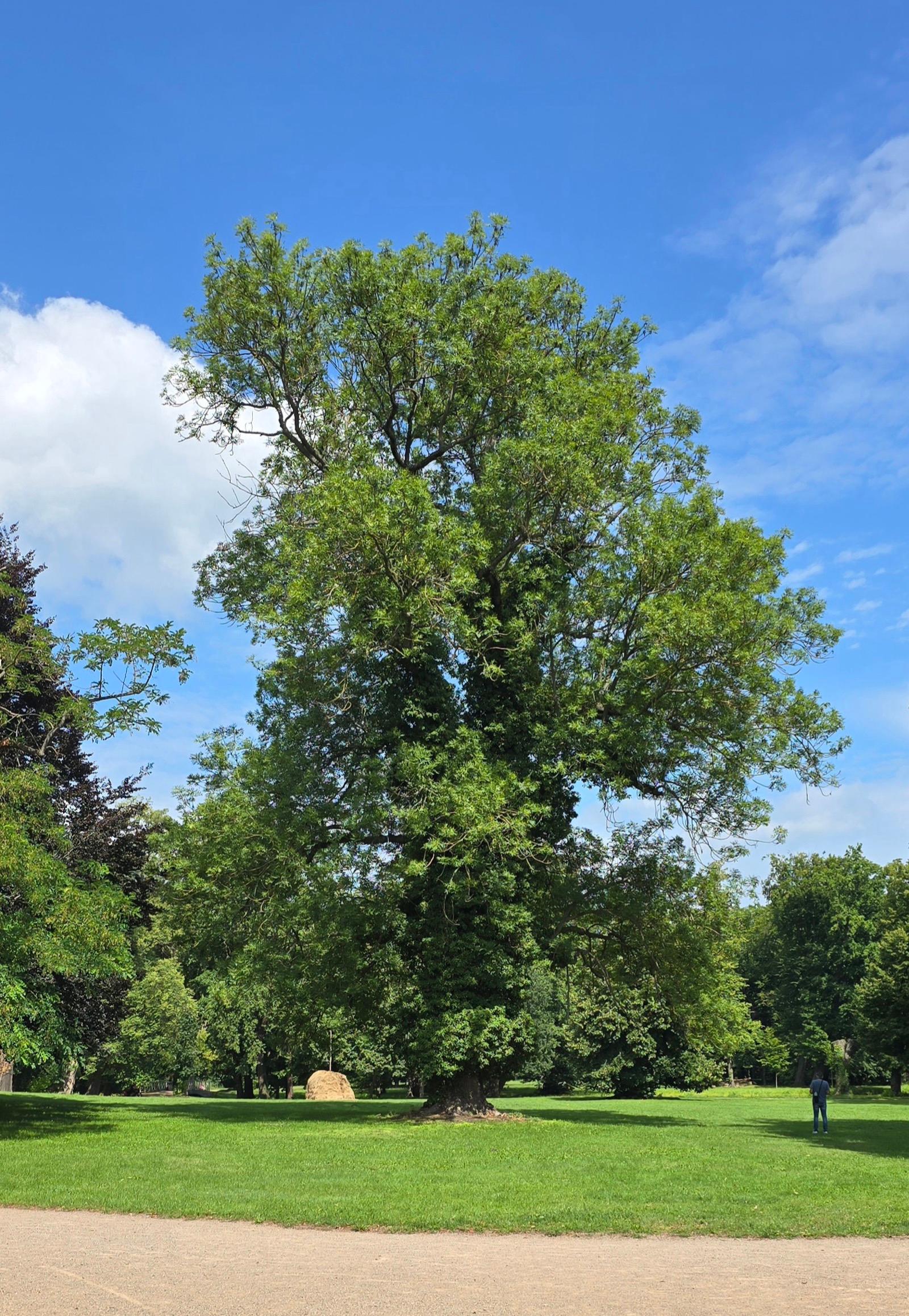
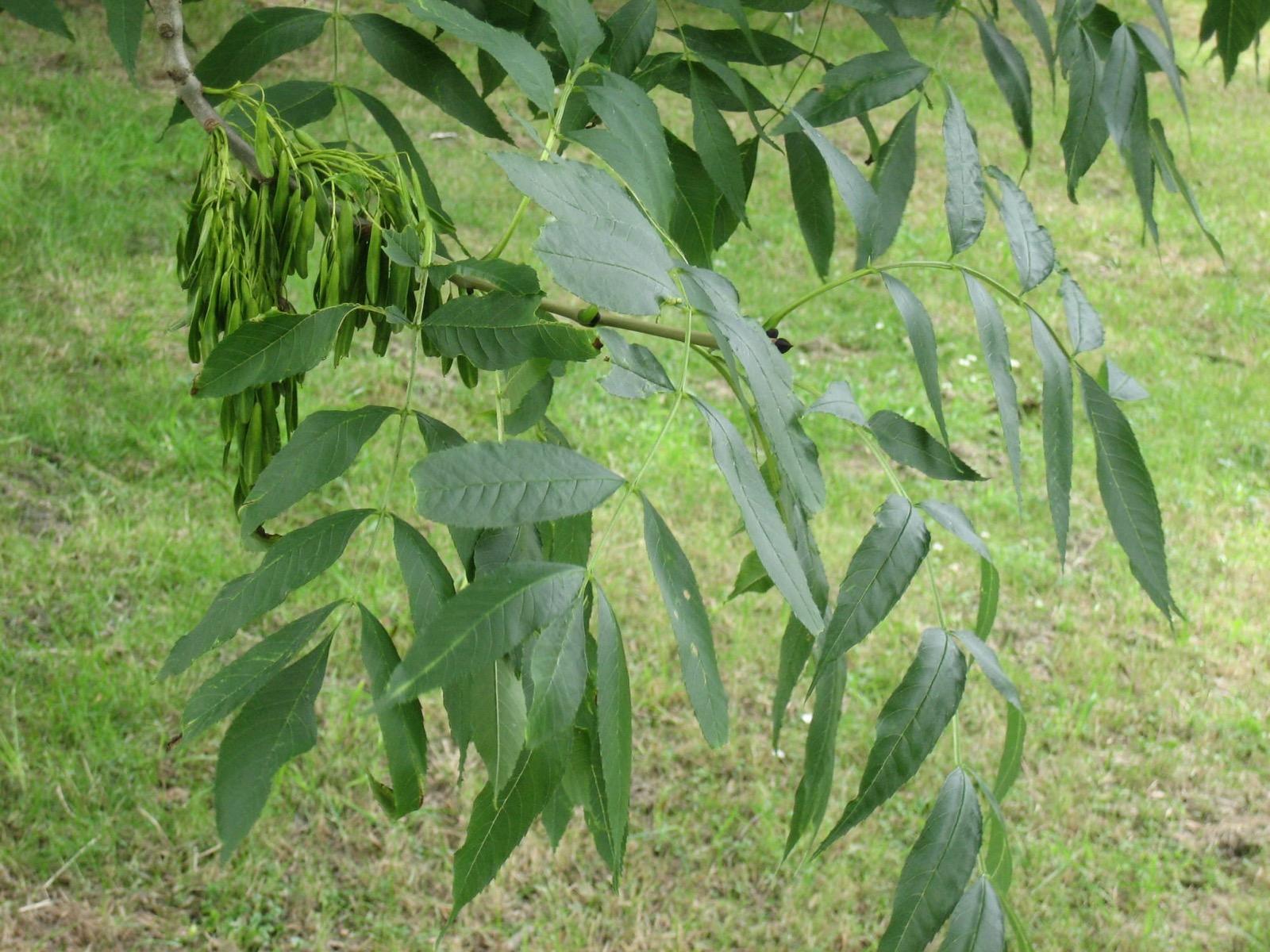
European ash (Fraxinus excelsior) is one of the largest deciduous trees native to Europe, reaching 60–80 ft with a broad, irregular crown and deeply furrowed grey bark. A member of the olive family, it produces compound leaves with 7–13 leaflets and distinctive winged seeds called keys that ripen in autumn and persist through winter. It supports over 950 species of insects, fungi, lichens, birds, and mammals, placing it among the continent's highest-value wildlife trees.
Ash is among the last major trees to leaf out in spring and one of the first to drop in autumn, casting a relatively light, dappled shade that allows diverse ground flora to establish underneath. It performs best on moist, fertile, neutral to slightly alkaline soils and tolerates periodic waterlogging and exposed, windy sites. The root system is deep and wide-spreading. Ash dieback, caused by the invasive fungus Hymenoscyphus fraxineus, is now widespread across Europe and established in parts of North America; confirm regional disease status before planting and prioritize selections showing partial natural tolerance where available.
The wood is exceptionally strong, flexible, and shock-resistant, used historically and commercially for tool handles, oars, sports equipment, ladders, and joinery. Young ash keys have traditionally been pickled as a condiment in Britain. Bark and leaf preparations carry a long record in European herbalism for reducing fever, easing rheumatism, and acting as a mild diuretic and laxative.
These dates are for Zone 6b. Enter your ZIP to time every job to your own frost dates.
- watch · Apr 24 - May 22Where emerald ash borer is established locally, have a certified arborist trunk-inject any tree worth saving on a 1-2 year cycle
- watch · Any time in summerInspect the canopy for thinning, D-shaped exit holes in the bark and vertical bark splits, all signs of emerald ash borer
- watch · Any time in summerLook for wilting leaves, diamond-shaped bark lesions and dieback at shoot tips, signs of ash dieback
Problems & troubleshooting
Watch for
Emerald Ash Borer
Agrilus planipennis →Larval tunneling under the bark girdles the tree's phloem, cutting off nutrient transport; causes canopy dieback progressing from the top down, bark splitting, and death of the majority of untreated ash within 3–5 years of first infestation.
Systemic insecticide trunk injection (emamectin benzoate) by a certified arborist, repeated on a 1–2 year cycle, for trees caught early enough to be worth saving. Biological control via released parasitoid wasps (Tetrastichus planipennisi, Oobius agrili, Spathius spp.) is underway in many states as a longer-term population suppression strategy, not a rescue option for individual trees.
Common problems
Ash Dieback
Wilting and death of shoot tips in summer; diamond-shaped or elongated tan-to-orange lesions at the junction of dead shoots and older wood; progressive crown dieback advancing inward from branch tips; epicormic shoots erupting on trunk and major limbs as a stress response; dark internal staining in affected wood. Lesions on main stems can girdle and kill entire branches or the whole tree over several seasons.
No cure exists. Remove and destroy infected shoots and branches, cutting well below visible lesions into healthy wood. Sterilize cutting tools between each cut. Do not compost affected material - bag and dispose or burn where permitted. Prune during dry weather in late summer to reduce spore transmission. Research into naturally tolerant genotypes is ongoing; seek certified tolerant planting stock where available. Consult local forestry or plant health authorities before large-scale removal, as regulations on ash material movement may apply in affected regions.
Armillaria Root Rot
Thinning, yellowing canopy with progressive dieback; white, fan-shaped mycelial mats visible beneath bark at or just below the soil line; honey-colored mushroom clusters appearing at the trunk base or on surface roots in autumn.
No chemical cure exists. Improve drainage and avoid any injury to roots or trunk. Remove severely infected trees along with as much root material as possible. Do not replant susceptible species in the same spot.
Cytospora Canker
White or blue-white pitch masses ooze from bark on lower branches and the trunk. Affected branches die back progressively from the tip inward; bark beneath the resin is discolored brown and may have a resinous, sunken appearance.
Prune infected branches well below the canker margin into healthy wood and destroy all cuttings. Sterilize pruning tools with 70% isopropyl alcohol between each cut. No effective fungicide is available; prevent recurrence by avoiding drought stress, soil compaction, and mechanical bark injury.
Fungal leaf spot
Brown or purplish spots on the leaves, often ringed with a yellow halo, that spread and merge in warm, humid, or wet weather; heavily spotted leaves yellow and drop early.
Pick off spotted leaves and clear fallen debris to remove overwintering spores. Improve air circulation by thinning, and water at the base so foliage dries quickly. If it persists, apply a copper- or sulfur-based fungicide at the first sign.