
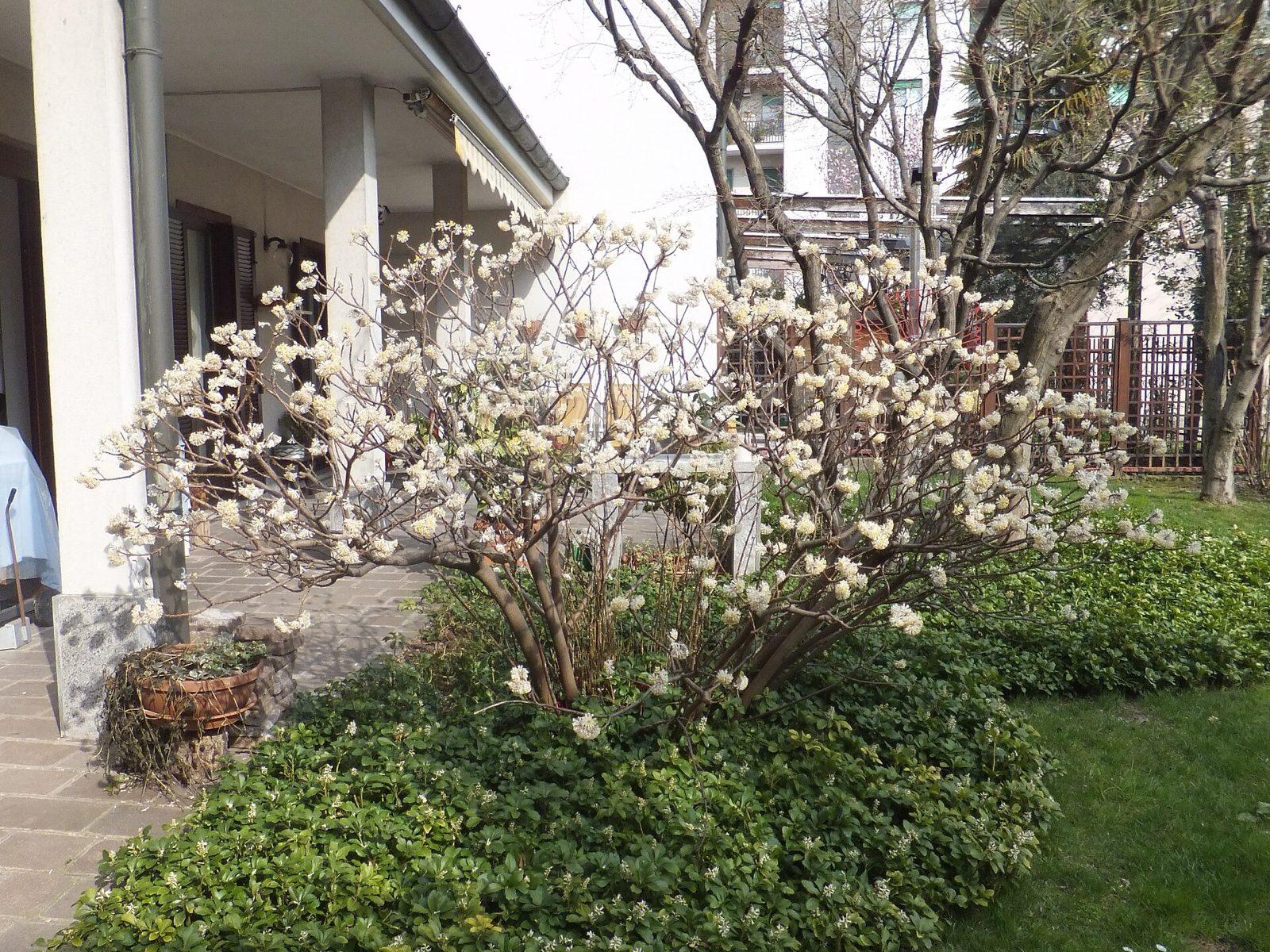
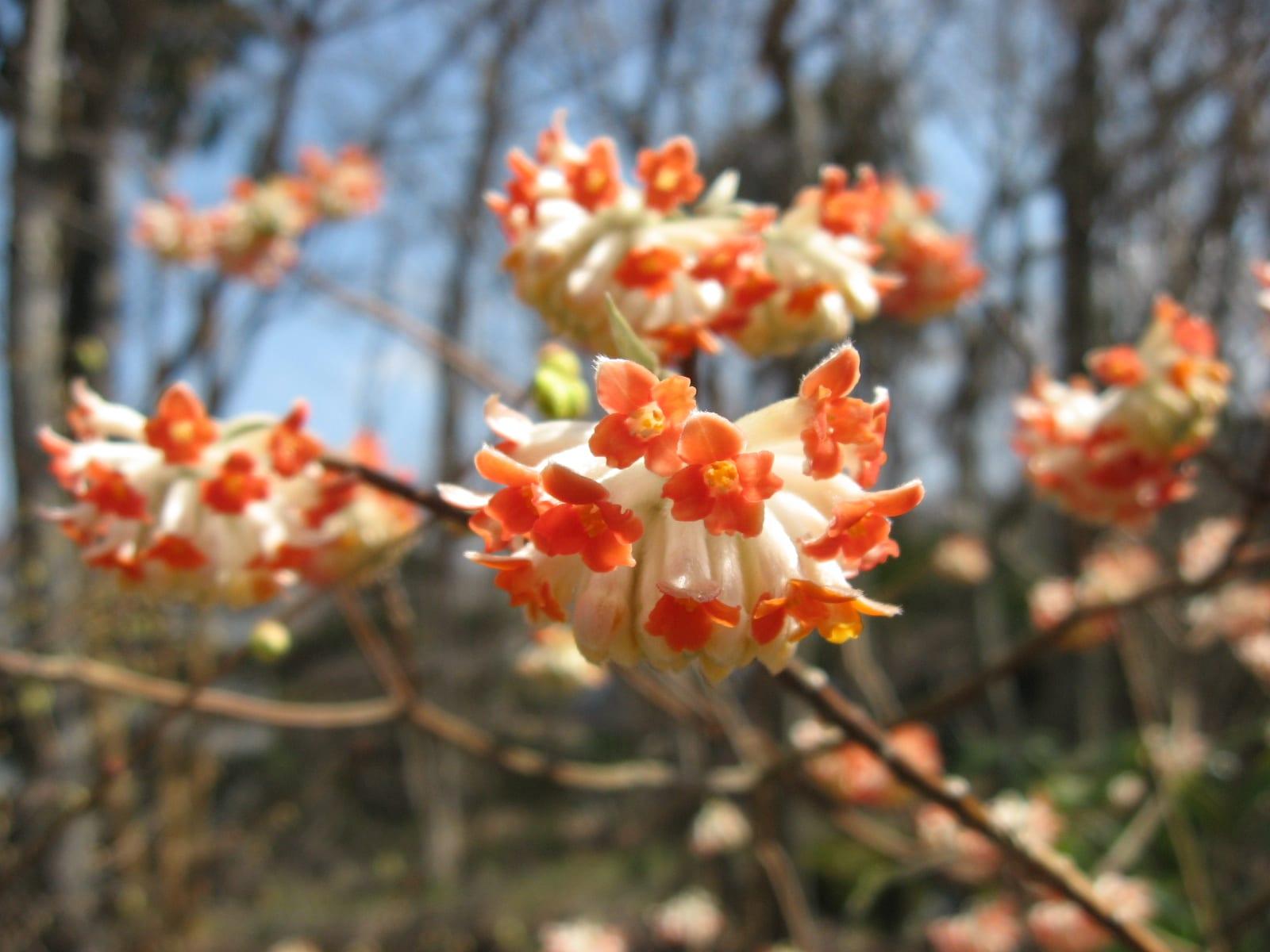
 The orange-red flowers of a red paperbush like 'Akebono'. Photo: Σ64 (CC BY-SA 3.0).
Edgeworthia chrysantha 'Akebono' is a deciduous shrub grown for its fragrant, tubular flowers that open in late winter to early spring before any foliage appears. The cultivar name means 'dawn' in Japanese, and the flowers match: orange-yellow on the exterior fading to creamy white within, carried in pendulous clusters at branch tips. The genus is native to woodland areas of China and the Himalayas.
Grows best with morning sun and afternoon shade in moist, humus-rich, well-drained soil. Waterlogged conditions lead rapidly to root failure. A consistent layer of organic mulch over the root zone maintains moisture and buffers soil temperature. In zone 7a, siting against a south- or west-facing wall improves cold hardiness. Basal suckers appear occasionally and can be removed to maintain form. Ideal soil pH is 5.5–6.5.
The inner bark fibers of Edgeworthia have been harvested in Japan and China for centuries to produce high-grade washi paper, historically used in Japanese banknotes and official documents. The root bark has a documented place in traditional Chinese medicine for eye disorders and pain.
These dates are for Zone 6b. Enter your ZIP to time every job to your own frost dates.
- buy · Feb 13 - Feb 27Buy plants - about two months before planting out
- cut · Mar 27Prune lightly right after flowering, only to remove crossing or damaged branches; next year's buds form on this year's growth
- plant · Apr 24 - May 8Plant nursery stock in a sheltered spot out of drying winter wind
- watch · Any time in summerWater deeply in dry spells; the large leaves wilt fast in drought
Problems & troubleshooting
Common problems
Phytophthora Root Rot
Wilting despite moist soil, yellowing leaves, stunted growth, and dark, decayed roots and crown tissue. Vines may collapse during hot weather.
Plant in well-draining soil and avoid waterlogging. Remove and destroy affected vines. Improve drainage with raised beds or amended soil and avoid overwatering.
Fungal leaf spot
Brown or purplish spots on the leaves, often ringed with a yellow halo, that spread and merge in warm, humid, or wet weather; heavily spotted leaves yellow and drop early.
Pick off spotted leaves and clear fallen debris to remove overwintering spores. Improve air circulation by thinning, and water at the base so foliage dries quickly. If it persists, apply a copper- or sulfur-based fungicide at the first sign.