
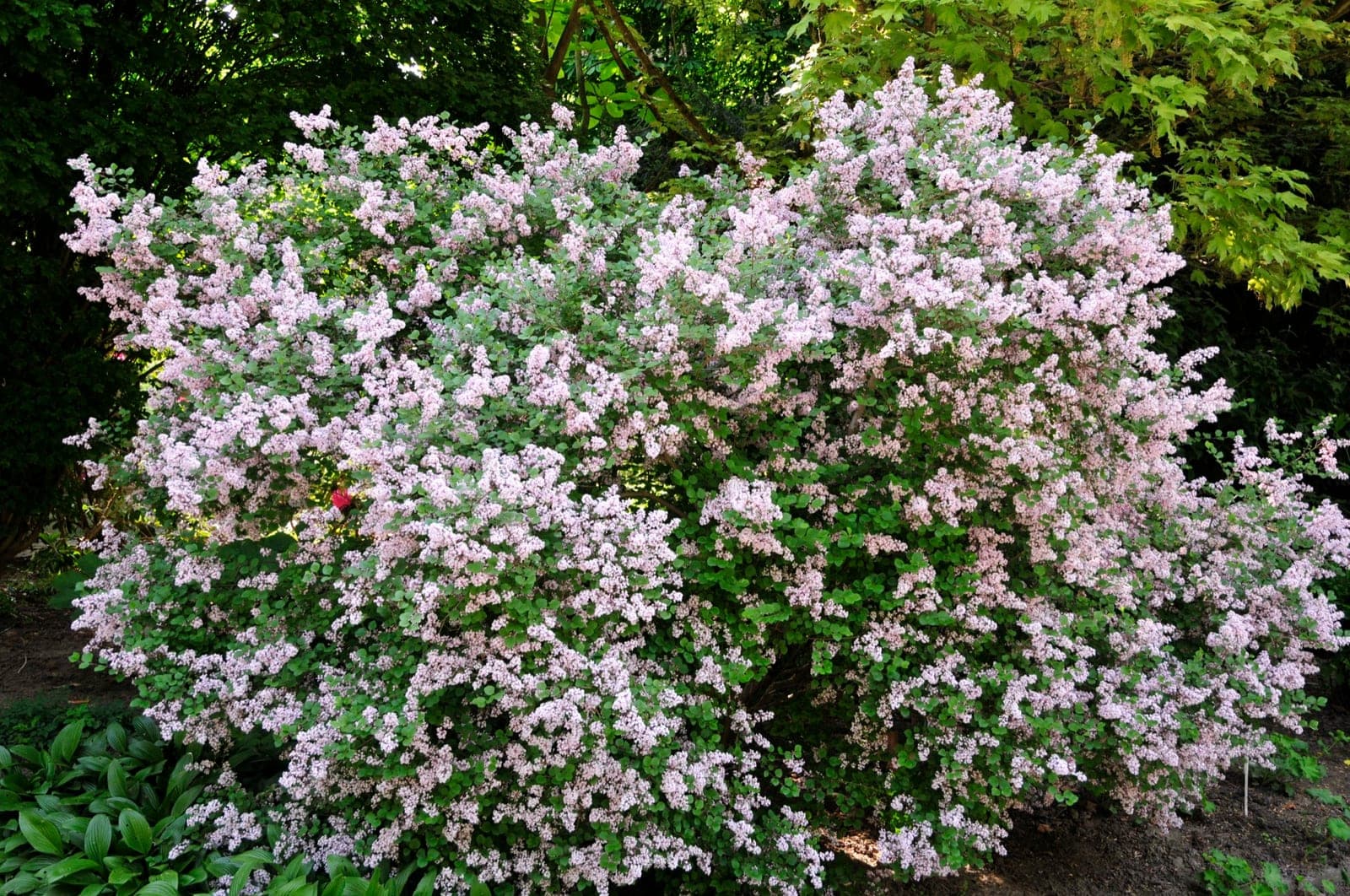
Dwarf Korean Lilac 'Palibin' is a compact, slow-growing deciduous shrub reaching 4–5 ft tall and nearly as wide, grown for its dense clusters of fragrant lavender-pink flowers in mid-to-late spring. It fits small gardens, urban lots, and foundation plantings where common lilac would be too large, and it shows better resistance to powdery mildew than Syringa vulgaris.
It blooms on old wood, so prune only immediately after flowering ends to avoid removing next year's buds. Full sun produces the most prolific flowering; performance drops noticeably with significant shade. Prefers neutral to slightly alkaline, well-drained soil and tolerates moderate drought once established. Mulch the root zone to retain moisture, keeping mulch clear of the stem base. Hardy to zone 3, it sets fewer buds above zone 7 where winters lack sufficient chill. Remove any basal suckers promptly to maintain compact form.
Lilac flowers are edible and have been used in syrups, jellies, and baked goods. Syringa bark and leaves have a documented history in traditional medicine as a febrifuge and antiparasitic remedy.
Powdery mildew
White or grey powdery coating on leaves - usually starting on older growth in humid conditions or when nights cool.
Improve air circulation by thinning plants. Apply neem oil or potassium bicarbonate spray at first sign. Avoid overhead watering.
Lilac Bacterial Blight
Young shoots wilt and collapse rapidly, turning brown to black. Leaves develop brown, water-soaked spots that expand and merge. Infected stems may form dark cankers and the shoot tip often bends into a characteristic shepherd's-crook shape. Damage is most severe in cool, wet spring weather.
Prune all affected shoots 6–8 inches below any visible symptom. Sterilize pruners between each cut using 70% isopropyl alcohol or a 10% bleach solution. Bag and dispose of infected material - do not compost it. Avoid overhead irrigation. Where blight recurs annually, apply a copper-based bactericide at bud swell and again at early leaf emergence.
Verticillium Wilt
Lower leaves yellow and wilt, often on one side of the plant, with brown streaking in the stem and crown tissue when cut open. Plants are stunted and decline over the season.
Remove and destroy affected plants. Avoid planting in soil that has grown infected tomatoes, peppers, or other susceptible crops. Rotate beds and improve drainage; there is no cure once a plant is infected.
Botryosphaeria Canker
Dark, sunken cankers on stems and major branches, most often occurring after drought stress or mechanical wounding. Bark peeled back from affected areas reveals brown, discolored wood beneath. Branch tips wilt and die back progressively inward.
Prune infected branches at least 6 inches below the visible canker margin using sterilized tools, and dispose of all cuttings away from the garden. Reduce plant stress by maintaining consistent irrigation during dry periods and avoiding bark wounds during maintenance. No curative fungicide is available; keeping plants vigorous is the primary preventive strategy.