
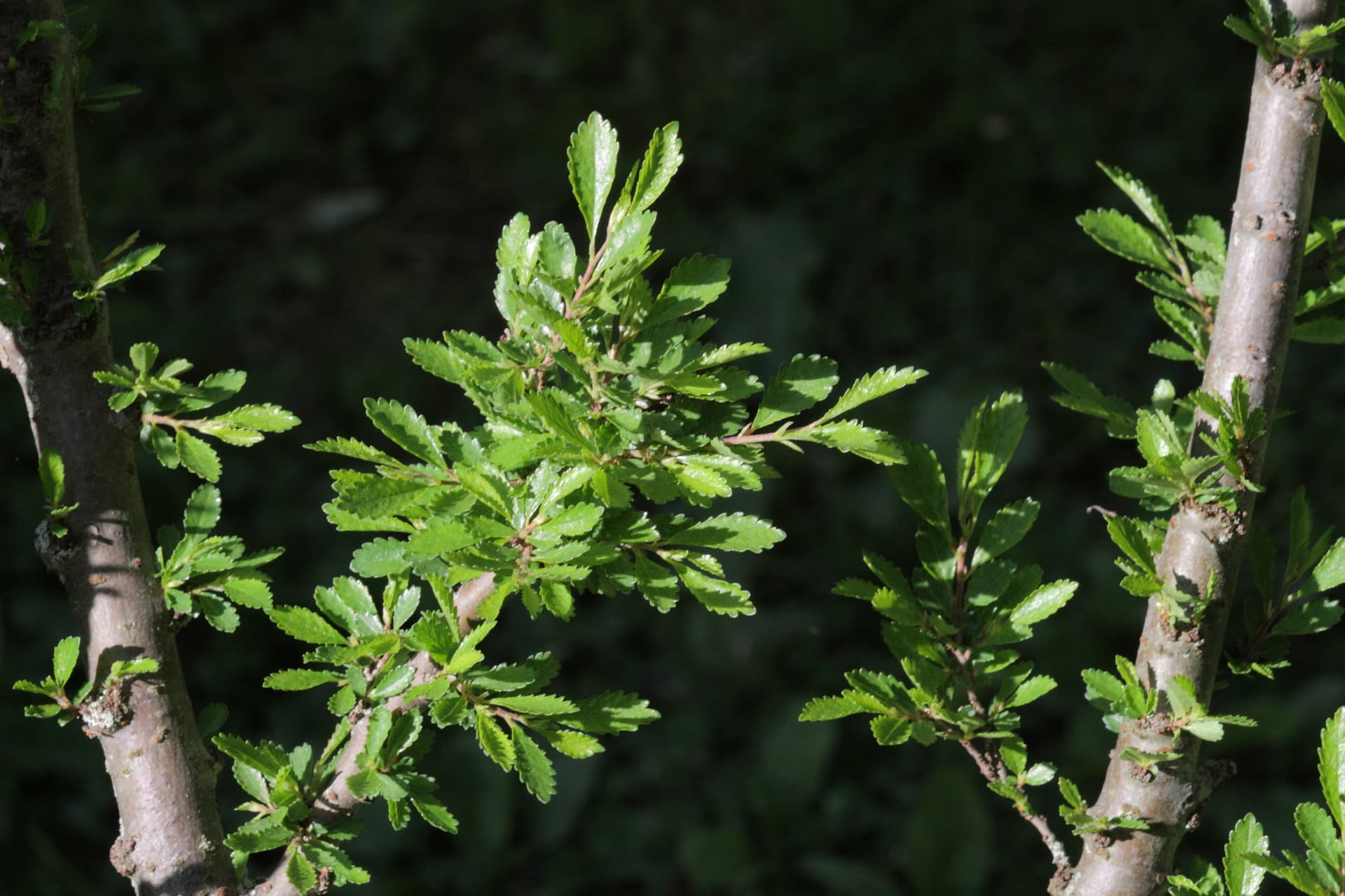
Ulmus parvifolia 'Yatsubusa' is a compact dwarf selection of Chinese elm, forming a slow-growing, dense mound of small, glossy dark green leaves. Like the species, it develops exfoliating bark that exposes a mosaic of gray, orange, green, and cream tones with age - a strong ornamental feature on a plant that may take decades to exceed 6 feet.
Chinese elm tolerates compacted soils, drought, urban pollution, and a wide pH range better than most elms. The 'Yatsubusa' form is long established in bonsai culture and fits confined landscape spaces where no full-sized tree could. Plant in well-drained soil and mulch the root zone to 3 inches to moderate soil temperature and retain moisture during establishment. It is semi-evergreen in mild winters and fully deciduous in colder climates at the lower end of its range.
Ulmus parvifolia carries strong resistance to Dutch elm disease, elm yellows (phloem necrosis), and elm leaf beetles - the pathogens and pests that largely eliminated American elms from the North American landscape. This disease resilience is a primary reason the species remains widely planted.
Fungal leaf spot
Brown or purplish spots on the leaves, often ringed with a yellow halo, that spread and merge in warm, humid, or wet weather; heavily spotted leaves yellow and drop early.
Pick off spotted leaves and clear fallen debris to remove overwintering spores. Improve air circulation by thinning, and water at the base so foliage dries quickly. If it persists, apply a copper- or sulfur-based fungicide at the first sign.
Powdery mildew
White or grey powdery coating on leaves - usually starting on older growth in humid conditions or when nights cool.
Improve air circulation by thinning plants. Apply neem oil or potassium bicarbonate spray at first sign. Avoid overhead watering.
Verticillium Wilt
Lower leaves yellow and wilt, often on one side of the plant, with brown streaking in the stem and crown tissue when cut open. Plants are stunted and decline over the season.
Remove and destroy affected plants. Avoid planting in soil that has grown infected tomatoes, peppers, or other susceptible crops. Rotate beds and improve drainage; there is no cure once a plant is infected.