
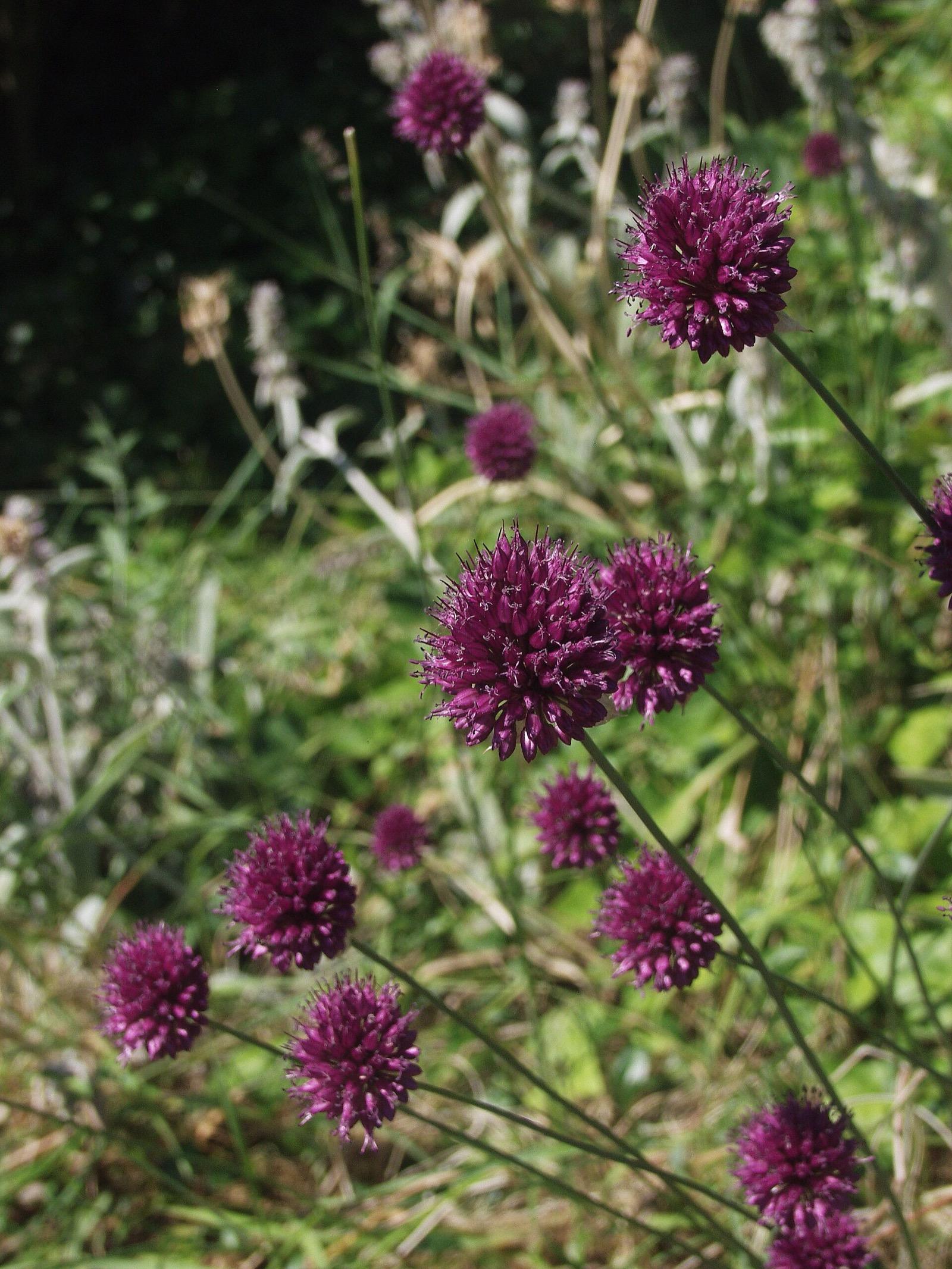
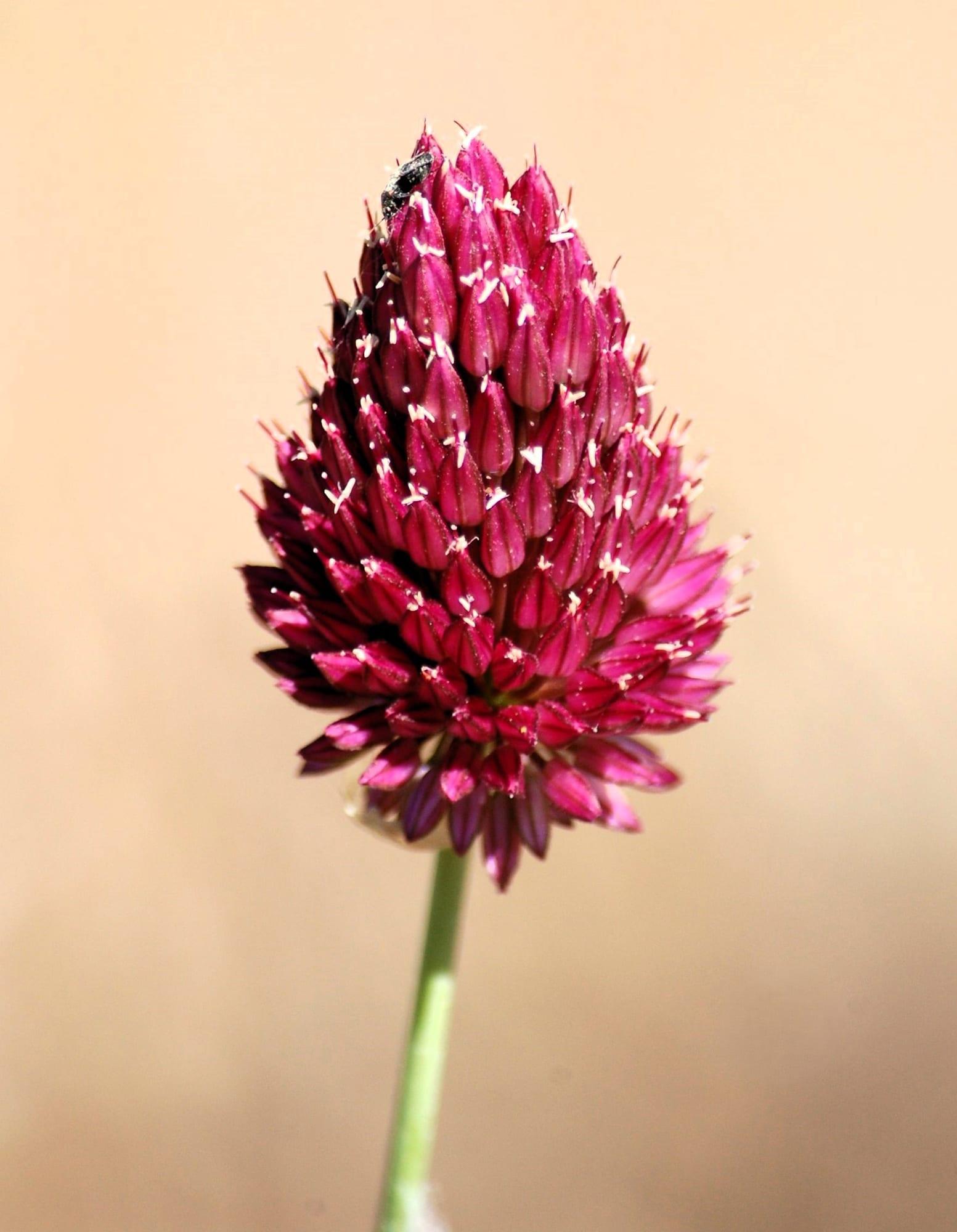
Allium sphaerocephalon is a bulbous perennial native to Europe, North Africa, and western Asia. Its slender stems carry dense, egg-shaped heads that graduate from lime-green to deep wine-red as summer progresses. This two-tone transition and fine, airy texture fit well in meadow-style plantings, mixed borders, and large naturalized drifts.
Bulbs multiply freely over years without becoming invasive. Foliage is sparse and grass-like, so planting alongside fuller perennials at the base reduces bare ground at the soil level. Sharp drainage is essential; amend heavy clay with horticultural grit or plant on a slight slope. Preferred pH is 6.0–7.0. Plant bulbs in fall, 3–4 inches deep; a cold dormancy period is required for reliable performance the following season.
All plant parts are edible. The bulbs carry a mild garlic-onion flavor and can substitute for small garlic cloves; young leaves serve as a mild chive alternative. Like other alliums, the plant contains organosulfur compounds with documented antimicrobial activity and a long history of traditional use for cardiovascular support.
These dates are for Zone 6b. Enter your ZIP to time every job to your own frost dates.
- buy · Jul 10 - Jul 24Order bulbs - about two months before planting; they are sold by the bag and the best stock goes early
- plant · Sep 4 - Oct 2Lift and divide crowded clumps every 3-4 years once the foliage has died down, replanting the offsets straight away
- plant · Sep 18 - Oct 16Plant bulbs 3–4 inches deep and 4–6 inches apart in drifts of 20 or more, threaded between perennials that will hide the fading leaves
Problems & troubleshooting
Common problems
White Rust
White, blister-like pustules on the undersides of leaves with yellow spots on the upper surface; severe infections distort leaves and stems.
Remove and destroy infected leaves, improve air circulation, avoid overhead watering, and rotate brassicas to a new bed each year.
Rust
Orange to brown raised pustules on the undersides of leaves, with yellow spotting on the upper surface. Heavy infections cause leaves to yellow and drop.
Remove and destroy infected leaves. Avoid overhead watering and improve air circulation. Apply a sulfur or copper-based fungicide if it spreads. Clear plant debris in fall.
Downy mildew
Yellowing on top of leaves with grey-purple fuzz underneath. Spreads rapidly in humid conditions.
Remove affected leaves. Improve air circulation. Avoid overhead watering. Copper spray as preventive.