
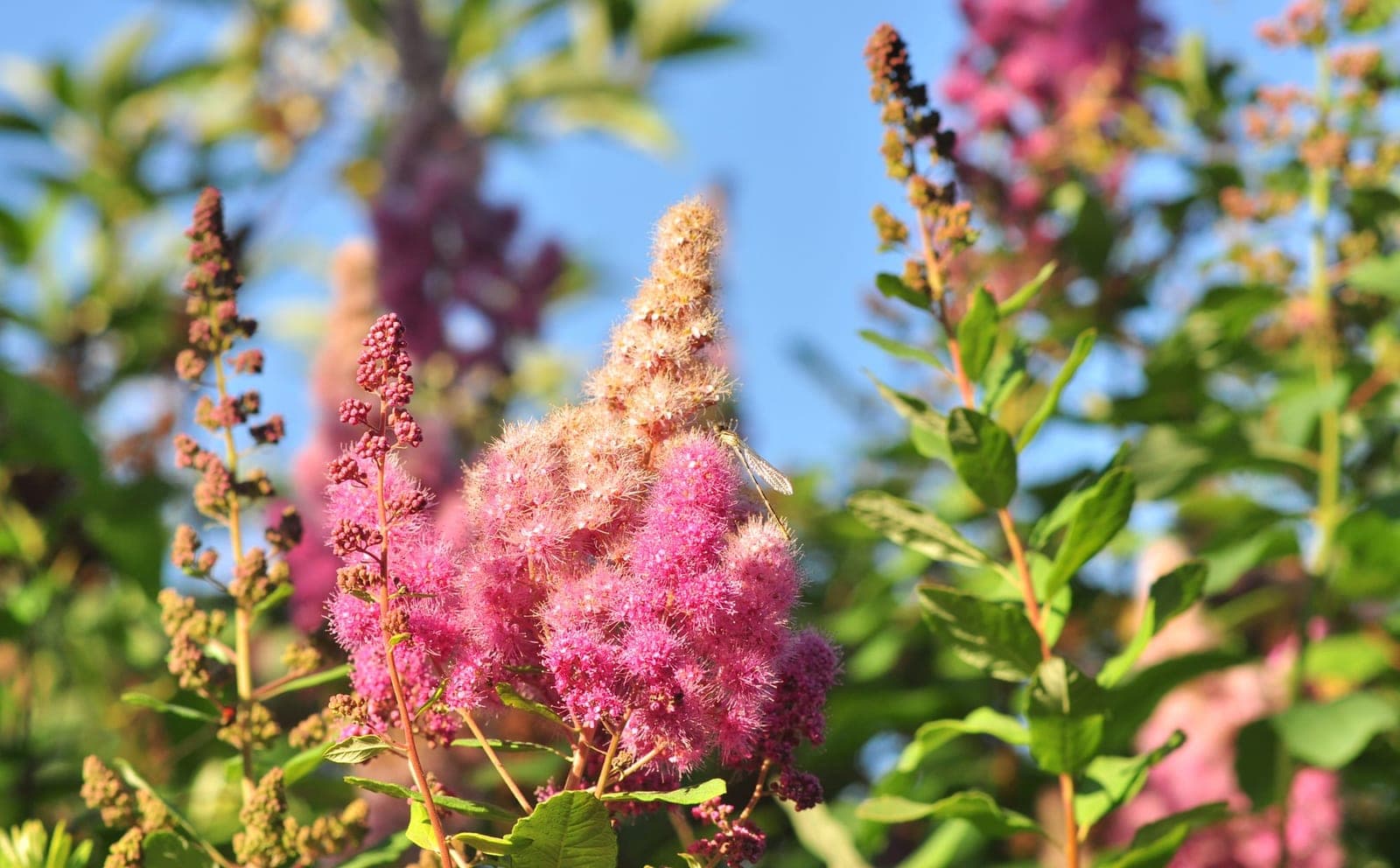
Douglas Spirea is a deciduous native shrub ranging from Alaska south to California and east into the northern Rockies. It produces dense, upright clusters of deep rose-pink flowers through midsummer and performs well in wet sites where most ornamentals fail - rain gardens, bioswales, pond margins, and streambanks.
This shrub spreads by rhizomes and suckers, forming dense thickets that bind streambanks and stabilize wet slopes. In garden settings that suckering requires consistent management at the planting edge. Outside its native range, notably in parts of Europe, it has naturalized invasively. It thrives in acidic, moist to wet soils with full sun but tolerates partial shade; pH around 5.5–6.5 suits it best.
Several Indigenous peoples of the Pacific Northwest prepared bark and leaf decoctions medicinally. Its dense midsummer flowering reliably supports native bees and bumblebees, and the thicket structure provides nesting cover and escape habitat for birds and small mammals, making it a strong choice for riparian restoration plantings.
Ecoregions:Northwestern Forested MountainsMarine West Coast Forest
Powdery mildew
White or grey powdery coating on leaves - usually starting on older growth in humid conditions or when nights cool.
Improve air circulation by thinning plants. Apply neem oil or potassium bicarbonate spray at first sign. Avoid overhead watering.
Fungal leaf spot
Brown or purplish spots on the leaves, often ringed with a yellow halo, that spread and merge in warm, humid, or wet weather; heavily spotted leaves yellow and drop early.
Pick off spotted leaves and clear fallen debris to remove overwintering spores. Improve air circulation by thinning, and water at the base so foliage dries quickly. If it persists, apply a copper- or sulfur-based fungicide at the first sign.