
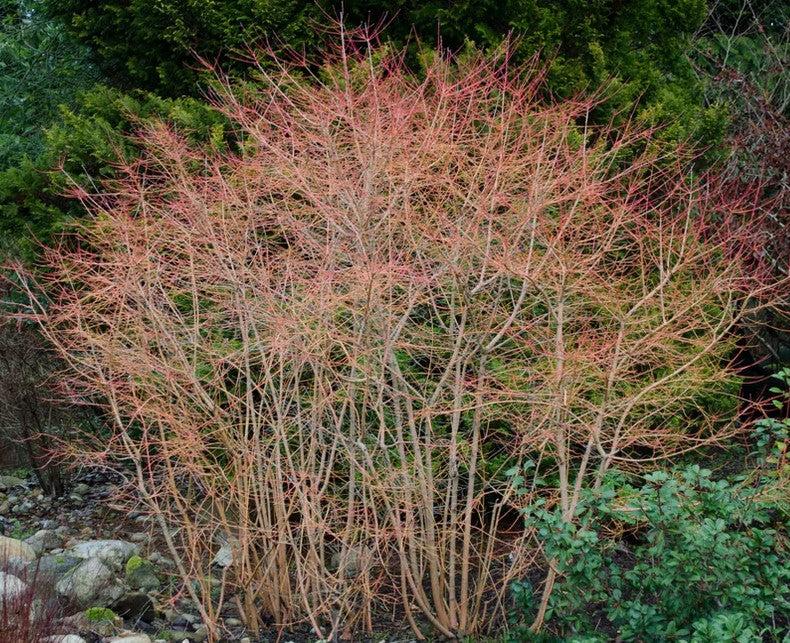
Midwinter Fire Dogwood
Cornus sanguinea 'Midwinter Fire' is a European bloodtwig dogwood cultivar grown primarily for its winter stem display. Stems grade from yellow-orange at the base to coral-red at the tips, producing a layered warm gradient that reads clearly across the dormant garden.
Annual hard coppicing - cutting all stems to 6–8 inches in early spring - forces vigorous young growth that delivers the most saturated stem color the following winter. Plants left unpruned still color up, but older wood produces noticeably duller tones. Mulching the base with 2–3 inches of organic material after coppicing supports rapid regrowth; the shrub tolerates clay and brief waterlogging. Best stem color develops in full sun; shade sites remain attractive but shift the display toward more muted tones. The plant is reliably cold-hardy through zone 4a without special protection.
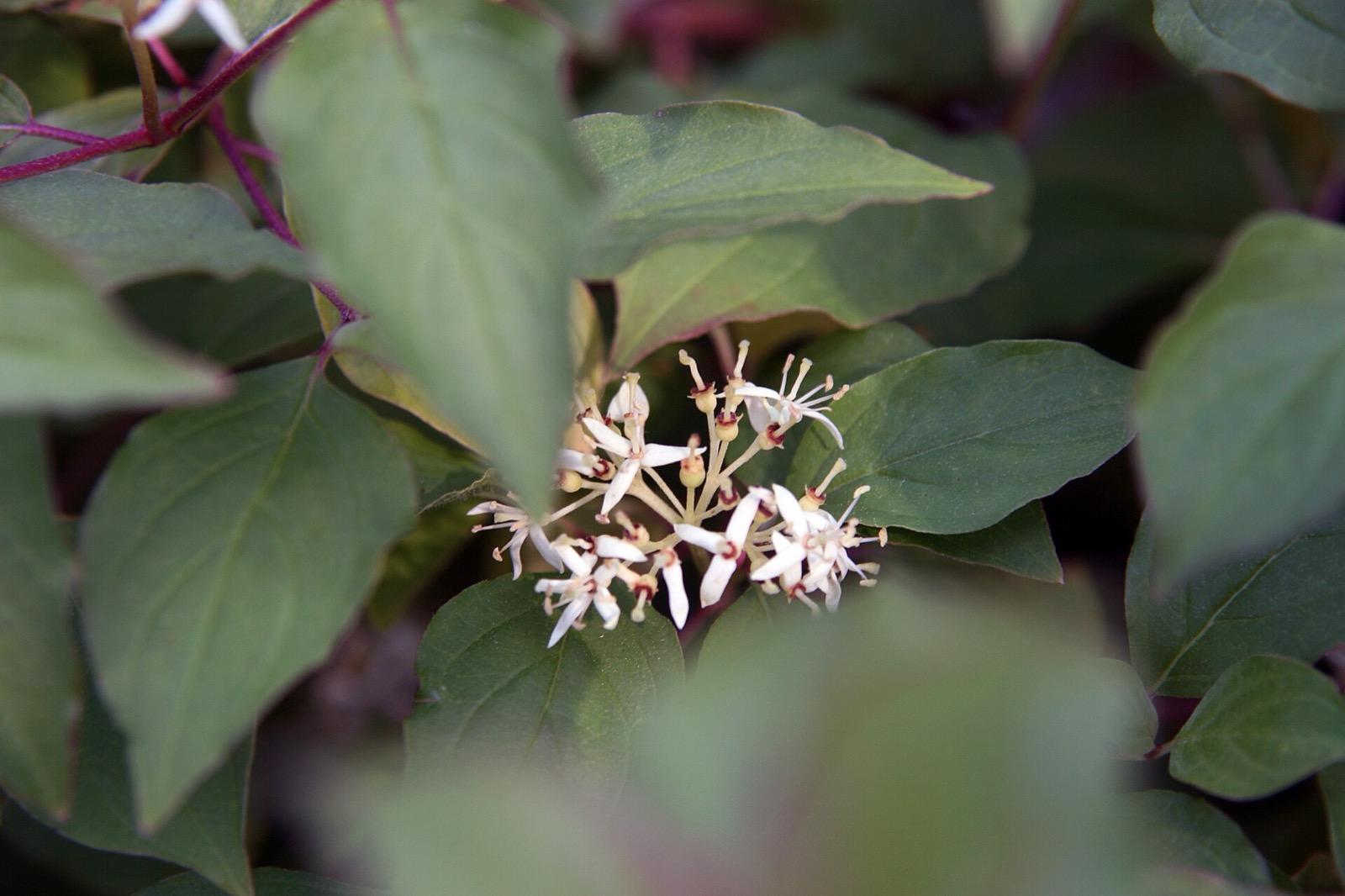
Late-spring white flower clusters attract pollinators, and the small blue-black berries that follow are taken by birds. Historically, oil pressed from Cornus sanguinea seeds was used in Europe for soap-making and as lamp fuel.
These dates are for Zone 6b. Enter your ZIP to time every job to your own frost dates.
- buy · Jan 16 - Jan 30Order plants - about two months before planting
- cut · Feb 13 - Mar 6Before bud break, cut every stem to 4–6 inches above ground every two to three years (or a third of the stems each year). The new wood carries the brightest orange-red.
- plant · Mar 20 - Apr 10Plant container stock in full sun, where low light catches the stems, and water in well.
- cut · Jun 5 - Jul 17Cut out suckers at the root collar where they stray outside the clump.
Problems & troubleshooting
Common problems
Powdery mildew
White or grey powdery coating on leaves - usually starting on older growth in humid conditions or when nights cool.
Improve air circulation by thinning plants. Apply neem oil or potassium bicarbonate spray at first sign. Avoid overhead watering.
Fungal leaf spot
Brown or purplish spots on the leaves, often ringed with a yellow halo, that spread and merge in warm, humid, or wet weather; heavily spotted leaves yellow and drop early.
Pick off spotted leaves and clear fallen debris to remove overwintering spores. Improve air circulation by thinning, and water at the base so foliage dries quickly. If it persists, apply a copper- or sulfur-based fungicide at the first sign.
Dogwood Canker
Sunken, discolored, or cracked areas on stems and branches; wood beneath the canker is brown and dead; affected stems wilt and die back from the canker site toward the tip.
Prune infected stems at least 6 inches below visible canker tissue. Sterilize cutting tools with 70% isopropyl alcohol between each cut. Dispose of removed material - do not compost. Maintain plant vigor through consistent watering and avoid wounding stems during routine maintenance. No chemical controls are reliably effective once infection is established; prevention through plant health is the primary strategy.