
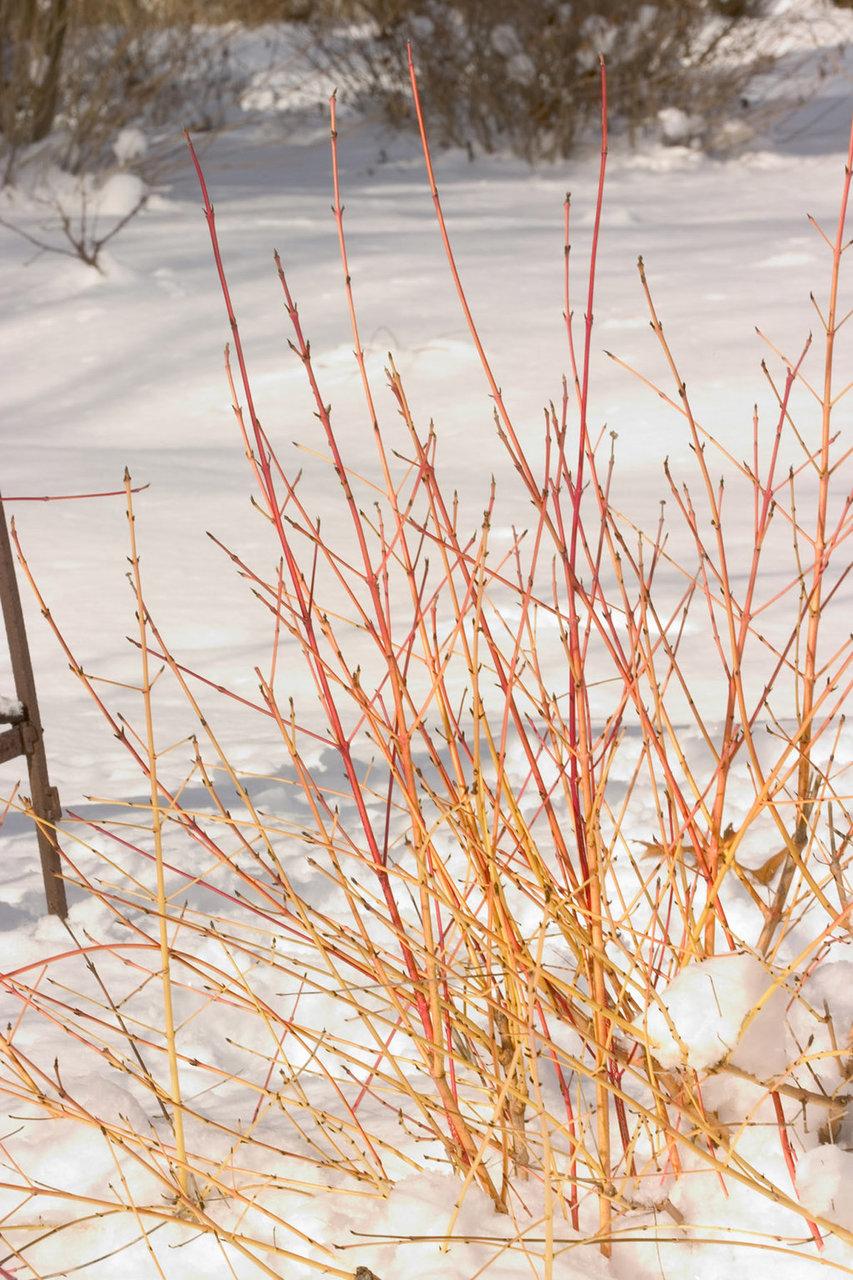
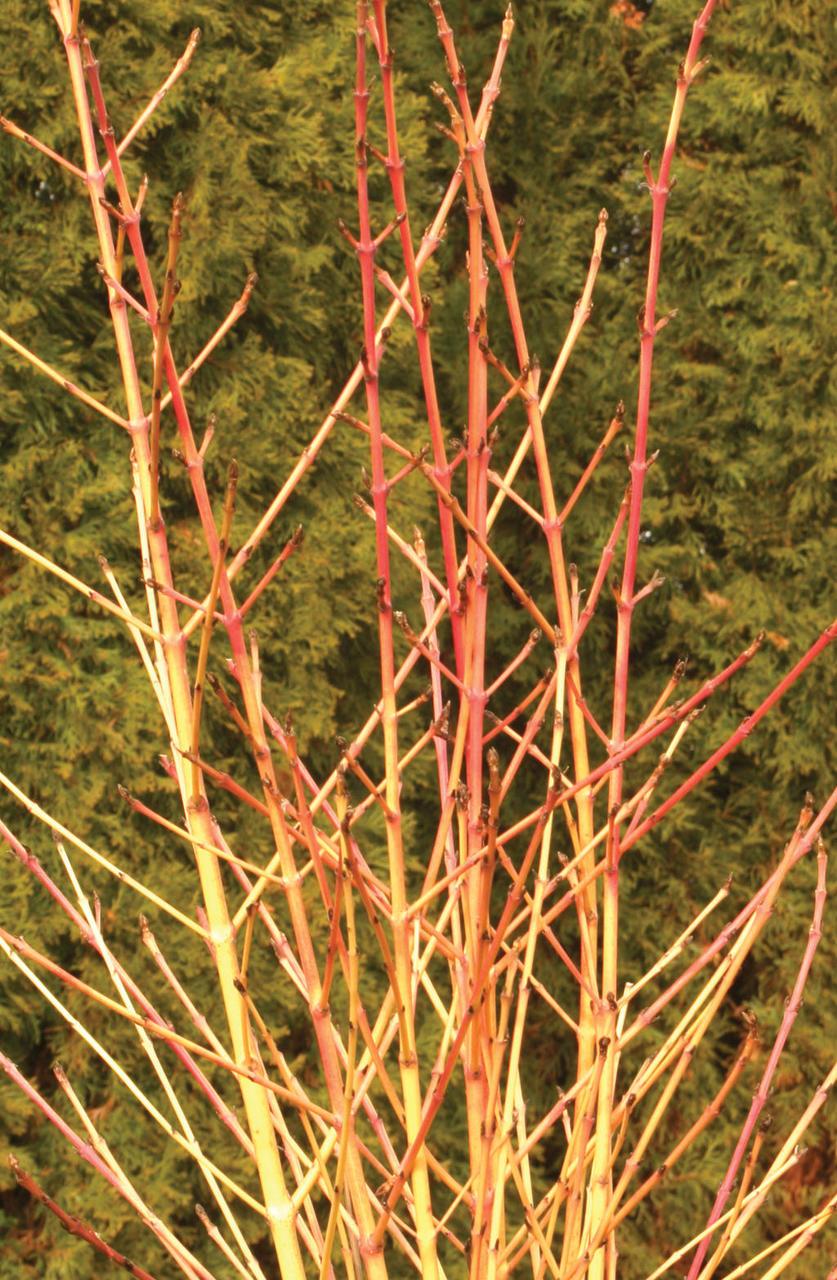
Arctic Sun Dogwood (Cornus sanguinea 'Cato') is a cultivar of European bloodtwig dogwood grown for its winter stem color: new canes grade from yellow-orange at the base to deep red-orange at the tips. The contrast is clearest against snow or a dark evergreen background, and the effect makes this shrub worth planting even in spaces where winter interest is the primary goal.
Stem color is brightest on new wood, so annual hard pruning to 6–12 inches in late winter is essential to sustain the display. Without regular cutting, older canes turn dull brown and the plant's main appeal fades. The shrub tolerates moist and occasionally wet soils, suits rain gardens and low spots, and spreads gradually by suckering if unmanaged. Full sun produces the most intense stem color; part shade is workable but reduces the effect. Soil pH of 5.5–7.0 is ideal, and a few inches of mulch helps retain the consistent moisture this species prefers.
White flower clusters appear in late spring and draw a range of pollinators. Blue-black fruit ripens by early fall and is taken readily by birds. Foliage turns purplish-red before leaf drop, giving the plant seasonal interest across all four seasons.
These dates are for Zone 6b. Enter your ZIP to time every job to your own frost dates.
- buy · Jan 16 - Jan 30Order plants - about two months before planting
- cut · Feb 13 - Mar 6Before bud break, remove a third of the oldest stems at the base each year, or cut the whole plant to 4–6 inches every few years. Young stems show the clearest gold with red tips.
- plant · Mar 20 - Apr 10Plant container stock in full sun and water in well. Shade dulls the yellow stems.
Problems & troubleshooting
Common problems
Dogwood Anthracnose
Irregular tan to brown spots on leaves with distinct purple or reddish margins, often starting at leaf tips and edges. In advanced cases: blighted shoots, stem cankers, and epicormic sprouts emerging from the lower trunk. Infected dead leaves may cling to branches through winter rather than dropping.
Remove and destroy all infected leaves, shoots, and cankered branches. Avoid overhead irrigation. Apply a copper-based or chlorothalonil fungicide starting at bud break in spring, repeating every 10–14 days during wet weather. Maintain tree vigor with consistent moisture and mulch - stressed trees are far more vulnerable. In high-pressure sites, consider replacing with anthracnose-resistant cultivars such as 'Appalachian Spring'.
Dogwood Canker
Sunken, discolored, or cracked areas on stems and branches; wood beneath the canker is brown and dead; affected stems wilt and die back from the canker site toward the tip.
Prune infected stems at least 6 inches below visible canker tissue. Sterilize cutting tools with 70% isopropyl alcohol between each cut. Dispose of removed material - do not compost. Maintain plant vigor through consistent watering and avoid wounding stems during routine maintenance. No chemical controls are reliably effective once infection is established; prevention through plant health is the primary strategy.
Powdery mildew
White or grey powdery coating on leaves - usually starting on older growth in humid conditions or when nights cool.
Improve air circulation by thinning plants. Apply neem oil or potassium bicarbonate spray at first sign. Avoid overhead watering.
Fungal leaf spot
Brown or purplish spots on the leaves, often ringed with a yellow halo, that spread and merge in warm, humid, or wet weather; heavily spotted leaves yellow and drop early.
Pick off spotted leaves and clear fallen debris to remove overwintering spores. Improve air circulation by thinning, and water at the base so foliage dries quickly. If it persists, apply a copper- or sulfur-based fungicide at the first sign.