
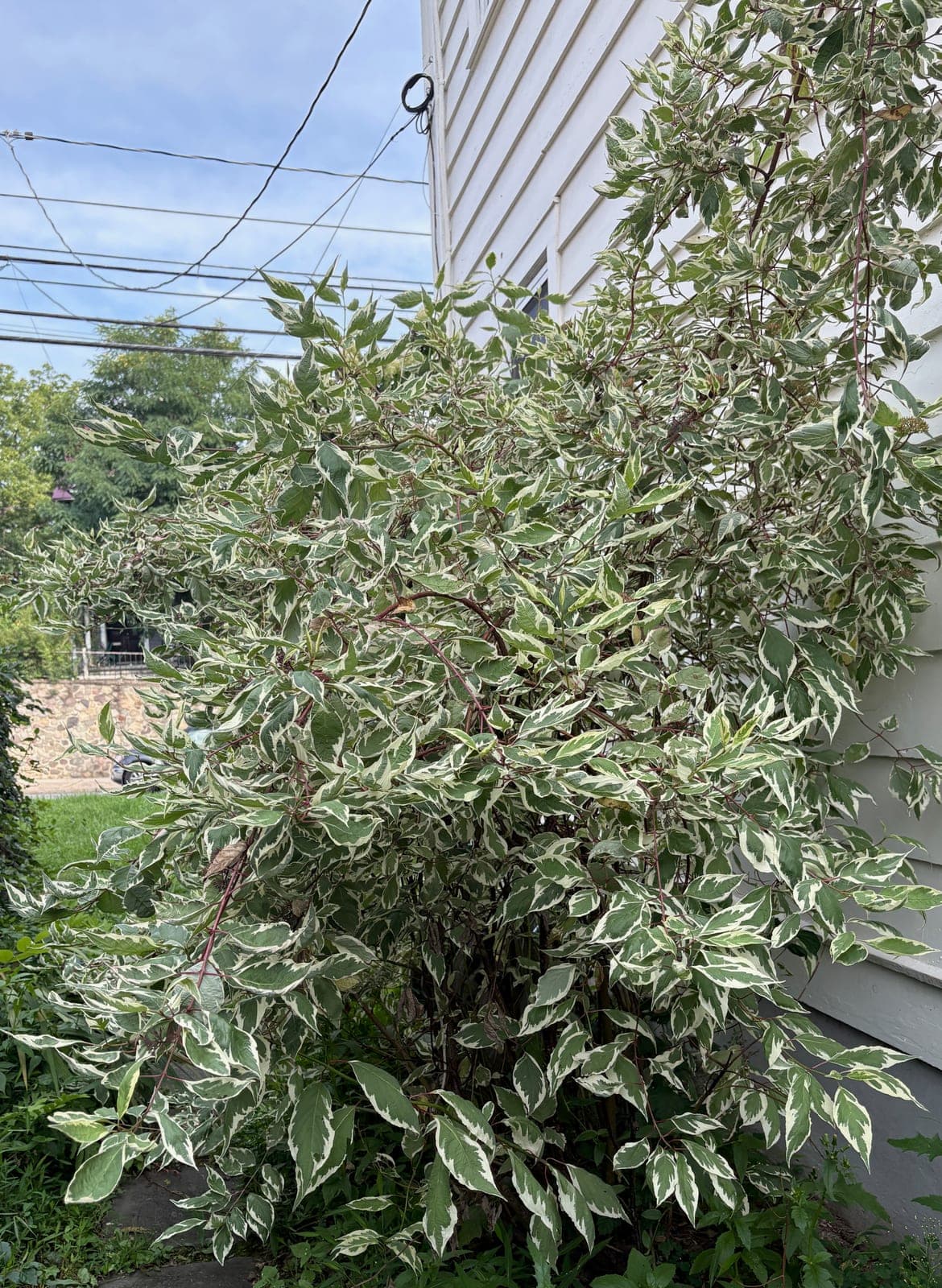
Variegated Tatarian Dogwood 'Elegantissima'
Cornus alba 'Elegantissima' is a deciduous shrub grown for two distinct assets: vivid red stems that stand out against snow in winter, and gray-green leaves edged in irregular creamy white that hold reliably through summer. It delivers genuine multi-season interest and is far more cold-hardy than most variegated shrubs, performing well into zone 3a.
Young stems carry the deepest red; hard renewal pruning every one to three years - cutting all stems to 6–12 inches above ground in late winter - forces vigorous regrowth that will produce the richest color the following winter. Without this, the plant becomes leggy and stem color fades to dull orange-brown. Cornus alba tolerates wet, poorly drained soils and is a dependable choice for rain gardens, streambanks, or low-lying areas subject to seasonal flooding. It spreads by suckering and can colonize substantial ground if suckers are not removed at the root collar. Mulching helps maintain soil moisture and suppress competing weeds during establishment.
Pale blue-white berries ripen in late summer and are taken quickly by songbirds. Foliage often shifts to red-purple tints before leaf drop, extending the seasonal display into autumn.
Powdery mildew
White or grey powdery coating on leaves - usually starting on older growth in humid conditions or when nights cool.
Improve air circulation by thinning plants. Apply neem oil or potassium bicarbonate spray at first sign. Avoid overhead watering.
Fungal leaf spot
Brown or purplish spots on the leaves, often ringed with a yellow halo, that spread and merge in warm, humid, or wet weather; heavily spotted leaves yellow and drop early.
Pick off spotted leaves and clear fallen debris to remove overwintering spores. Improve air circulation by thinning, and water at the base so foliage dries quickly. If it persists, apply a copper- or sulfur-based fungicide at the first sign.
Dogwood Canker
Sunken, discolored, or cracked areas on stems and branches; wood beneath the canker is brown and dead; affected stems wilt and die back from the canker site toward the tip.
Prune infected stems at least 6 inches below visible canker tissue. Sterilize cutting tools with 70% isopropyl alcohol between each cut. Dispose of removed material - do not compost. Maintain plant vigor through consistent watering and avoid wounding stems during routine maintenance. No chemical controls are reliably effective once infection is established; prevention through plant health is the primary strategy.