
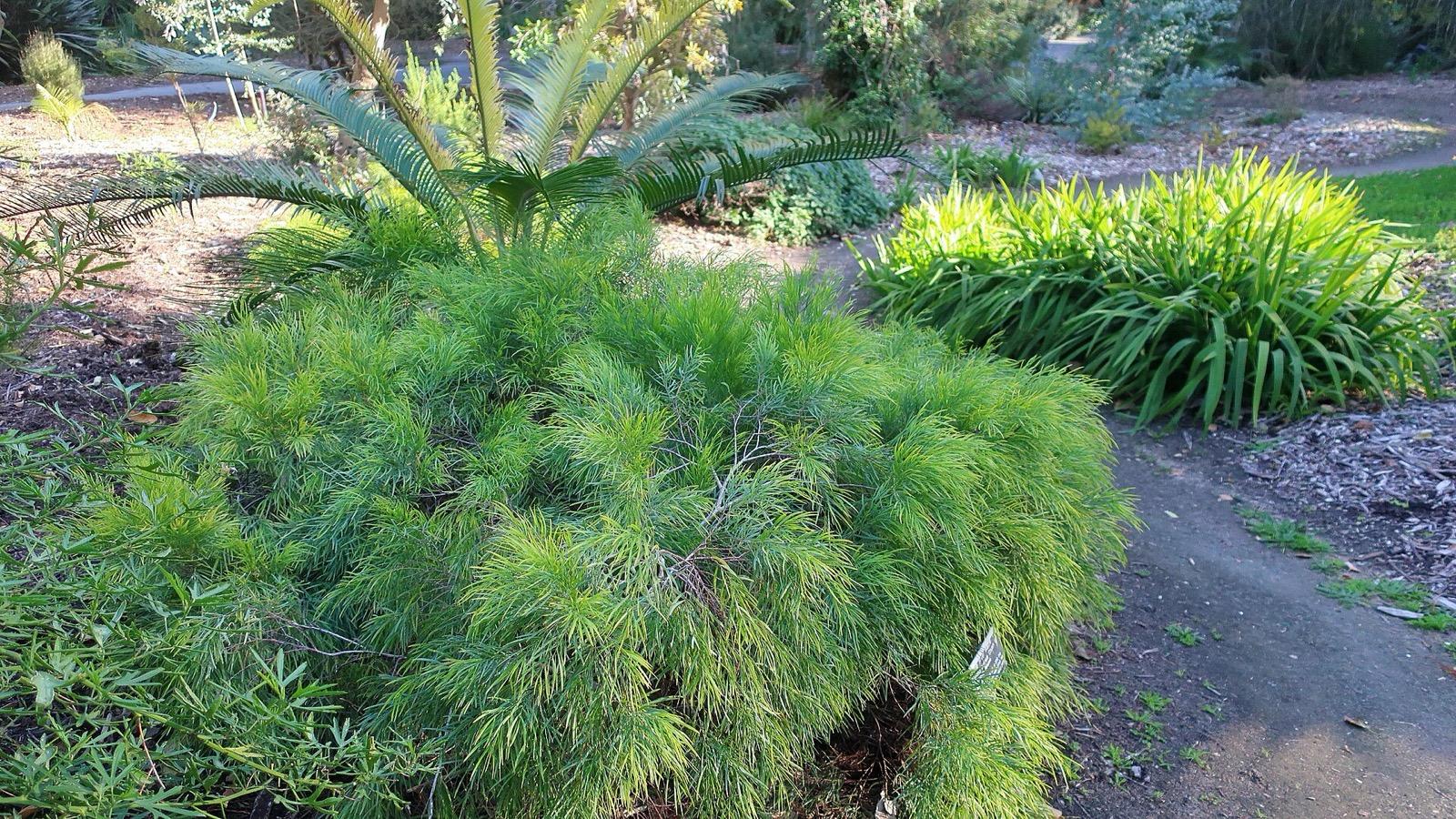
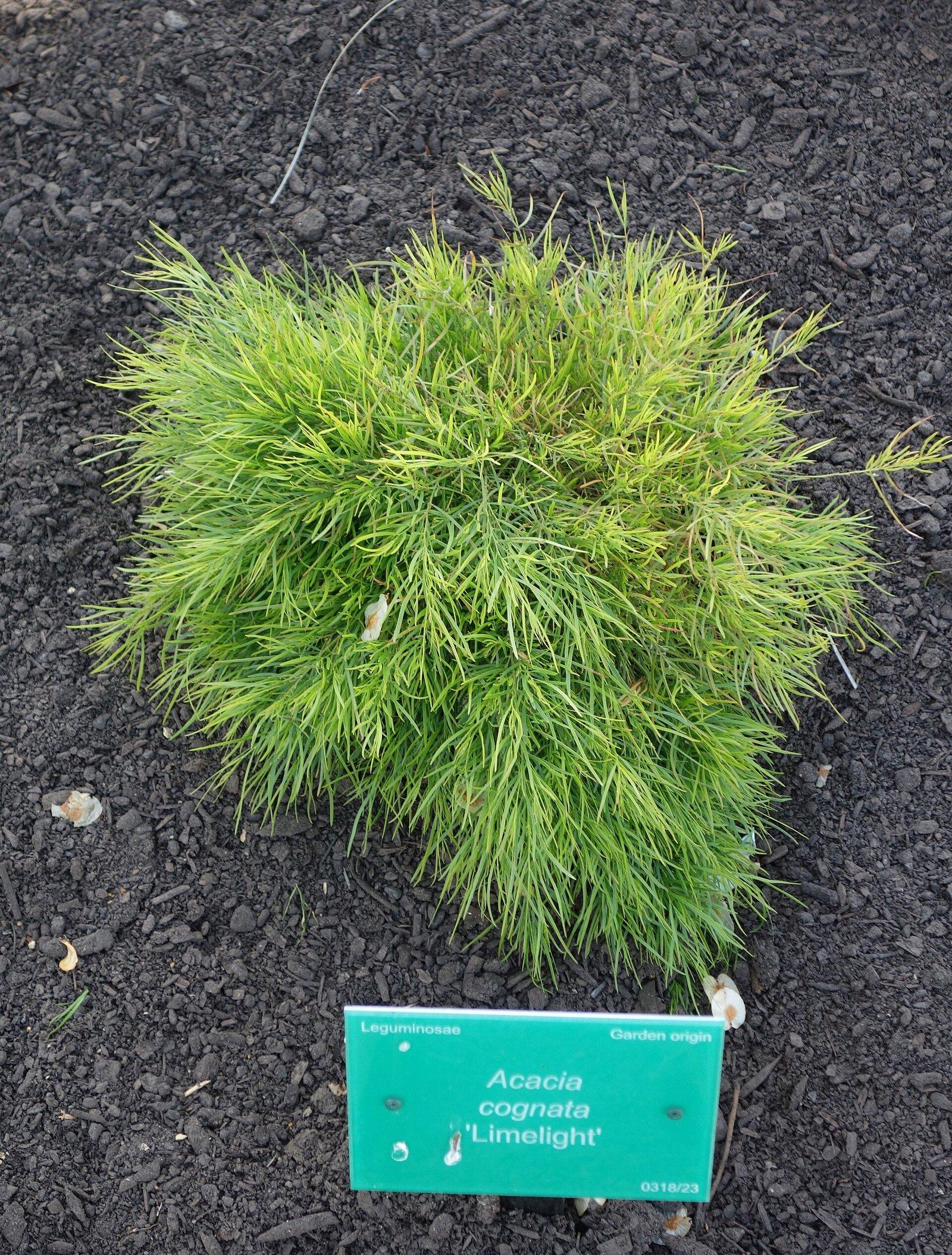
 'Limelight' - brighter lime-green foliage than 'Cousin Itt' on a similar low, weeping mound. Photo: Daderot, CC0.
Acacia cognata 'Cousin Itt' is a compact cultivar of river wattle, native to southeastern Australia. It forms a dense, ground-hugging mound of fine, thread-like phyllodes - modified leaf stalks that cascade and weave into a textured, olive-green cushion. At roughly 1–2 ft tall with a spread of 3–5 ft, it fills low-growing roles in warm-climate landscapes: groundcover, rock garden accent, container specimen, or erosion control on gentle slopes.
Excellent drainage is the single most important requirement; heavy clay or chronically wet soil triggers Phytophthora root rot and is the primary cause of plant failure. Sandy or loamy soil with a pH of 5.5–7.0 suits it well. Once established, 'Cousin Itt' is highly drought tolerant and rarely needs supplemental irrigation in coastal zones 9–11. Small, pale cream flowers appear in late winter to early spring but are largely hidden within the foliage - the ornamental value lies in the form and texture of the mound rather than the display. Plants rarely need pruning; a light shaping after flowering keeps the mound even without exposing old wood.
These dates are for Zone 6b. Enter your ZIP to time every job to your own frost dates.
- buy · Feb 13 - Feb 27Buy plants - about two months before planting out
- plant · Apr 24 - May 22Plant in fast-draining soil or a large container, and water regularly until it settles in
- watch · May 22 - Aug 28Check that the soil drains between waterings; yellowing or dieback in the centre usually means the roots are sitting wet
Problems & troubleshooting
Common problems
Phytophthora Root Rot
Wilting despite moist soil, yellowing leaves, stunted growth, and dark, decayed roots and crown tissue. Vines may collapse during hot weather.
Plant in well-draining soil and avoid waterlogging. Remove and destroy affected vines. Improve drainage with raised beds or amended soil and avoid overwatering.
Root rot
Plants wilt, yellow, and stunt even in moist soil; lower stems and roots turn brown, soft, and mushy and the plant may collapse. Most common in heavy, wet, or poorly drained ground.
Improve drainage and stop overwatering, and never plant too deep. Lift and destroy badly affected plants along with the soil around the roots. Grow in raised or free-draining beds to prevent it returning.
Sooty Mold (Scale-Associated)
Black, powdery or crusty coating on upper leaf surfaces and stems. Affected leaves may yellow and drop in severe cases. The mold grows on honeydew secreted by scale insects, mealybugs, or aphids feeding on the plant.
Control the underlying pest infestation first using horticultural oil or neem oil applied thoroughly to stems and leaf undersides. Once pest populations are reduced, sooty mold stops spreading and weathers away over time. Rinse foliage with a strong stream of water to dislodge existing mold deposits.