
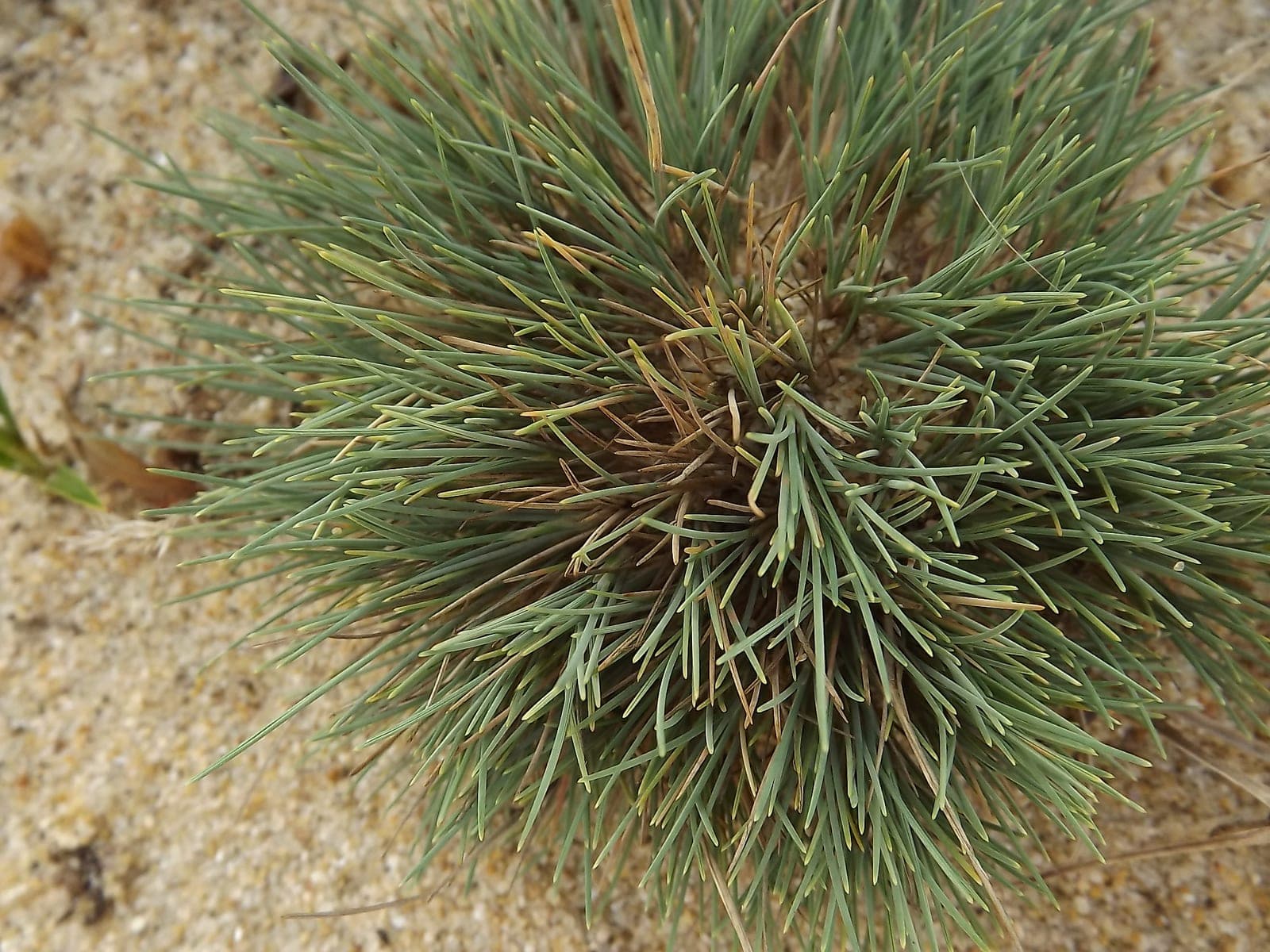
Corynephorus canescens is a compact clump-forming grass native to sandy dunes and heathlands across Europe, the Middle East, and North Africa, with naturalized populations in North America. In the UK it remains uncommon, found mainly in the Breckland area of Suffolk. Gardeners grow it for its fine silver-grey foliage and its capacity to thrive in dry, infertile, sandy ground where most plants fail.
This grass performs best in lean, acidic, well-drained sandy soil. Fertile or consistently moist conditions cause it to sprawl and die back early. It is a relatively short-lived perennial - often persisting three to five years - but self-sows readily into open sandy spots, naturalizing as a spreading colony. A hard cut in late winter before new growth begins keeps clumps tidy. Avoid mulching or top-dressing with rich materials, as added fertility shortens its life.
In its native range it functions as a primary colonizer and binder of mobile sand surfaces, including coastal and inland dunes. This role translates directly to the garden: it is a practical low-input choice for dry, erosion-prone banks, gravel paths edges, or sandy slopes where soil stability is needed without irrigation.