
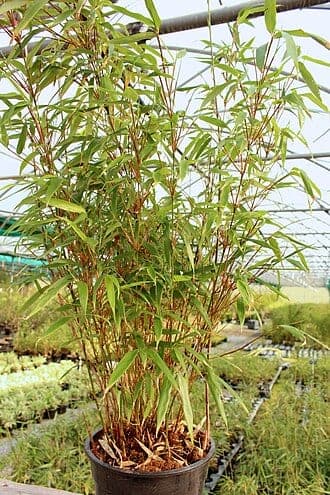
Fargesia rufa is a clumping bamboo native to high-elevation forests in Sichuan and Gansu provinces of western China. Unlike running bamboos, it spreads slowly in tight clumps and requires no root barrier, making it one of the most garden-safe choices for temperate landscapes. Dense, arching culms reach 6–10 ft and work effectively as privacy screens, windbreaks, or specimen plantings.
It is cold-hardy to zone 5a and handles shade better than most bamboos. In zones 7 and warmer, afternoon shade is important to prevent leaf rolling and tip scorch. Soil pH of 6.0–7.0 and a thick mulch layer over the root zone help it through summer heat. New culms push up each spring and reach full height within weeks, hardening and developing a characteristic reddish-brown sheath as the season progresses. Like all bamboos, established clumps will eventually undergo a masting event - mass simultaneous flowering followed by whole-clump death - though the cycle length for this species has not been precisely established.
Fargesia rufa is one of the primary food plants of the giant panda in its native range, particularly in Qingchuan county of Sichuan, from which the species takes its Chinese common name.
Fungal leaf spot
Brown or purplish spots on the leaves, often ringed with a yellow halo, that spread and merge in warm, humid, or wet weather; heavily spotted leaves yellow and drop early.
Pick off spotted leaves and clear fallen debris to remove overwintering spores. Improve air circulation by thinning, and water at the base so foliage dries quickly. If it persists, apply a copper- or sulfur-based fungicide at the first sign.
Root rot
Plants wilt, yellow, and stunt even in moist soil; lower stems and roots turn brown, soft, and mushy and the plant may collapse. Most common in heavy, wet, or poorly drained ground.
Improve drainage and stop overwatering, and never plant too deep. Lift and destroy badly affected plants along with the soil around the roots. Grow in raised or free-draining beds to prevent it returning.
Sooty Mold (Scale-Associated)
Black, powdery or crusty coating on upper leaf surfaces and stems. Affected leaves may yellow and drop in severe cases. The mold grows on honeydew secreted by scale insects, mealybugs, or aphids feeding on the plant.
Control the underlying pest infestation first using horticultural oil or neem oil applied thoroughly to stems and leaf undersides. Once pest populations are reduced, sooty mold stops spreading and weathers away over time. Rinse foliage with a strong stream of water to dislodge existing mold deposits.