
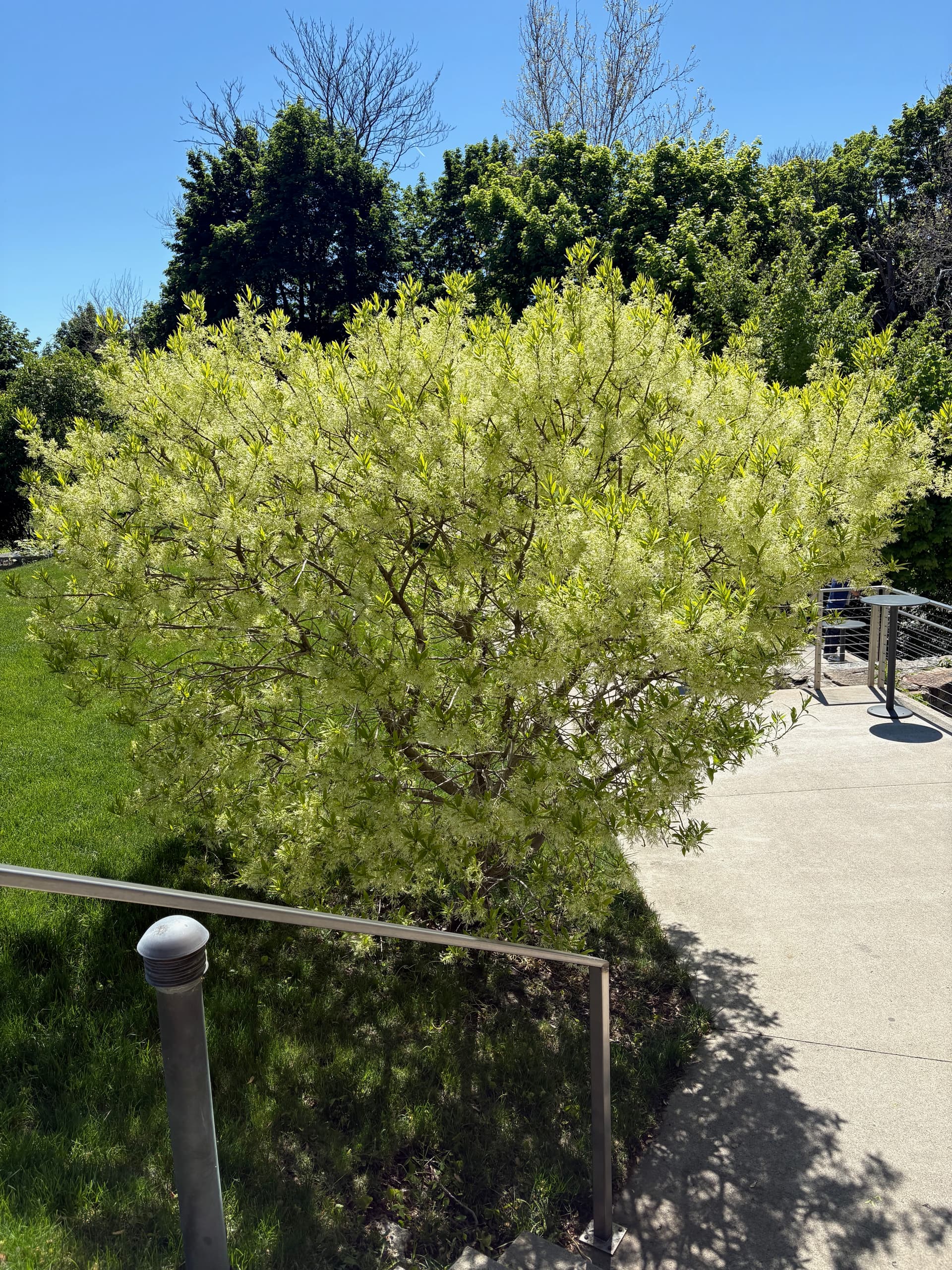
Fringe tree is one of those plants that rewards your patience absolutely. It's slow to establish - don't panic if it sulks for the first season or two - but once it settles in, it practically looks after itself. Site it in moist, slightly acidic, well-drained soil with good organic matter worked in; a handful of sulfur or acidifying compost at planting makes a real difference on alkaline ground. Full sun gives you the densest flowering, but it'll bloom quite happily in light dappled shade, which also helps it cope with summer heat in the warmer zones. The single biggest mistake gardeners make is overwatering after the first year - it hates waterlogged roots and simply doesn't need coddling once established. If you're growing from seed, be prepared: fresh seed needs a warm stratification period followed by a cold one, often taking eighteen months or more to germinate. Buying a small nursery tree and planting it in spring or early fall tends to be far more satisfying.
Native American herbalists used the bark of fringe tree's roots as a bitter tonic and liver remedy, and it found its way into 19th-century Eclectic medicine as a treatment for jaundice, gallbladder complaints, and sluggish digestion - the Cherokee and others prepared decoctions from the bark for fevers and sore throats as well. The active compound oleuropein, also found in olive leaves (fringe tree is in the Oleaceae family), is thought to underpin much of its hepatic activity. The small, olive-like drupes that female trees produce in late summer are technically edible but intensely bitter and astringent - they're far more valuable left on the tree for migrating birds than for any culinary purpose. Fringe tree has wonderful ecological value: its flowers are an excellent early-season pollen source for native bees, and pairing it with yarrow or native sedges underneath makes for a low-maintenance, wildlife-friendly planting that looks intentional rather than accidental.