
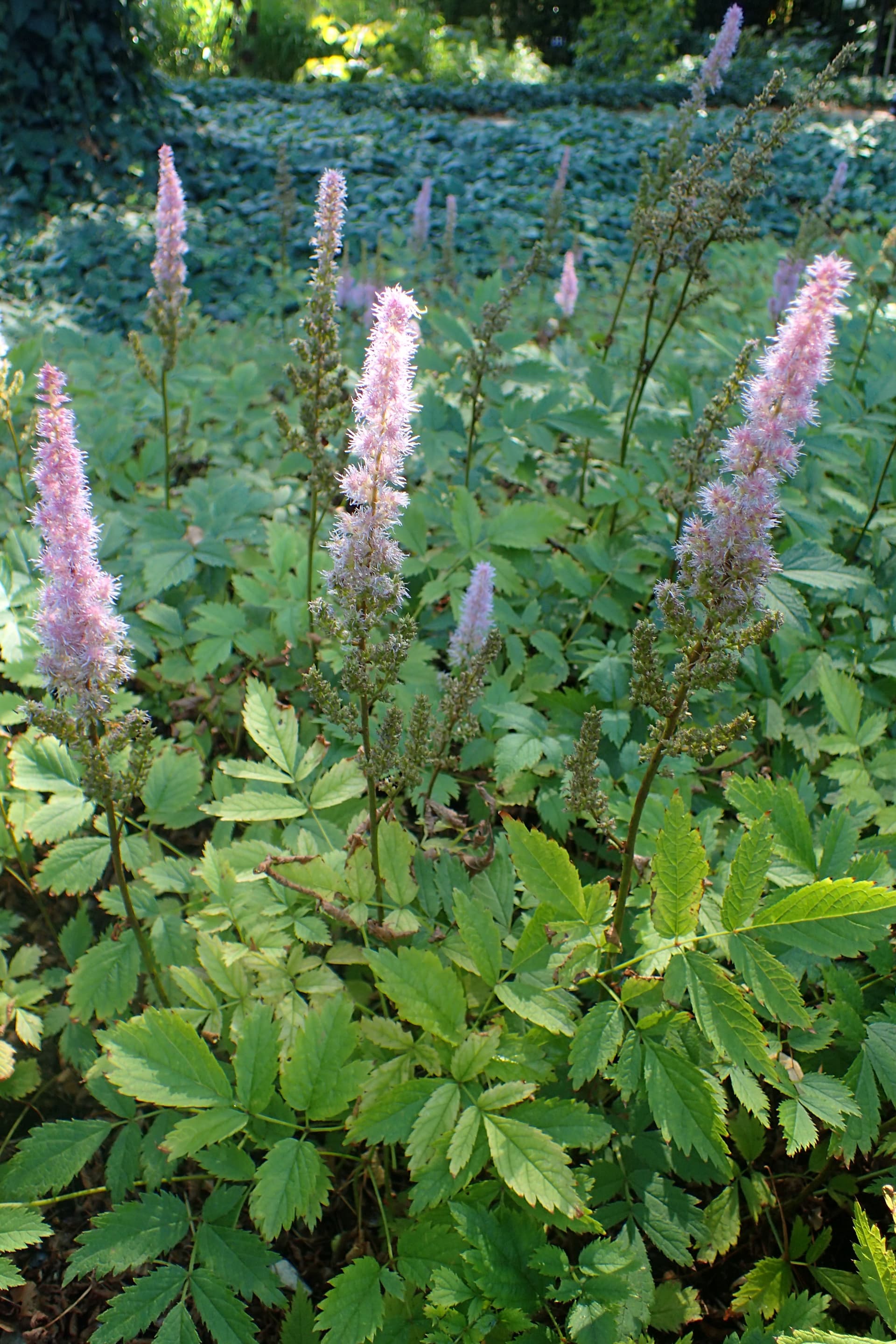
Astilbe chinensis is a clump-forming perennial native to stream banks and shaded forest margins in China and Korea. It produces upright, feathery plumes in shades of pink, lavender, and purple over dark, ferny foliage. Among astilbes, it stands out for blooming later in summer and tolerating drier conditions better than most in the genus.
It spreads slowly by rhizomes and naturalizes gradually in moist, shaded spots. Plant in humus-rich, consistently moist soil at a slightly acidic pH of 5.5–6.5. It handles more sun where summers are cool and moisture is reliable. Mulching helps keep roots cool and reduces watering frequency. Divide clumps every three to four years to maintain vigor; without division, flowering declines and centers die out.
In traditional Chinese medicine, root preparations of Astilbe chinensis have been used for rheumatic pain, toothache, and inflammatory conditions.
Powdery mildew
White or grey powdery coating on leaves - usually starting on older growth in humid conditions or when nights cool.
Improve air circulation by thinning plants. Apply neem oil or potassium bicarbonate spray at first sign. Avoid overhead watering.
Crown Rot
Lower leaves yellow and wilt; the base of the rosette turns brown and soft, sometimes with white fungal threads at the soil line. Plants collapse in wet conditions.
Remove and destroy affected plants. Improve drainage and avoid overhead watering. Do not mulch directly against the crown. Space plants for airflow and avoid replanting in the same wet spot.
Root rot
Plants wilt, yellow, and stunt even in moist soil; lower stems and roots turn brown, soft, and mushy and the plant may collapse. Most common in heavy, wet, or poorly drained ground.
Improve drainage and stop overwatering, and never plant too deep. Lift and destroy badly affected plants along with the soil around the roots. Grow in raised or free-draining beds to prevent it returning.
Fungal leaf spot
Brown or purplish spots on the leaves, often ringed with a yellow halo, that spread and merge in warm, humid, or wet weather; heavily spotted leaves yellow and drop early.
Pick off spotted leaves and clear fallen debris to remove overwintering spores. Improve air circulation by thinning, and water at the base so foliage dries quickly. If it persists, apply a copper- or sulfur-based fungicide at the first sign.