
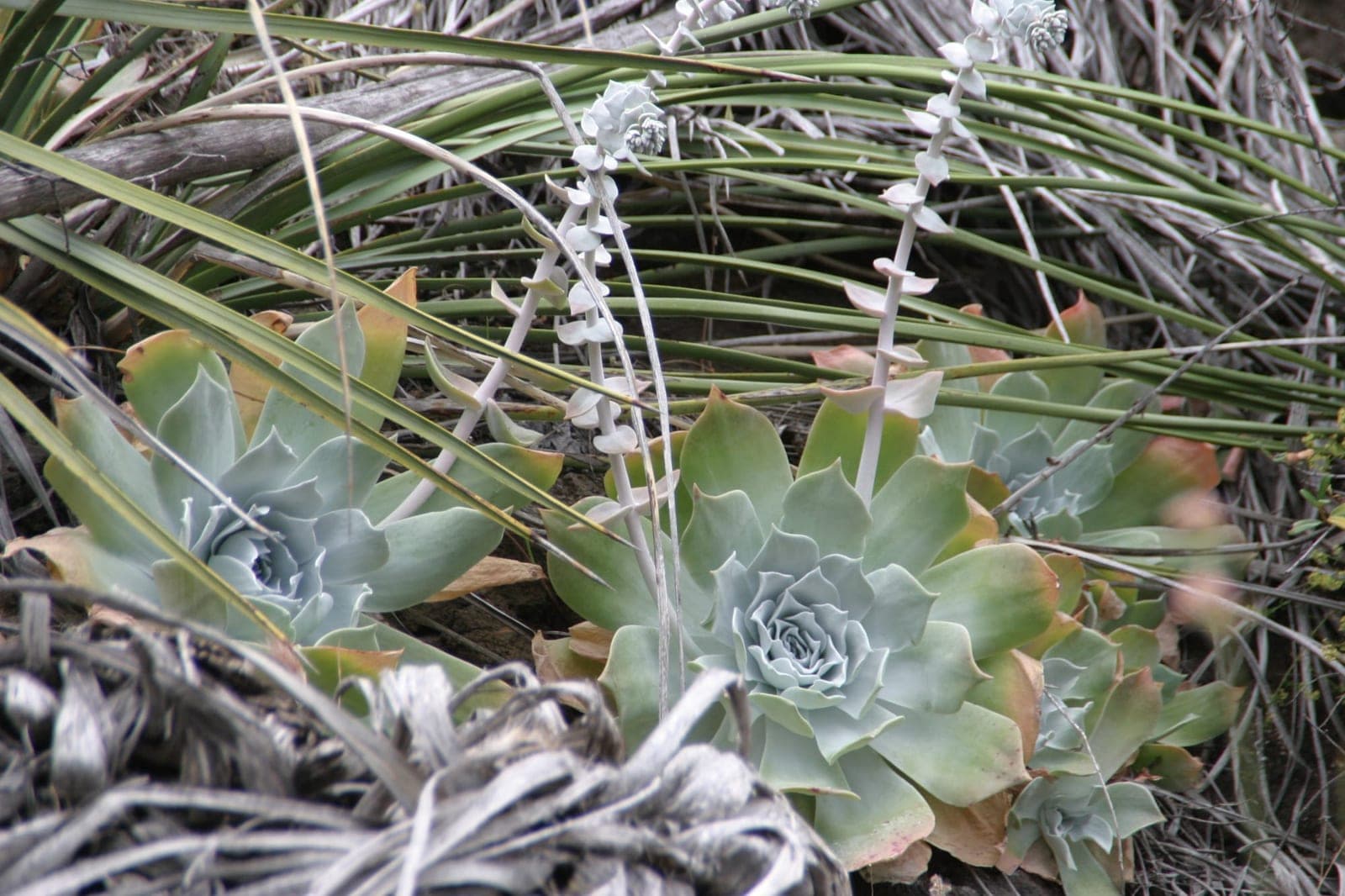
Chalk Dudleya is a large perennial succulent native to rocky outcrops and near-vertical cliff faces from southern Monterey County, California, to Baja California. Its rosette is densely coated in white waxy powder called farina, which reflects heat and reduces water loss; on dark rock the plant is conspicuous from a distance. Mature rosettes reach 12–24 inches across, placing it among the largest Dudleya species.
In the wild, immediate drainage and summer drought define growing conditions; replicating them in cultivation is essential. Soil that stays moist in summer causes rapid crown and root rot. Plant in mineral-lean, fast-draining rocky or gravelly substrate on a slope, cliff face, or raised bed with a pH around 6.5–7.5. Withhold irrigation from June through September to respect summer dormancy, then resume light watering in fall as the natural wet season begins. Avoid handling the rosette - fingerprints permanently damage the farina coating.
Flowering stalks emerge in spring, arching outward with pendant red flowers that have among the longest corollas and highest nectar output in the genus - traits directly shaped by hummingbird pollination. The species holds the widest natural range of any Dudleya, spanning over 1,000 km along the Pacific coast, and is a significant nectar resource for Anna's and Allen's hummingbirds in coastal California.
Ecoregions:Mediterranean California
Root rot
Plants wilt, yellow, and stunt even in moist soil; lower stems and roots turn brown, soft, and mushy and the plant may collapse. Most common in heavy, wet, or poorly drained ground.
Improve drainage and stop overwatering, and never plant too deep. Lift and destroy badly affected plants along with the soil around the roots. Grow in raised or free-draining beds to prevent it returning.
Crown Rot
Lower leaves yellow and wilt; the base of the rosette turns brown and soft, sometimes with white fungal threads at the soil line. Plants collapse in wet conditions.
Remove and destroy affected plants. Improve drainage and avoid overhead watering. Do not mulch directly against the crown. Space plants for airflow and avoid replanting in the same wet spot.