
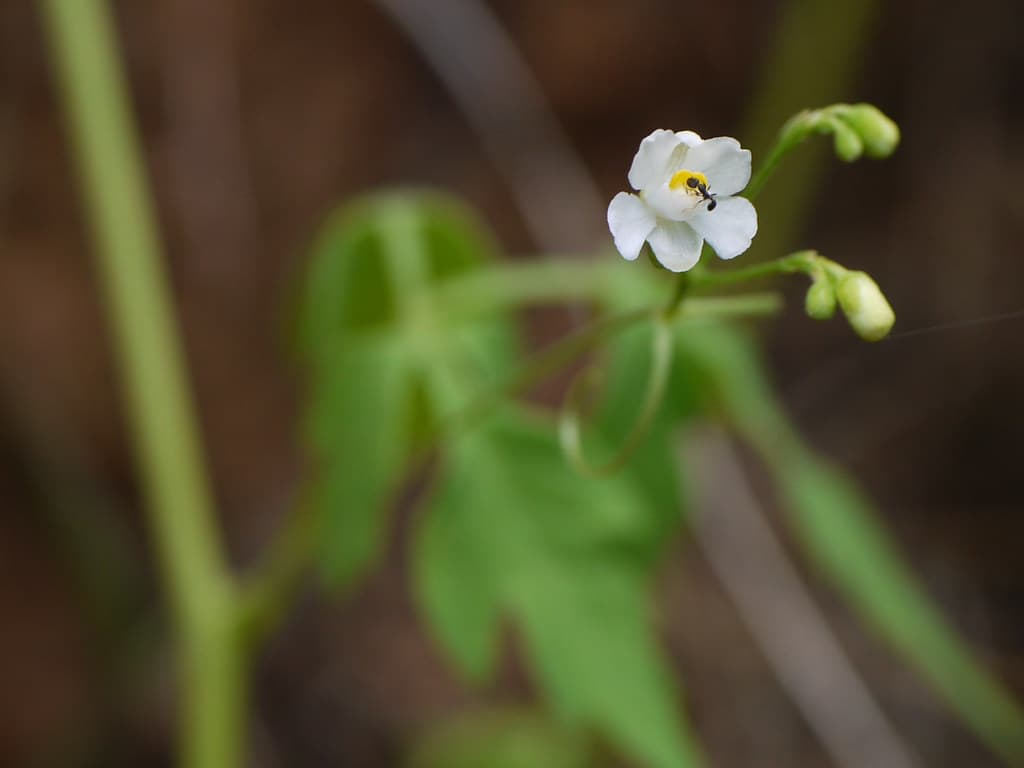
Cardiospermum halicacabum is a fast-climbing vine in the Sapindaceae family, native to tropical and subtropical regions of Africa, South Asia, and the Americas. Gardeners grow it for its inflated, papery seed pods - the balloon-like structures that give the plant its most popular common name - and for the distinctive white heart mark embossed on each black seed.
In frost-free climates it behaves as a short-lived perennial and self-seeds prolifically; it is classified as invasive in parts of Australia, South Africa, and the southeastern United States. In temperate gardens it is grown as an annual, reaching 6–12 feet in a single season on a trellis, fence, or wire support. Soil should be warm before sowing, and removing pods before they split is the primary technique for controlling spread.
The plant has substantial documented use in Ayurvedic and African traditional medicine, principally for inflammatory skin conditions. Phytochemical research has confirmed anti-inflammatory, analgesic, and immunomodulatory compounds in leaf and root extracts, and standardized preparations are licensed for use in topical eczema treatments in several countries.
Powdery mildew
White or grey powdery coating on leaves - usually starting on older growth in humid conditions or when nights cool.
Improve air circulation by thinning plants. Apply neem oil or potassium bicarbonate spray at first sign. Avoid overhead watering.
Fungal leaf spot
Brown or purplish spots on the leaves, often ringed with a yellow halo, that spread and merge in warm, humid, or wet weather; heavily spotted leaves yellow and drop early.
Pick off spotted leaves and clear fallen debris to remove overwintering spores. Improve air circulation by thinning, and water at the base so foliage dries quickly. If it persists, apply a copper- or sulfur-based fungicide at the first sign.
Root rot
Plants wilt, yellow, and stunt even in moist soil; lower stems and roots turn brown, soft, and mushy and the plant may collapse. Most common in heavy, wet, or poorly drained ground.
Improve drainage and stop overwatering, and never plant too deep. Lift and destroy badly affected plants along with the soil around the roots. Grow in raised or free-draining beds to prevent it returning.
Damping Off
Seedlings collapse at the soil line with thin, water-soaked stems; seeds may fail to emerge or rot before sprouting.
Sow in well-draining mix, avoid overwatering, and ensure good airflow. Remove affected seedlings and let the surface dry between waterings.