
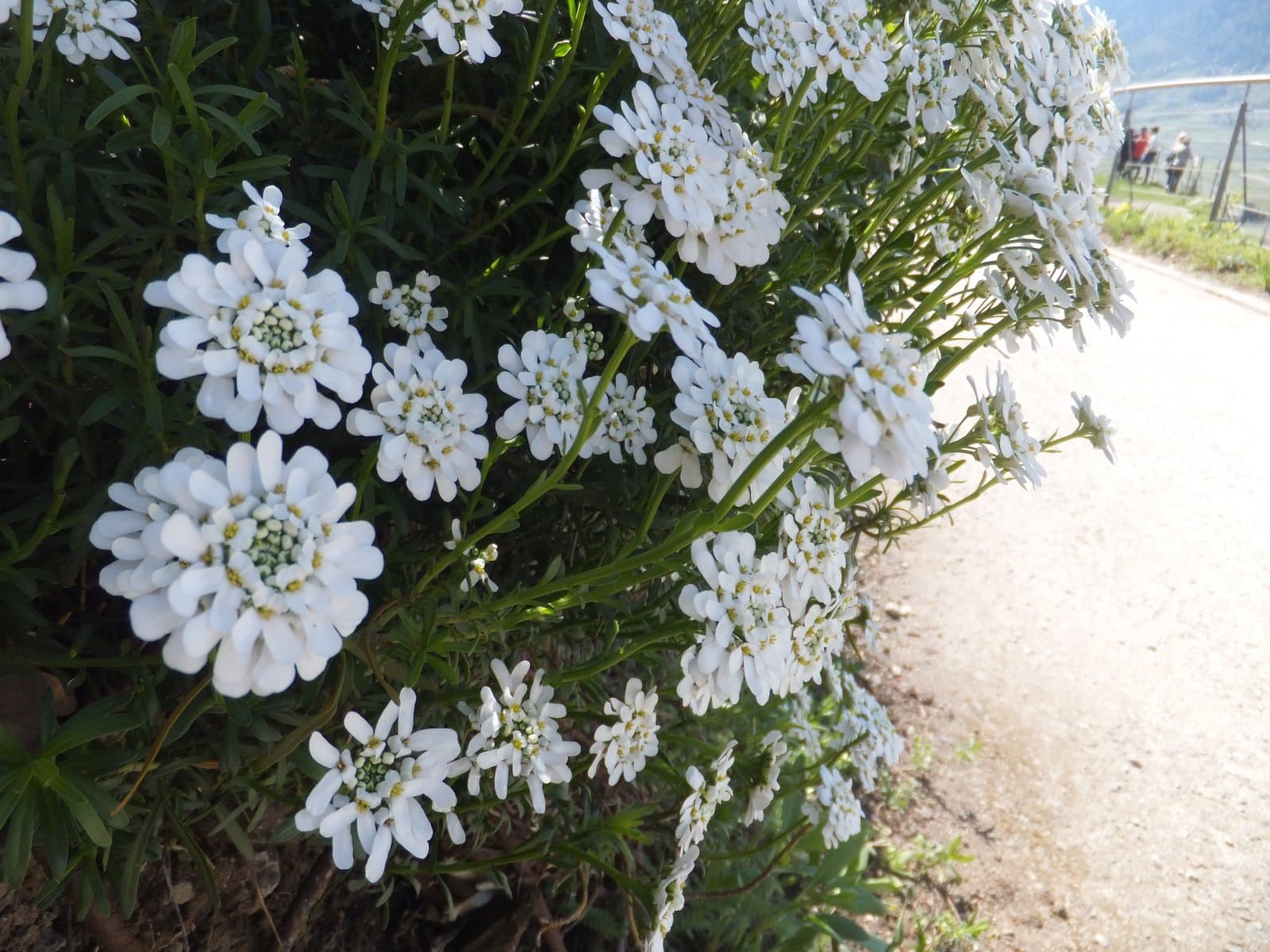
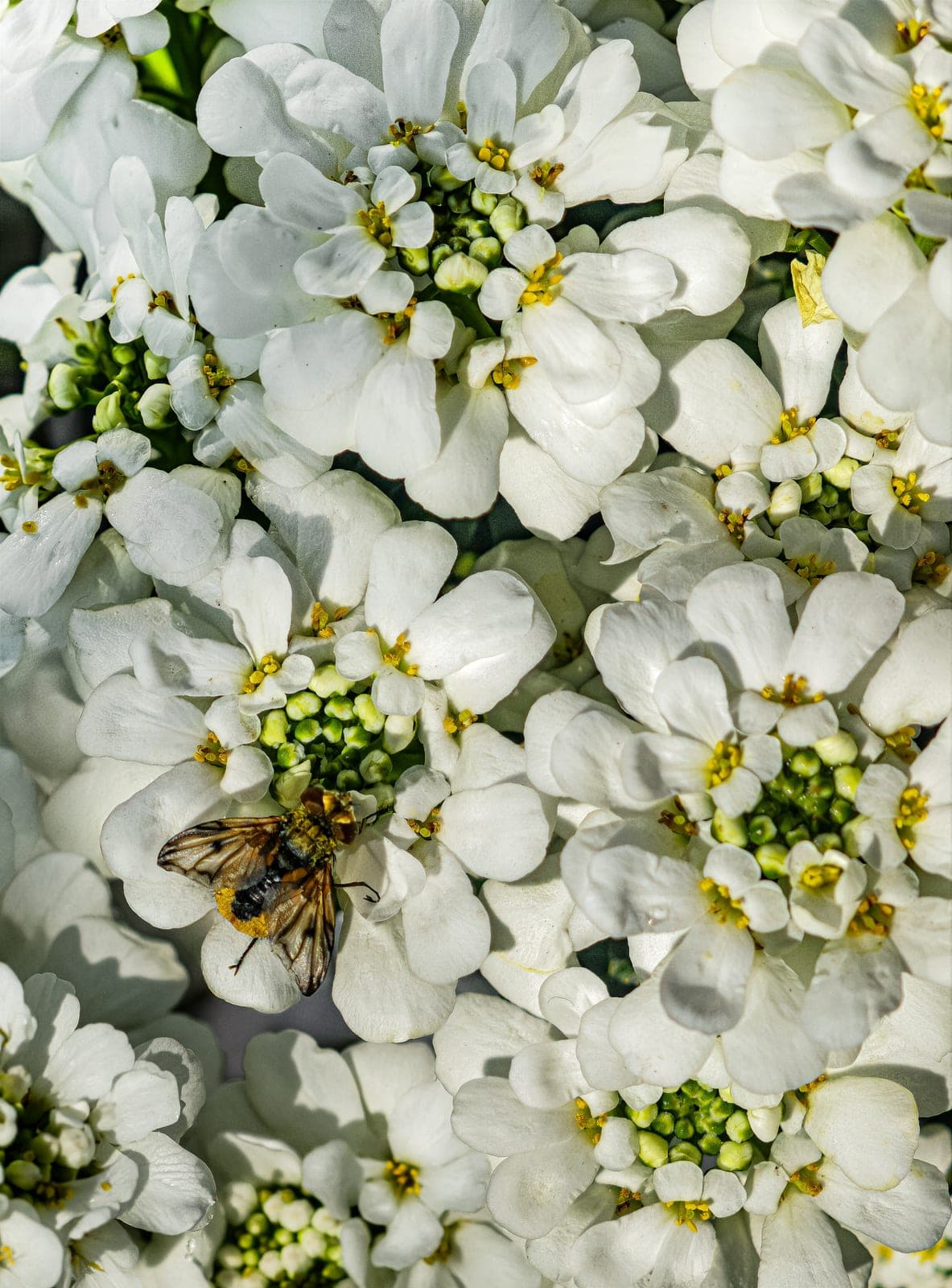
Iberis sempervirens is a low-growing evergreen subshrub native to rocky slopes and cliffs in southern Europe. In gardens it functions as edging, groundcover, or rock garden filler, valued for its dense white flower clusters in mid-spring and dark green foliage that persists through winter.
Plants spread slowly to 18–24 inches wide, staying 6–12 inches tall. Shearing by about one-third immediately after the main flush prevents the center from becoming woody and leggy, and can prompt a light secondary flush in autumn. Sharp drainage is non-negotiable; even brief waterlogging causes rapid crown collapse. It performs best in lean, neutral to slightly alkaline soil and is drought tolerant once established. As a member of Brassicaceae, it can host clubroot and white rust - avoid planting in beds with a history of those pathogens or brassica crops.
Crown Rot
Lower leaves yellow and wilt; the base of the rosette turns brown and soft, sometimes with white fungal threads at the soil line. Plants collapse in wet conditions.
Remove and destroy affected plants. Improve drainage and avoid overhead watering. Do not mulch directly against the crown. Space plants for airflow and avoid replanting in the same wet spot.
Downy mildew
Yellowing on top of leaves with grey-purple fuzz underneath. Spreads rapidly in humid conditions.
Remove affected leaves. Improve air circulation. Avoid overhead watering. Copper spray as preventive.
Clubroot
Swollen, distorted roots; wilting in midday heat; stunted growth and yellowing foliage. Plants recover poorly even with watering.
Remove and destroy infected plants with roots. Raise soil pH toward 7.2 with lime. Improve drainage and rotate out of brassicas for several years.
White Rust
Raised white to cream-colored pustules on leaf undersides, with yellow blotches on upper surfaces. Infected tissue may swell or distort.
Remove and destroy infected leaves. Improve air circulation and avoid overhead watering. Rotate brassicas and avoid planting in previously infected soil.