
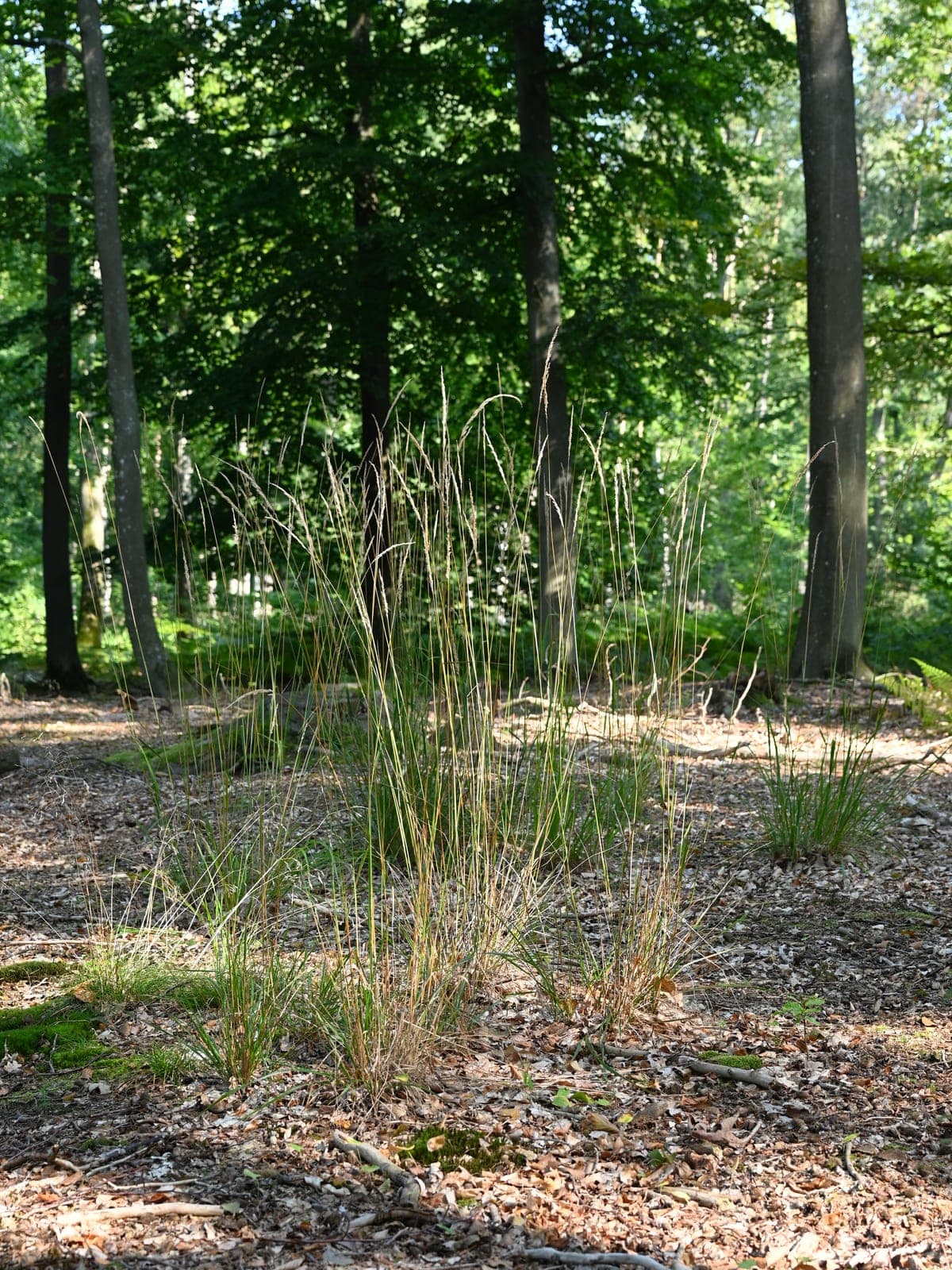
Korean feather reed grass (Calamagrostis brachytricha, accepted as C. arundinacea) is a clump-forming bunch grass native to Eurasia, China, and India. It holds the Royal Horticultural Society's Award of Garden Merit. Feathery pink-tinged plumes rise above arching mid-green foliage in late summer, then fade to silver-tan and hold their form well into autumn, extending garden interest after most perennials have finished.
Unlike most ornamental grasses, this species tolerates meaningful shade and performs well under open woodland canopies or on the shadier sides of structures where other grasses fail. Clumps are non-invasive, expanding slowly without running. It adapts to clay soils better than many ornamental grasses, provided drainage is adequate. Cut old stems to 4–6 inches in late winter before new growth emerges; divide clumps every 4–5 years if the center becomes open or vigor declines.
Rust
Orange to brown raised pustules on the undersides of leaves, with yellow spotting on the upper surface. Heavy infections cause leaves to yellow and drop.
Remove and destroy infected leaves. Avoid overhead watering and improve air circulation. Apply a sulfur or copper-based fungicide if it spreads. Clear plant debris in fall.
Fungal leaf spot
Brown or purplish spots on the leaves, often ringed with a yellow halo, that spread and merge in warm, humid, or wet weather; heavily spotted leaves yellow and drop early.
Pick off spotted leaves and clear fallen debris to remove overwintering spores. Improve air circulation by thinning, and water at the base so foliage dries quickly. If it persists, apply a copper- or sulfur-based fungicide at the first sign.