
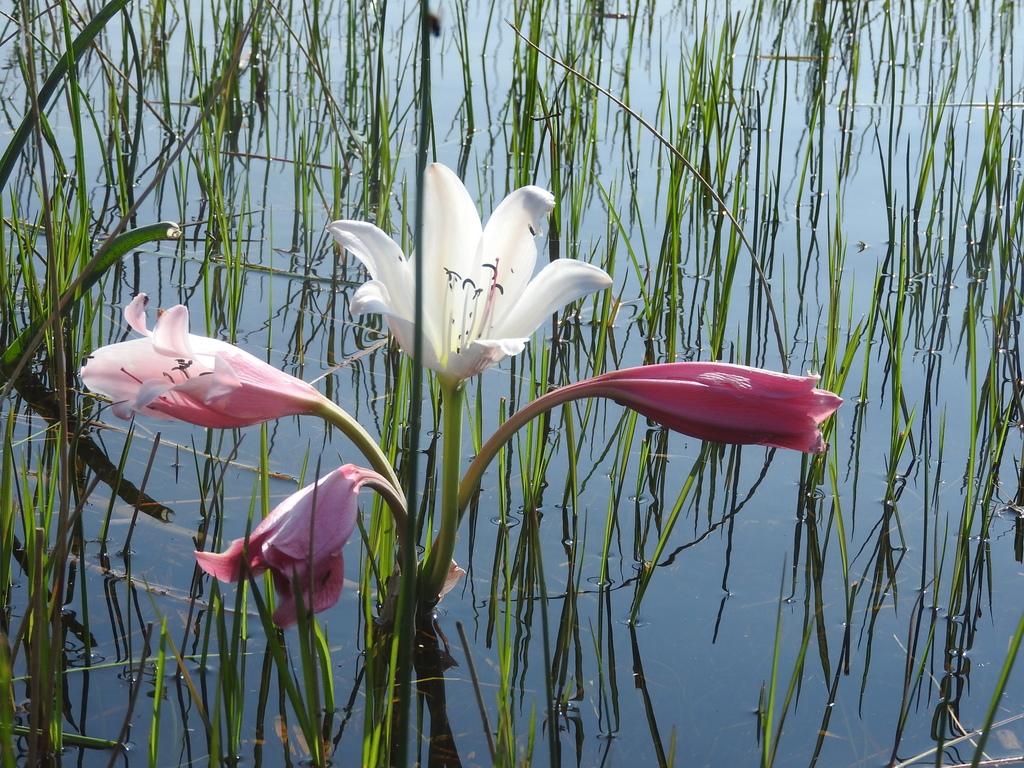
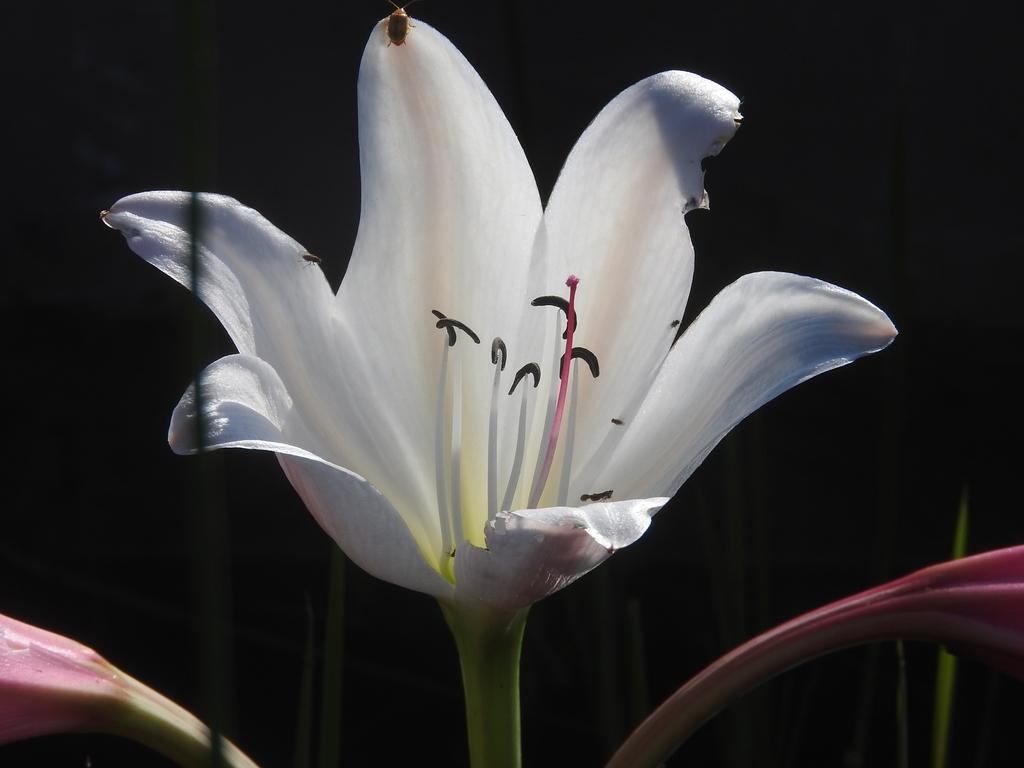
Crinum paludosum is a bulbous perennial native to vleis - seasonal marshy depressions - across South Africa's bushveld. It produces tall, leafless scapes carrying clusters of large, white to pale-pink tubular flowers and develops broad strap-shaped foliage from substantial bulbs. It fills a niche most ornamental bulbs cannot: consistently wet or seasonally flooded ground.
In the wild it undergoes alternating wet and dry seasons, giving it tolerance for both periodic waterlogging and brief soil drying. Bulbs multiply readily by offsets, and established clumps become large and dense over several years. The neck of the bulb should sit at or just above the soil surface; burying it too deep suppresses flowering. In zone 8b, a thick mulch layer over dormant crowns provides sufficient cold protection; in zones 9 and above the plant remains semi-evergreen year-round.
All parts of the plant contain Amaryllidaceae alkaloids, including lycorine, and are toxic if ingested by humans or animals. The large tubular flowers attract hawk moths and long-tongued bees, making the plant a useful pollinator resource in wet garden areas and pond margins.
These dates are for Zone 6b. Enter your ZIP to time every job to your own frost dates.
- buy · Feb 13 - Feb 27Buy bulbs - about two months before planting
- plant · Apr 24 - May 8Plant bulbs with the neck at the soil surface in wet ground, a bog garden or a pond margin
- watch · Any time in summerKeep the soil wet through the growing season; it can flower standing in shallow water
- watch · Any time in summerCheck bulbs for amaryllis caterpillars, which tunnel in and cause rot
Problems & troubleshooting
Common problems
Fungal leaf spot
Brown or purplish spots on the leaves, often ringed with a yellow halo, that spread and merge in warm, humid, or wet weather; heavily spotted leaves yellow and drop early.
Pick off spotted leaves and clear fallen debris to remove overwintering spores. Improve air circulation by thinning, and water at the base so foliage dries quickly. If it persists, apply a copper- or sulfur-based fungicide at the first sign.
Root rot
Plants wilt, yellow, and stunt even in moist soil; lower stems and roots turn brown, soft, and mushy and the plant may collapse. Most common in heavy, wet, or poorly drained ground.
Improve drainage and stop overwatering, and never plant too deep. Lift and destroy badly affected plants along with the soil around the roots. Grow in raised or free-draining beds to prevent it returning.
Hippeastrum Red Blotch
Red or orange-red streaks, spots, and sunken lesions on bulb scales, emerging leaf sheaths, flower stalks, and petals. Infected stalks may be distorted or fail to open fully. Severe cases leave large maroon to dark-red patches across all above-ground tissue.
Remove and destroy all affected plant material. Before planting, soak bulbs for 30 minutes in a dilute bleach solution or apply a copper-based fungicide drench. Avoid overhead irrigation and improve air circulation. Do not reuse soil from beds where infected bulbs were grown.