
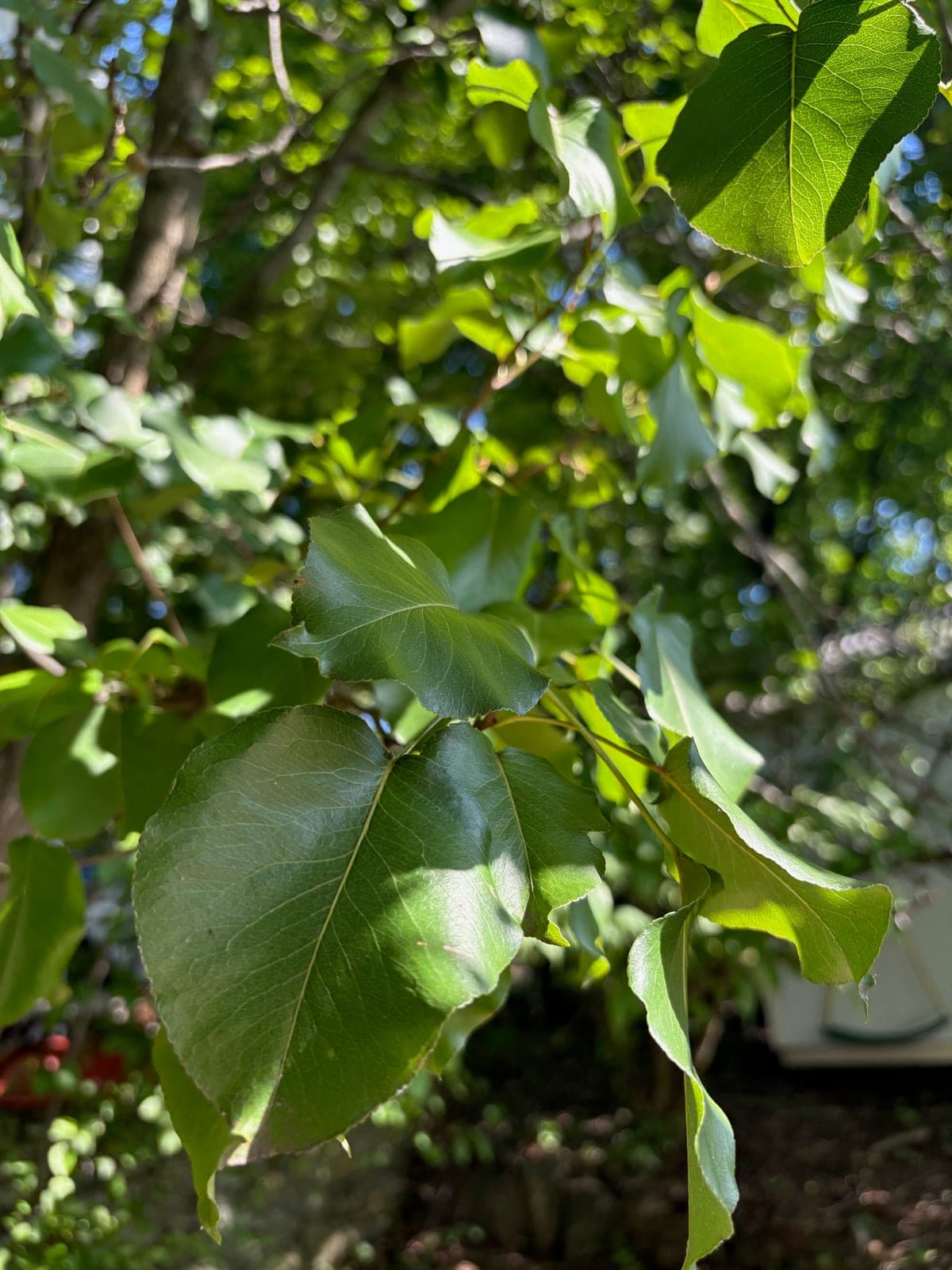
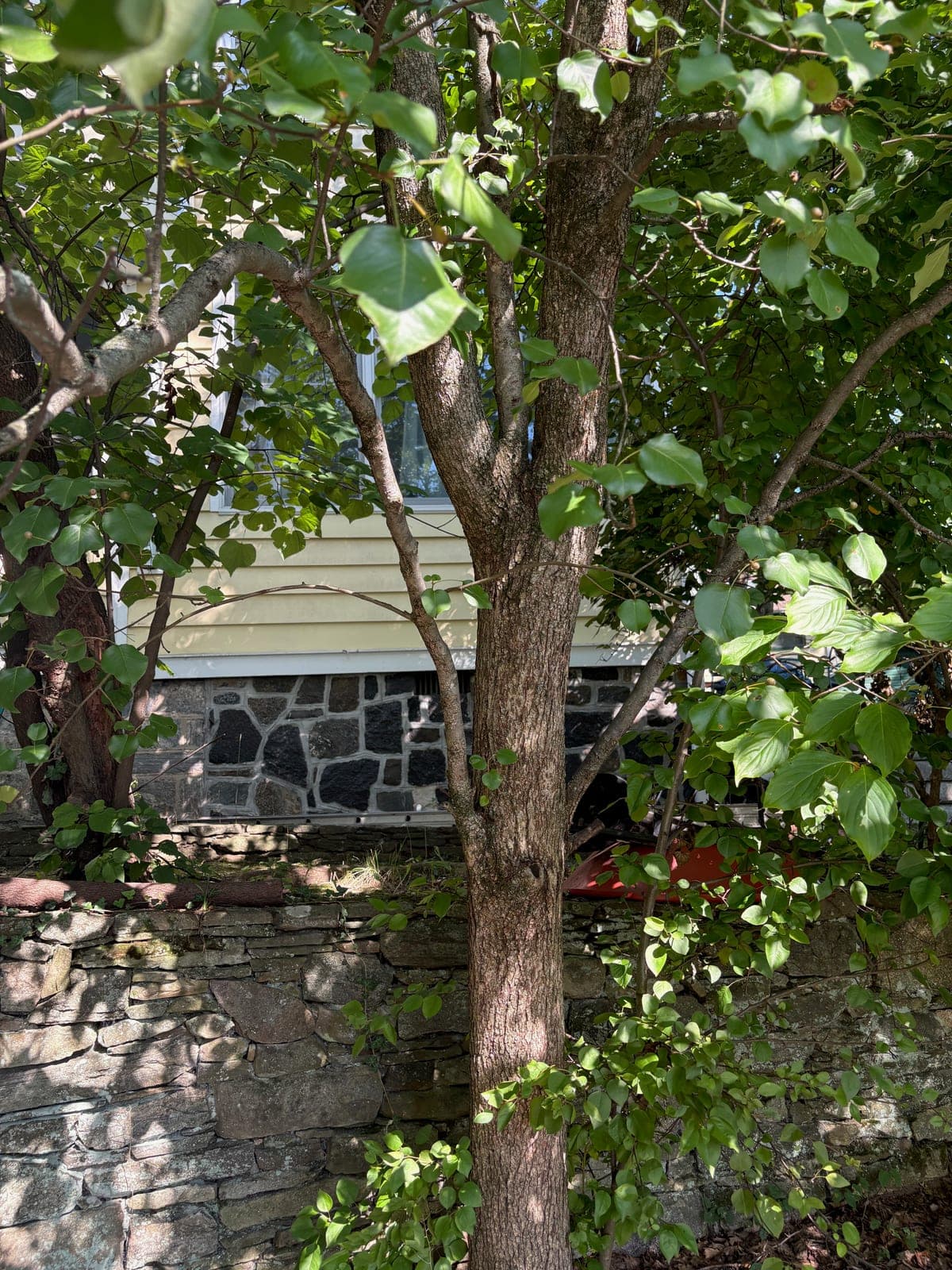
Bradford pear is a sterile cultivar of Callery pear (Pyrus calleryana) developed at the USDA in the 1960s and planted extensively across North America as a fast-growing ornamental tree. It leafs out early, produces dense white flower clusters in early spring with a notably unpleasant odor at close range, and reliably turns red to purple in fall.
The cultivar was bred fruitless, but when multiple Callery pear cultivars or wild seedlings grow in proximity they cross-pollinate, producing viable seeds that birds distribute widely. Naturalized thickets of thorny seedlings now colonize roadsides and forest edges across the eastern and midwestern US. Several states including Ohio, Pennsylvania, Indiana, and South Carolina have banned its sale or are actively phasing it out. The tree also has structurally weak branch unions with narrow crotch angles that cause major limb failure or whole-tree splitting, typically within 15–25 years of planting.
Gardeners maintaining existing Bradford pears should monitor structure and fire blight, and plan for eventual removal and replacement with a long-lived native alternative such as serviceberry, redbud, or flowering dogwood.
Fire Blight
Water-soaked, wilting blossoms and young stems that rapidly turn brown to black. Infected shoot tips curl into a characteristic shepherd's crook. Bark beneath the infection may show reddish-brown discoloration.
Prune infected wood 8–12 inches below visible symptoms during dry weather. Sterilize tools with 70% isopropyl alcohol or a 10% bleach solution between cuts. Avoid high-nitrogen fertilizers that produce soft, disease-susceptible growth. Copper-based bactericides applied at early flowering can reduce spread in high-pressure years.
Entomosporium Leaf Spot
Small circular red-purple spots on both leaf surfaces beginning in late spring, enlarging to lesions with gray or tan centers and red-purple margins. Heavy infection leads to early leaf drop by late summer.
Rake and dispose of fallen leaves each season. Prune selectively to improve air circulation. Avoid overhead irrigation. Fungicide applications - myclobutanil, chlorothalonil, or copper-based products - beginning at leaf emergence and repeated every 10–14 days during wet weather can limit disease spread.