
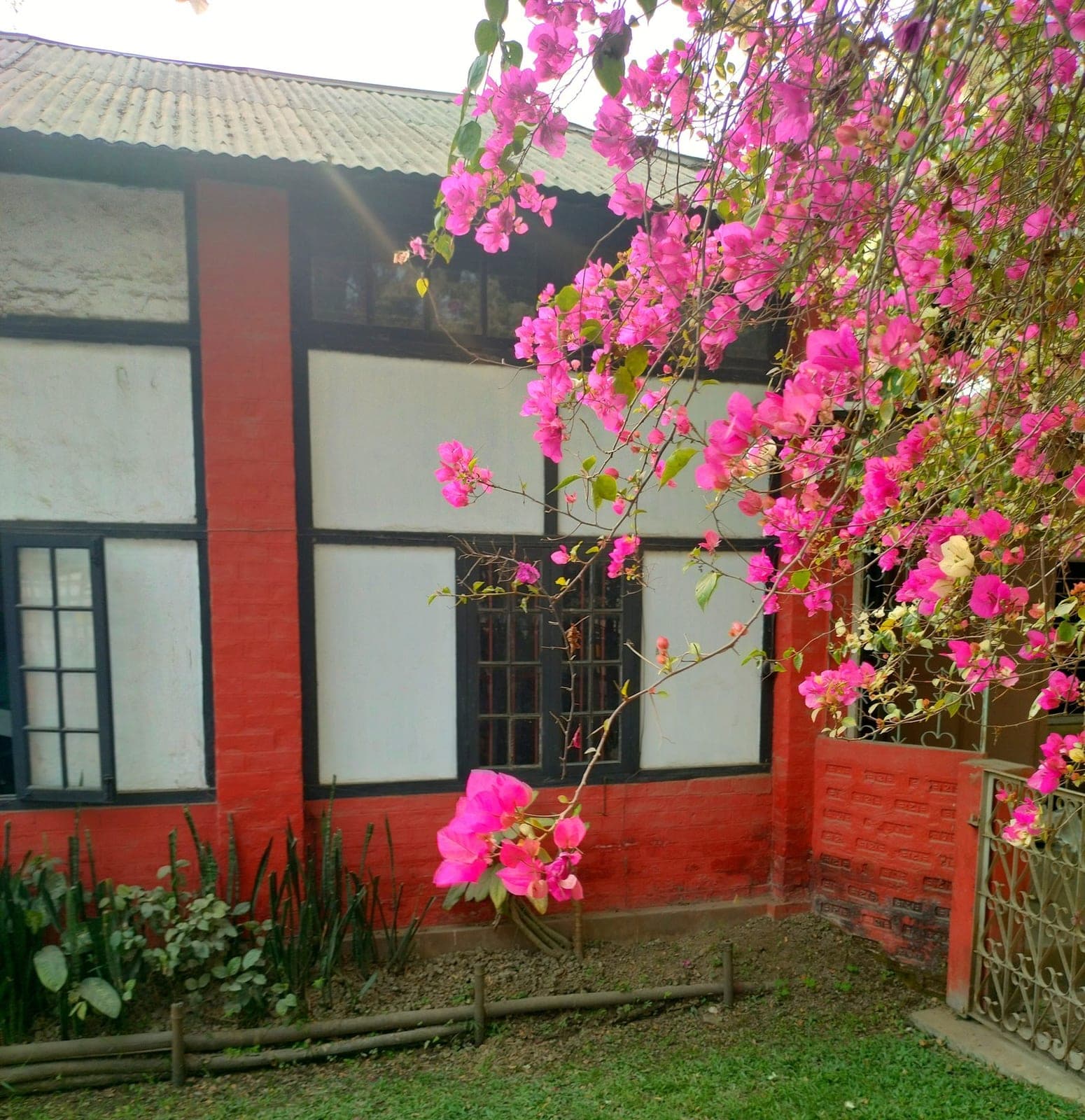
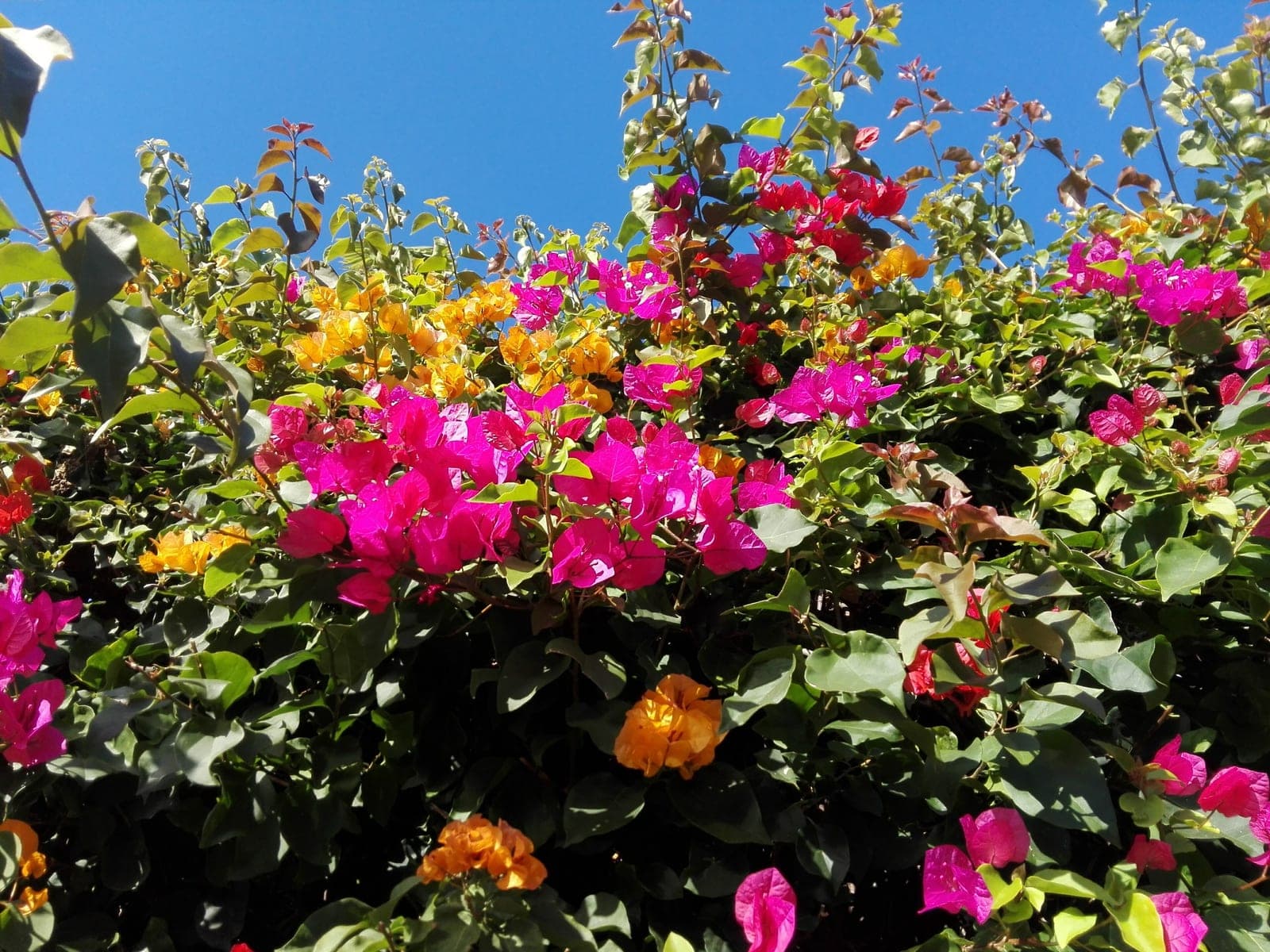
Bougainvillea glabra is a woody, thorny climbing vine native to coastal Brazil, cultivated across warm-climate gardens for vivid, long-lasting displays of papery bracts in shades from magenta and purple to red, orange, and white. What reads as colorful petals are modified leaves - bracts - that surround small white tubular flowers and hold their color well after the flowers fade. It is also the most widely used Bougainvillea species in bonsai.
Established plants are highly drought-tolerant and produce more prolific bract displays under mild water stress before a bloom cycle. The vine climbs by leaning and hooking with recurved thorns, so stems require tying to supports rather than self-adhering. Heavy pruning is well tolerated and triggers fresh lateral growth and repeat bract displays. In zone 9b, frost may kill top growth, but plants typically resprout from the root system. Well-drained soil is essential; standing water leads to rapid root failure.
Leaf and bract preparations appear in Brazilian and Latin American folk medicine for coughs and respiratory complaints. Laboratory studies have identified pinitol and flavonoids with anti-inflammatory and hypoglycemic activity, though clinical evidence in humans remains limited.
Root rot
Plants wilt, yellow, and stunt even in moist soil; lower stems and roots turn brown, soft, and mushy and the plant may collapse. Most common in heavy, wet, or poorly drained ground.
Improve drainage and stop overwatering, and never plant too deep. Lift and destroy badly affected plants along with the soil around the roots. Grow in raised or free-draining beds to prevent it returning.
Fungal leaf spot
Brown or purplish spots on the leaves, often ringed with a yellow halo, that spread and merge in warm, humid, or wet weather; heavily spotted leaves yellow and drop early.
Pick off spotted leaves and clear fallen debris to remove overwintering spores. Improve air circulation by thinning, and water at the base so foliage dries quickly. If it persists, apply a copper- or sulfur-based fungicide at the first sign.
Sooty Mold (Scale-Associated)
Black, powdery or crusty coating on upper leaf surfaces and stems. Affected leaves may yellow and drop in severe cases. The mold grows on honeydew secreted by scale insects, mealybugs, or aphids feeding on the plant.
Control the underlying pest infestation first using horticultural oil or neem oil applied thoroughly to stems and leaf undersides. Once pest populations are reduced, sooty mold stops spreading and weathers away over time. Rinse foliage with a strong stream of water to dislodge existing mold deposits.
Powdery mildew
White or grey powdery coating on leaves - usually starting on older growth in humid conditions or when nights cool.
Improve air circulation by thinning plants. Apply neem oil or potassium bicarbonate spray at first sign. Avoid overhead watering.
Botryosphaeria Canker
Dark, sunken cankers on stems and major branches, most often occurring after drought stress or mechanical wounding. Bark peeled back from affected areas reveals brown, discolored wood beneath. Branch tips wilt and die back progressively inward.
Prune infected branches at least 6 inches below the visible canker margin using sterilized tools, and dispose of all cuttings away from the garden. Reduce plant stress by maintaining consistent irrigation during dry periods and avoiding bark wounds during maintenance. No curative fungicide is available; keeping plants vigorous is the primary preventive strategy.