
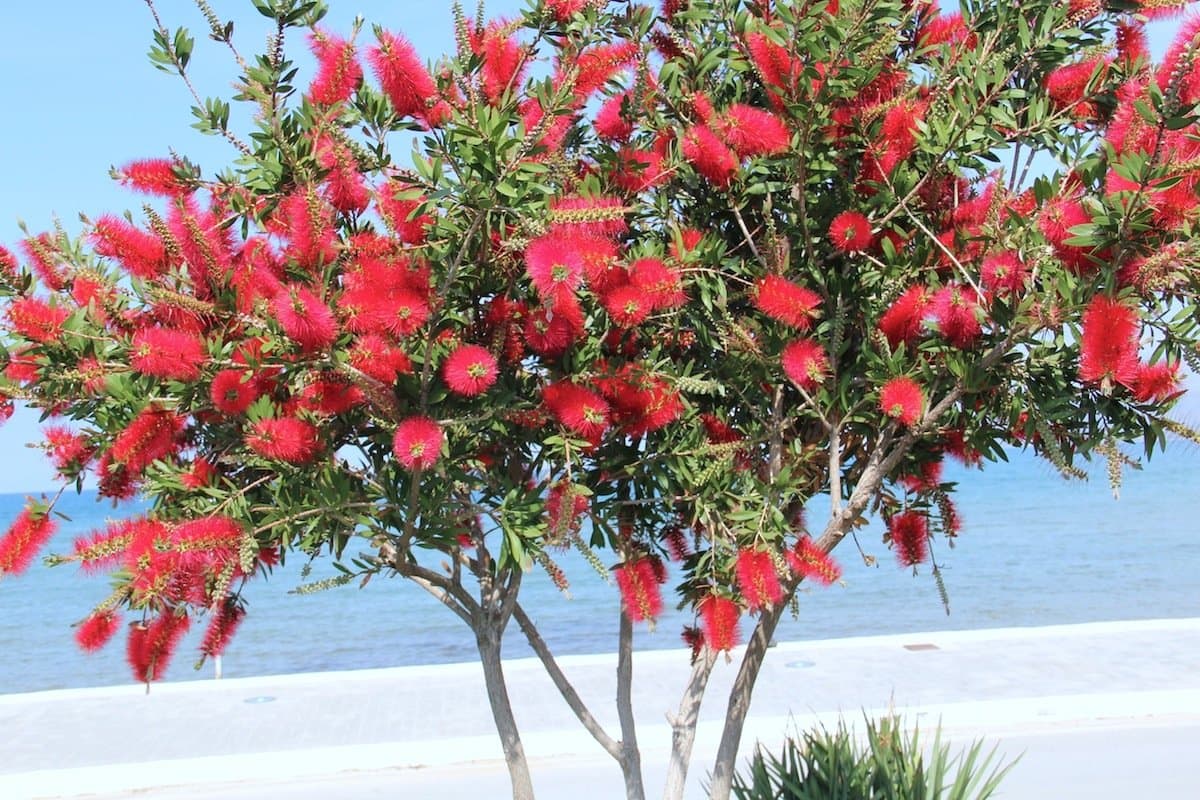
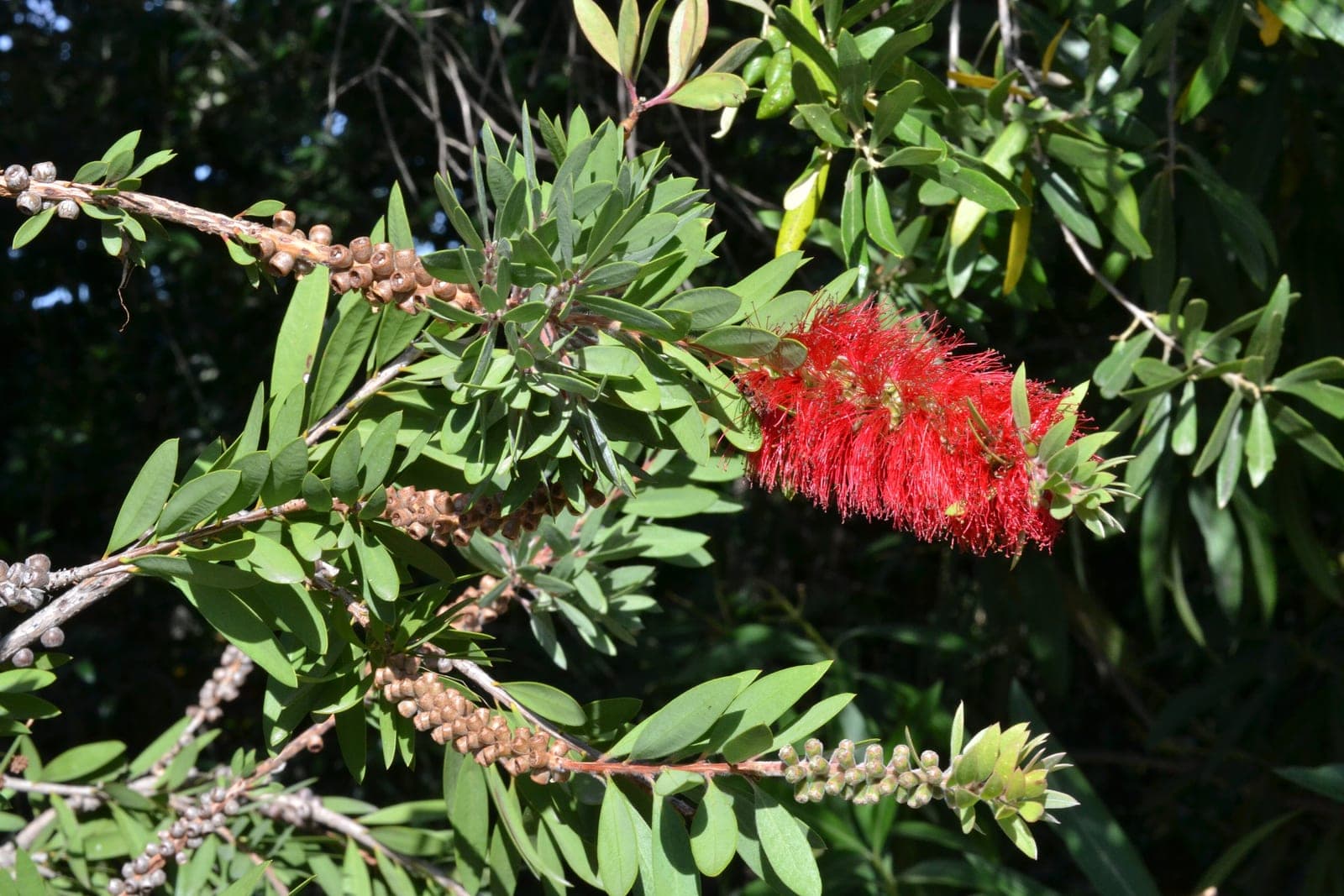
Melaleuca citrina is an evergreen shrub or small tree native to eastern Australia, grown for its dense cylindrical flower heads composed of hundreds of red stamens, produced through most of the year in frost-free gardens. Collected by Joseph Banks in 1770, it was among the first Australian plants introduced to cultivation outside the country. Nectar-rich flower heads draw hummingbirds, honeyeaters, bees, and butterflies consistently across the growing season.
It tolerates clay soils, brief waterlogging, mild coastal salt spray, and drought once established, all while requiring full sun. Prune immediately after each major flowering flush by cutting just behind spent flower heads into current-season wood; this maintains a compact habit and stimulates new growth that carries the next round of flower heads. Feed with a low-phosphorus fertilizer formulated for Australian natives, as high phosphorus levels can damage a root system adapted to phosphorus-poor soils.
The lemon-scented leaves contain cineole and citral. Aboriginal Australians have used leaves and bark medicinally for generations, and leaf extracts show antimicrobial activity in laboratory research. The dense evergreen habit suits screening hedges, windbreaks, and espalier training against warm walls.
Myrtle Rust
Bright yellow-orange powdery pustules erupt on young shoots, leaves, and buds. Heavily infected growing tips become distorted, stunted, or killed. Older leaves develop smaller, darker brown pustules as infection matures.
Remove and destroy infected plant material immediately. Apply fungicides containing myclobutanil or mancozeb at first appearance of pustules and repeat on label schedule. Avoid overhead irrigation. Monitor new growth closely during warm, humid weather, when the pathogen spreads most rapidly.
Phytophthora Root Rot
Wilting despite moist soil, yellowing leaves, stunted growth, and dark, decayed roots and crown tissue. Vines may collapse during hot weather.
Plant in well-draining soil and avoid waterlogging. Remove and destroy affected vines. Improve drainage with raised beds or amended soil and avoid overwatering.
Sooty Mold (Scale-Associated)
Black, powdery or crusty coating on upper leaf surfaces and stems. Affected leaves may yellow and drop in severe cases. The mold grows on honeydew secreted by scale insects, mealybugs, or aphids feeding on the plant.
Control the underlying pest infestation first using horticultural oil or neem oil applied thoroughly to stems and leaf undersides. Once pest populations are reduced, sooty mold stops spreading and weathers away over time. Rinse foliage with a strong stream of water to dislodge existing mold deposits.