
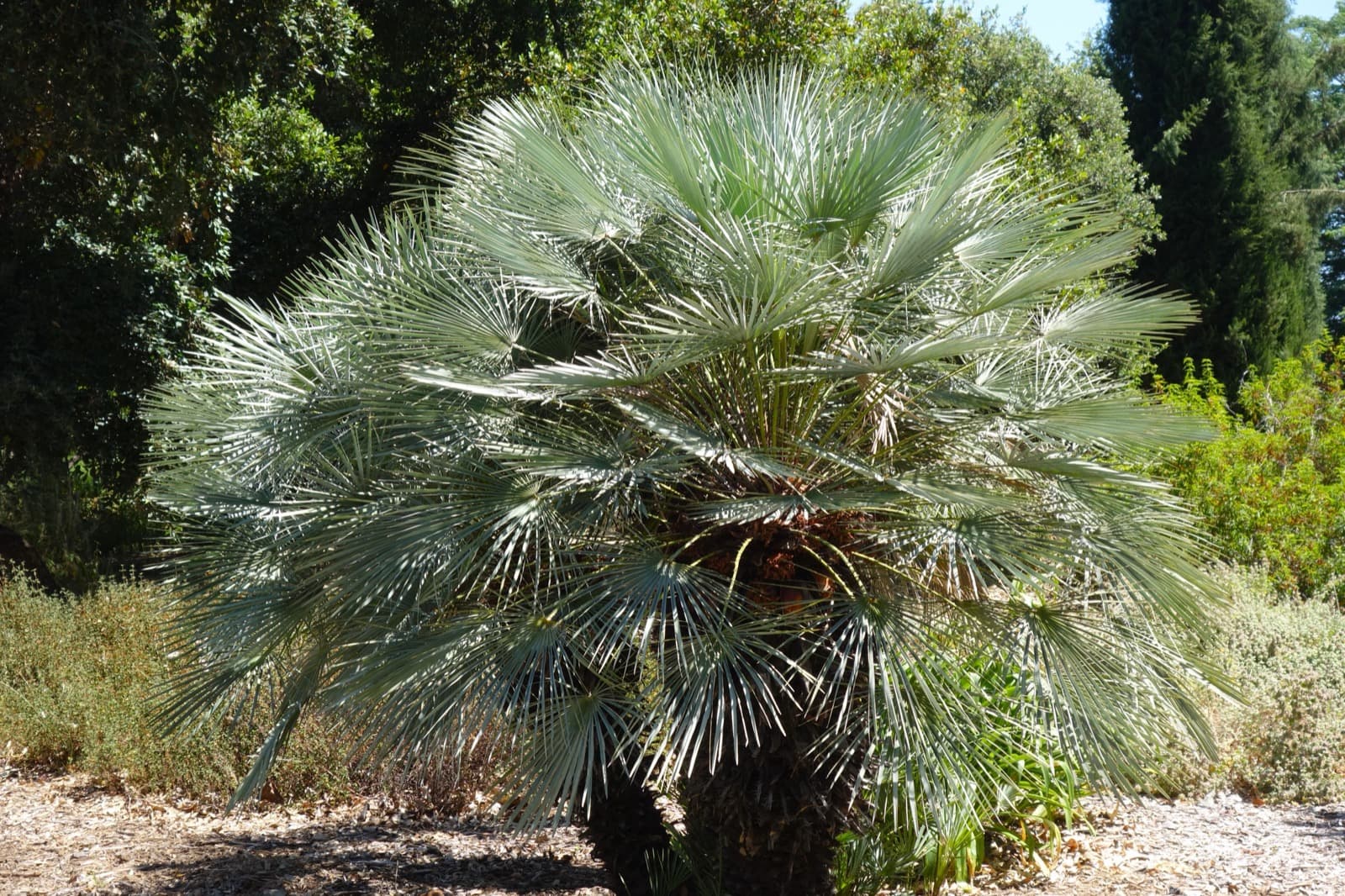
Blue Mediterranean Fan Palm
Chamaerops humilis var. cerifera is the blue-wax form of the European fan palm, native to the High Atlas Mountains of Morocco at elevations above 1,500 m. A dense waxy coating on each frond produces the distinctive blue-silver coloration that separates it from the green-leafed species type, and that color intensifies in full sun and lean, dry soil. It ranks among the most cold-tolerant palms in cultivation and functions as a bold specimen in temperate Mediterranean-style landscapes.
This variety grows slowly into a clumping, multi-stemmed form with trunks wrapped in coarse brown fiber, typically reaching 10–15 ft over many years. It performs best in alkaline, sandy, or rocky soils with perfect drainage and tolerates extended drought once established. Persistent moisture at the root zone or crown is the primary cultural threat. In zone 8, the pH of surrounding soil should trend neutral to alkaline; rich, amended beds encourage soft growth that is more vulnerable to cold. Tying outer fronds over the growing point and applying deep mulch at the base before hard freezes substantially reduces winter damage.
The small orange fruits are edible and have been consumed in North Africa. Young terminal growth has been used as palm heart. The plant's namesake characteristic, its waxy frond coating, has historically been harvested as a surface wax in its native range.
Palm Pink Rot
Water-soaked, darkening lesions at petiole bases and on lower fronds; pink to salmon-colored spore masses develop on affected tissue; fronds collapse and hang without detaching cleanly.
Cut out and dispose of infected fronds and petiole tissue. Avoid overhead irrigation and any practice that keeps the crown wet. Improve soil drainage around the trunk. Apply copper-based fungicide to the crown and petiole bases at first sign of infection and repeat every 2–3 weeks while warm, humid conditions persist.
Graphiola Leaf Spot (False Smut)
Small, hard, dark brown to black wart-like pustules erupt from both surfaces of fronds, often ringed by yellow halos. Heavily infected fronds yellow and die back prematurely.
Remove and destroy heavily infected fronds. Improve air circulation around the crown by pruning adjacent vegetation. Apply copper-based fungicide in spring as new growth emerges and repeat monthly through the growing season if infection pressure remains high.
Root rot
Plants wilt, yellow, and stunt even in moist soil; lower stems and roots turn brown, soft, and mushy and the plant may collapse. Most common in heavy, wet, or poorly drained ground.
Improve drainage and stop overwatering, and never plant too deep. Lift and destroy badly affected plants along with the soil around the roots. Grow in raised or free-draining beds to prevent it returning.