
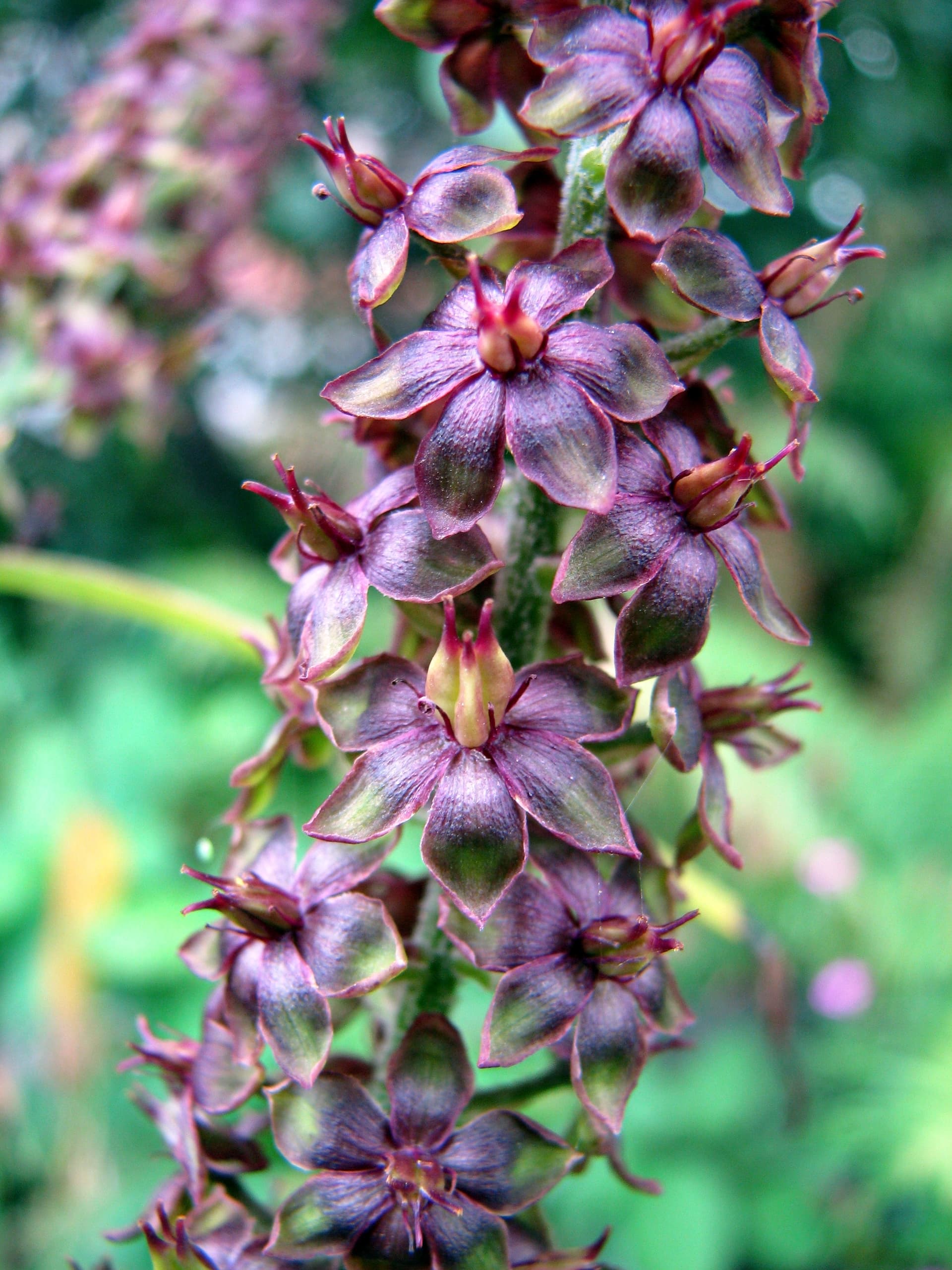
Veratrum nigrum is a bold Eurasian perennial in the family Melanthiaceae, unrelated to true hellebores despite the shared common name. It produces wide, deeply pleated basal leaves and tall racemes of dark maroon to near-black flowers in midsummer, making it one of the more dramatically colored plants available for temperate shade gardens.
The plant is slow to establish and may take three to five years to bloom from seed, but once settled it is long-lived and largely self-sufficient. It requires consistently moist, humus-rich soil and benefits from afternoon shade at the warmer end of its range. All parts are highly toxic due to steroidal alkaloids; always handle with gloves and site it away from livestock and children. A deep mulch layer helps retain the soil moisture the plant depends on.
In traditional Chinese medicine, the plant (known as lí lú) has been used as an emetic to address phlegm accumulation. Its alkaloids, particularly jervine and cyclopamine, have attracted pharmaceutical research interest as inhibitors of the hedgehog signaling pathway.
Fungal leaf spot
Brown or purplish spots on the leaves, often ringed with a yellow halo, that spread and merge in warm, humid, or wet weather; heavily spotted leaves yellow and drop early.
Pick off spotted leaves and clear fallen debris to remove overwintering spores. Improve air circulation by thinning, and water at the base so foliage dries quickly. If it persists, apply a copper- or sulfur-based fungicide at the first sign.
Botrytis (grey mould)
Grey fuzzy mould on petals and stems, worst in cool wet conditions.
Remove affected parts immediately. Improve air circulation. Avoid overhead watering. Apply copper fungicide if severe.
Root rot
Plants wilt, yellow, and stunt even in moist soil; lower stems and roots turn brown, soft, and mushy and the plant may collapse. Most common in heavy, wet, or poorly drained ground.
Improve drainage and stop overwatering, and never plant too deep. Lift and destroy badly affected plants along with the soil around the roots. Grow in raised or free-draining beds to prevent it returning.