
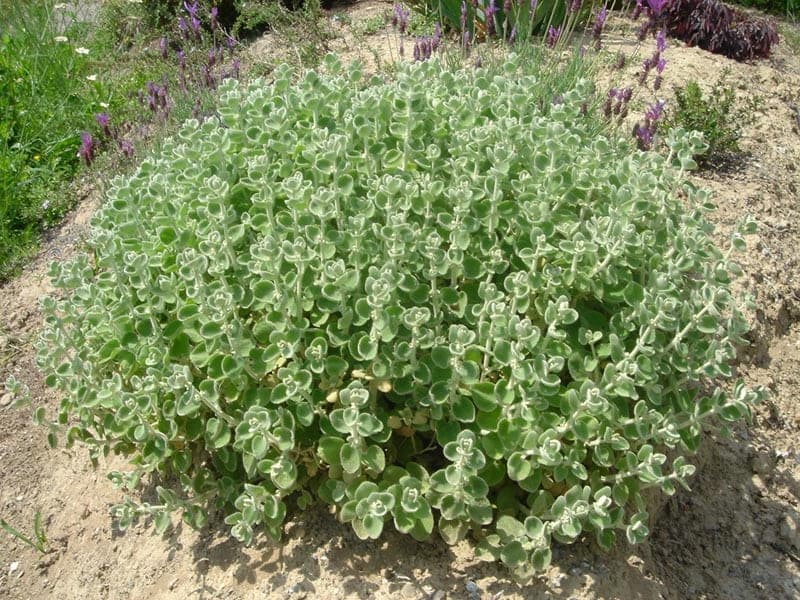
False dittany is a compact Mediterranean subshrub grown primarily for its densely woolly, silver-white stems and rounded leaves. Native to the southern Aegean islands, it forms a low mound that holds silvery foliage through most of the year in mild climates. Small pinkish-white flowers appear in whorls in summer, with persistent papery calyces adding texture after the flowers fade. In zones 8–10 it is reliably evergreen; on the cooler edge of its range, wet cold is a greater threat than low temperature alone.
Full sun and sharply drained soil are non-negotiable - heavy clay or standing water causes rapid root rot. The woolly leaf coating evolved to reflect intense sunlight and limit water loss, making this plant well-suited to gravel gardens, dry borders, and coastal plantings in Mediterranean climates. Hard pruning in early spring, cutting back to a few inches of live growth, prevents woodiness and forces a flush of compact, silvery new stems.
Root rot
Plants wilt, yellow, and stunt even in moist soil; lower stems and roots turn brown, soft, and mushy and the plant may collapse. Most common in heavy, wet, or poorly drained ground.
Improve drainage and stop overwatering, and never plant too deep. Lift and destroy badly affected plants along with the soil around the roots. Grow in raised or free-draining beds to prevent it returning.
Powdery mildew
White or grey powdery coating on leaves - usually starting on older growth in humid conditions or when nights cool.
Improve air circulation by thinning plants. Apply neem oil or potassium bicarbonate spray at first sign. Avoid overhead watering.